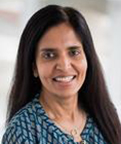
Jacque Duncan, MD

Professor


High resolution retinal imaging in inherited retinal degeneration

Dr. Duncan, Professor of Ophthalmology, leads an NIH-funded translational vision science laboratory focused on adaptive optics scanning laser ophthalmoscopy (AOSLO) imaging of human photoreceptors to discover mechanisms of cone death in inherited retinal degenerations. In addition, Dr. Duncan’s group is studying changes in cone structure and function during disease progression and testing the efficacy of treatments that aim to slow progression. Along with her collaborator Austin Roorda, PhD (UC Berkeley), they reported the first studies of cone structure during disease progression and in response to an experimental treatment. Dr. Duncan is also Co-PI with Joseph Carroll, PhD (Medical College of Wisconsin) on an NEI-funded Audacious Goals Initiatives proposal that will develop cone-dominant retinal disease models as a resource for translational vision research. Dr. Duncan’s group will characterize photoreceptor structure and function in patients with cone-rod dystrophy. In addition, Dr. Duncan is the Chair of the Foundation Fighting Blindness Consortium Executive Committee. She is the study chair of a natural history study examining the rate of retinal degeneration due to mutations in the USH2a gene (the RUSH2A study). She also serves as principal investigator on a number of clinical trials of treatments and natural history of disease progression in inherited retinal degenerations including retinitis pigmentosa and Usher syndrome.


To Learn More:

https://profiles.ucsf.edu/jacque.duncan


Research Areas:

Retina or Retinal Diseases, Retinitis Pigmentosa or Retinal Degenerations, Macular Degeneration, Adaptive optics, Retinal imaging
 
Learn more about UCSF Ophthalmology faculty research.
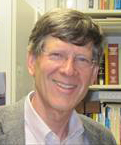
Matilda Chan, MD, PhD

Associate Professor


Molecular Mechanisms Underlying Corneal Injury, Inflammation, and Repair

Dr. Chan, Associate Professor of Ophthalmology, is a cornea clinician-scientist interested in understanding the molecular mechanisms underlying corneal injury, inflammation, and repair. Dr. Chan’s R01 is focused on the role of matrix metalloproteinases (MMPs) in modulating various aspects of corneal repair after injury including inflammation, neovascularization, and fibrosis. She is also studying the epigenetic and genetic alterations underlying Fuch’s endothelial cell dystrophy (FECD), specifically the role of DNA methylation as a mechanism for silencing genes during disease pathogenesis. In collaboration with Jason Gestwicki (UCSF), her group is using high throughput screening to identify compounds for the treatment of FECD. Dr. Chan has mentored undergraduates, medical students, postdoctoral fellows, residents, and clinical fellows. The Chan lab would provide opportunities for Scholars interested in the role of extracellular matrix in ocular disease, epigenetics, and translational vision science.


To Learn More:

https://profiles.ucsf.edu/matilda.chan


Research Areas:

Cornea, Matrix Metalloproteinases, Infectious Diseases
 
Learn more about UCSF Ophthalmology faculty research.
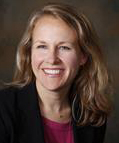
Travis Porco, PhD, MPH

Professor


Trachoma, Ebola Virus Disease, Measles, and Other Communicable Diseases, Infodemiology Using Social Media

Dr. Porco, Professor of Epidemiology & Biostatistics and Ophthalmology, is a mathematical epidemiologist and biostatistician who has contributed to projects involving trachoma, Ebola virus disease, measles, and other communicable diseases. He has been the biostatistician for numerous NEI RCTs, including MUTT I and II, SCUT II, TANA I and II, SWIFT, FAST, ADJUST, and KETFO, and multiple BMGF trials including PRET-Niger, MORDOR I and II, NAITRE, CHAT, and CHATON. He is multiple PI on the NEI Trachoma Forecasting grant, and PI on an NIH EBOLA forecasting grant. He has been co-Investigator on NIH and other grants using search, social media, mobile health, deep learning, digital surveillance, and large clinical registry datasets to remotely study infectious, inflammatory, pediatric, and age-related eye conditions. His team has found significant correlations of social media data (Twitter, Google Search, Wikipedia) with clinically validated seasonality of eye disease and with detection of worldwide ocular epidemics. They have studied the potential impact of the COVID-19 pandemic on global eye health and on other communicable disease, using search and social media. They have begun using LLMs of social media text to validate reported disease. They also have recently begun use of targeted social media campaigns to identify and recruit study subjects for interactive components of their digital surveillance studies. Dr. Porco has considerable experience in mentoring residents and research fellows in study design, having a hand in most of the resident and fellow research projects over the last ten years. Scholars interested in mathematical modeling and biostatistics may identify Dr. Porco as a Mentor.


To Learn More:

https://profiles.ucsf.edu/travis.porco


Research Areas:

Infectious Diseases, Cornea, Epidemiology
 
Learn more about UCSF Ophthalmology faculty research.
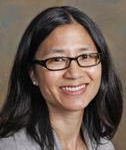
Thomas Lietman, MD

Professor


Trachoma, Childhood Mortality, and Corneal Ulcer Treatment and Prevention

Dr. Lietman is the Ruth Lee and Phillips Thygeson Distinguished Professor in the Department of Ophthalmology and Department of Epidemiology & Biostatistics, and the Director of the Francis I. Proctor Foundation. His research group has considerable experience with individual and community-randomized trials of trachoma, childhood mortality, and corneal ulcer treatment and prevention. He has served as the PI on a number of NIH-funded clinical trials: the Steroids for Corneal Ulcer Trial, the two Mycotic Ulcer Treatment Trials, the two Trachoma Amelioration in Northern Amhara studies, and the Village Integrated Eye Worker trial (in Nepal). He is multiple PI on the Ethiopian trachoma trial KETFO and on the ongoing SCUT II corneal ulcer trial. In addition, he was the overall PI on the Bill and Melinda Gates Foundation-funded MORDOR I study and for the MORDOR II studies (Niger and Burkina Faso), as well as the AVENIR planning grant (Niger). He ran the Niger arm of the BMGF-funded PRET trachoma study, and has worked on the BMGF-funded Neglected Tropical Disease modeling consortium. Recently, he has explored big data for infectious disease, including two NEI projects: the Digital Disease Detection grant and the Forecasting Trachoma grant.


To Learn More:

https://profiles.ucsf.edu/thomas.lietman


Research Areas:

Trachoma, Cornea, Infectious Diseases
 
Learn more about UCSF Ophthalmology faculty research.
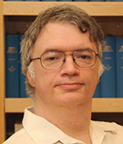
Douglas Gould, PhD

Professor


Studying the biological functions of the extracellular matrix and its role in human disease

Our broad mission is to understand the biological functions of a specialized extracellular matrix structure called the Basement Membrane.

Our primary focus is a multi-system disorder that is caused by mutations in the genes encoding type IV collagen alpha 1 (COL4A1) and COL4A2.

Our goal is to understand the tissue-specific molecular mechanisms that underlie this syndrome and develop mechanism-based therapies that can prevent, reduce or delay disease in patients.

The Gould lab uses translational genetics to study the role that extracellular matrix proteins play in a multisystem connective tissue disorder caused by mutations in type IV collagens. Individuals with mutations in type IV collagen alpha 1 (COL4A1) or alpha 2 (COL4A2) often have a complex syndrome presenting with cerebrovascular, ocular, renal and muscular manifestations. Approximately one-third of these individuals have developmental defects of the eye leading to impaired vision or early onset glaucoma. The Gould lab uses genetic models to understand the molecular mechanisms underlying pathology in each organ that might represent therapeutic targets to prevent, reduce, or delay disease. Dr. Gould is the Director and Vice Chair for research and is dedicated trainee advocate and mentor with a commitment to inclusivity. The Gould lab provides research opportunities for Scholars interested in state-of-the-art genetic approaches, extracellular matrix biology, cell biology, physiology, biochemistry and advanced imaging.


To Learn More:

https://profiles.ucsf.edu/douglas.gould


Research Areas:

Glaucoma, Retina or Retinal Diseases, Gene Research
 
 
Learn more about UCSF Ophthalmology faculty research.
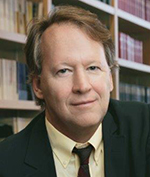
Catherine Oldenburg, ScD, MPH

Assistant Professor


Infectious Disease and Strategies for Trachoma Elimination

Dr. Oldenburg, Assistant Professor of Ophthalmology and Epidemiology & Biostatistics, is an infectious disease epidemiologist who uses randomized controlled trial designs to evaluate antibiotic-based interventions to prevent childhood morbidity and mortality in sub-Saharan Africa. Her expertise includes infectious disease epidemiology, causal inference, and global health. Current projects include evaluation of core-group based targeting strategies for trachoma elimination in Ethiopia and administration of azithromycin to young infants and neonates for the prevention of child mortality in Burkina Faso. Dr. Oldenburg serves as a mentor on the Resident Research Committee in the Department of Ophthalmology (approximately ten resident projects per year). She also serves as a research mentor for epidemiology graduate students, medical students, and undergraduate students interested in clinical research and public health. Dr. Oldenburg may be identified as Mentor for those Scholars interested in RCT design, infectious disease epidemiology, and global health.


To Learn More:

https://profiles.ucsf.edu/cate.oldenburg


Research Areas:

Cornea, Infectious Diseases, Trachoma
 
Learn more about UCSF Ophthalmology faculty research.
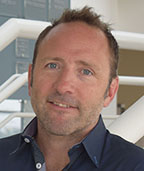
Jeremy Keenan, MD, MPH

Professor


Reducing the Global Burden of Blindness

Dr. Keenan, H. Bruce Ostler Professor of Ophthalmology and the Director of International Programs at the Proctor Foundation, is an epidemiologist and ophthalmologist with clinical specialties of cornea and uveitis. His research focuses on strategies to reduce the global burden of blindness, with an emphasis on developing countries. Dr. Keenan is currently the PI of two UG1 grants from the NEI: SWIFT (Sanitation, Water, and Instruction in Face-washing for Trachoma), a cluster-randomized trial that seeks to determine whether improvements in water, sanitation, and hygiene are effective for infectious trachoma in Africa, and VIEW II (Village-integrated Eye Worker Trial II), a cluster-randomized trial that seeks to determine the effectiveness of community-based screening for glaucoma, diabetic retinopathy, and macular degeneration in Nepal. Dr. Keenan is also a co-investigator on several trials funded by the Gates Foundation to determine the effectiveness of mass azithromycin distributions for childhood mortality. In addition, he has strong ties to Aravind Eye Hospital in South India, where he is conducting a pilot trial comparing different treatments for acanthamoeba keratitis, and with Chiang Mai University in Thailand, where he has performed diagnostic accuracy studies for cytomegalovirus retinitis, glaucoma, and diabetic retinopathy.


To Learn More:

https://profiles.ucsf.edu/jeremy.keenan


Research Areas:

Cornea, Infectious Diseases, Trachoma
 
Learn more about UCSF Ophthalmology faculty research.