
Research Spotlight: Advancing Glaucoma Care with Ying Han
Q: What first drew you to medicine, and eventually to ophthalmology and glaucoma research?
Medicine was always part of my life. My grandfather was a family physician, and that example created a strong tradition in our family. From an early age, I saw medicine as one of the most meaningful ways to help people. It’s a field where you can directly improve and even save lives.
When I chose a specialty, ophthalmology stood out because it offers a unique balance between clinical care and surgery. It also allows physicians to care for patients across the entire lifespan. In my clinic, I see children and older adults, sometimes following patients for many years as they grow and age. That long-term relationship with patients is incredibly rewarding.
Glaucoma, in particular, is fascinating because it combines clinical care, surgery, and research. There is tremendous opportunity to translate scientific discoveries into better treatments for patients.
Q: From your perspective, what are some of the biggest shifts happening in glaucoma research and care right now?
We’re currently in a very exciting period for glaucoma research and treatment.
One major shift is in how we think about preventing certain types of glaucoma. For example, emerging research suggests that earlier cataract surgery for patients with primary angle-closure glaucoma may help prevent the progression of the disease, which is responsible for a large proportion of blindness worldwide. That’s a significant change in how we think about managing risk.
At the same time, treatment options for open-angle glaucoma have expanded dramatically. In the past, we had a limited number of therapies. Now we have multiple minimally invasive glaucoma procedures and new laser approaches that allow us to control eye pressure while minimizing complications.
Overall, glaucoma is a great example of how research can move discoveries from the laboratory to patient care relatively quickly.
Q: What areas of glaucoma research are most exciting to you right now?
My research focuses largely on clinical studies aimed at improving both surgical outcomes and patient care.
One major project is a randomized clinical trial studying the best location for placing a drainage tube during glaucoma surgery. The tube helps lower eye pressure by draining fluid from the eye. Our study is examining how different placement strategies affect surrounding eye structures and long-term outcomes. We’re also conducting genomic analyses to better understand the biological responses that occur after surgery.
Another area of work focuses on improving how glaucoma care is delivered. For example, we recently published research showing that when optometrists trained in glaucoma care manage stable patients, ophthalmologists can focus on patients who need surgery or urgent treatment. This team-based approach can improve access to care.
We’re also studying how often patients truly need follow-up visits. Historically, follow-up intervals were largely based on expert opinion. We need robust data to determine the optimal follow-up intervals for glaucoma patients. Gaining this understanding could enhance care quality while improving patient access.
Q: How are emerging technologies like artificial intelligence shaping glaucoma research?
Artificial intelligence has enormous potential in glaucoma diagnosis and management.
Our team has been working on AI tools that can identify patients with narrow-angle anatomy, a type of glaucoma that can lead to sudden increases in eye pressure and rapid vision loss. AI could help screen patients earlier and identify those who are at the highest risk of developing serious disease.
More broadly, AI may help improve the accuracy and efficiency of glaucoma diagnosis and monitoring. There are also groups exploring how AI could assist with surgical planning and other aspects of care.
Q: You’re also studying virtual and remote testing for glaucoma. How could that change patient care?
A key test for glaucoma is the visual field exam, which measures a patient’s peripheral vision. Traditionally, this test is performed in a clinic using specialized equipment.
We’re studying new approaches that could allow patients to complete visual field testing outside the clinic. For example, some systems allow patients to perform tests online, while others use virtual-reality headsets to measure vision.
Our research is comparing these different approaches to determine which are most accurate and practical. If successful, these technologies could allow patients to monitor their disease from home or in a clinic waiting room, improving convenience and expanding access to care.
Q: Why is risk stratification so important in glaucoma care?
Glaucoma is the leading cause of irreversible blindness worldwide, but it usually progresses slowly.
In fact, with appropriate care, about 75 percent of patients experience relatively stable disease or slow progression, while only a smaller group of patients experiences rapid deterioration.
That means it’s critical to identify the patients who are at the highest risk. If we can determine which patients are likely to progress quickly, we can monitor them more closely and intervene earlier. At the same time, stable patients may not need such intensive follow-up.
Better risk stratification helps ensure that patients receive the right level of care at the right time.
Q: What do you hope clinicians and researchers take away from your work?
First, I think this is an incredibly exciting time for glaucoma research. We have a real opportunity to prevent vision loss for many patients with the tools we have today, including new surgical approaches, to advanced imaging, and data analysis.
Second, I believe improving care delivery is just as important as developing new treatments. Team-based care models, smarter follow-up strategies, and better use of technology can all help ensure that patients receive timely and effective care.
Q: What makes UCSF uniquely positioned to lead in glaucoma research?
At UCSF, we benefit from a strong culture of collaboration across clinical specialties and research disciplines.
Our glaucoma team works closely with colleagues in retina, cornea, and uveitis, as well as with basic science researchers across the university. This environment allows us to study complex eye diseases from multiple perspectives.
We also treat a large number of complex cases, which provides important opportunities to identify new research questions and test innovative solutions.
Q: Looking ahead five years, where do you see UCSF leading nationally in glaucoma research?
Clinical trials will remain one of our greatest strengths. Through collaborations with groups like the Proctor Foundation, we are well positioned to conduct rigorous studies that answer critical clinical questions. These trials can directly influence how glaucoma is treated worldwide.
At the same time, UCSF has a strong basic science community that is exploring new approaches such as neuroprotection and nerve regeneration. Advances in these areas could eventually help preserve or even restore vision in patients with glaucoma.
Together, these efforts give us a real opportunity to shape the future of glaucoma care.
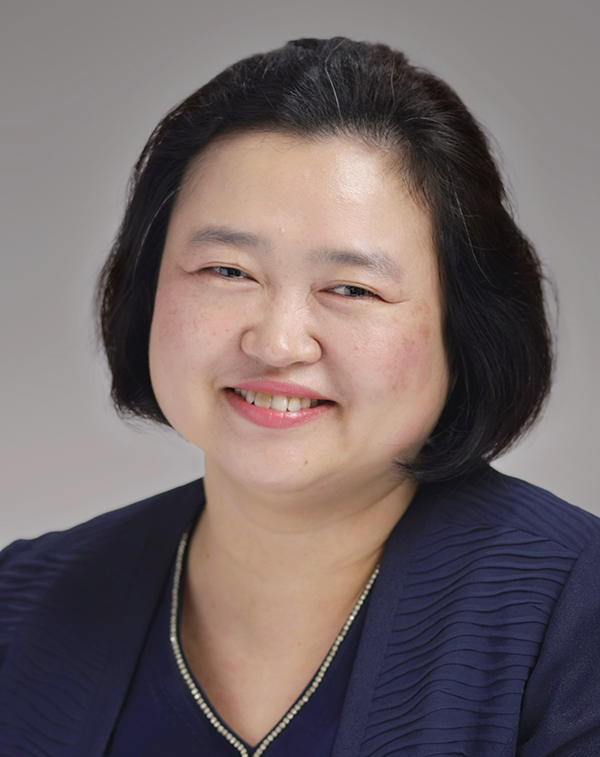
Image caption: Dr. Ying Han is a glaucoma specialist, surgeon, and researcher who aims to improve care through earlier diagnosis, better treatment, and stronger long-term support for patients at risk of vision loss.