ACTION Against COVID-19

Orange badge with a virus symbol and text 'Responding to COVID-19'.

Clinical Study of Azithromycin

Premier research teams worldwide are racing to halt the devastation of this novel coronavirus. The Francis I. Proctor Foundation for Research in Ophthalmology quickly joined the fight, using its 20 years of experience with the antibiotic azithromycin to search for solutions.

Two decades ago, That Man May See helped to launch the Proctor Foundation’s research to eliminate the blinding disease trachoma in Ethiopia. The seed-funded pilot study examined the impact of azithromycin on infants and young children. Findings proved that the antibiotic drastically reduced prevalence of the eye disease and saved children’s lives.


Leaping into Action

Now, Catie Oldenburg, ScD, MPH, and Thuy Doan, MD, PhD, lead a clinical trial for COVID-19. They have leveraged Proctor Foundation’s deep azithromycin expertise to swiftly initiate a well-designed, nationwide, randomized clinical trial, with support from the Bill & Melinda Gates Foundation. Planning for such rigorous studies often takes months and even years, but the team is already enrolling patients, following a markedly compressed planning period.

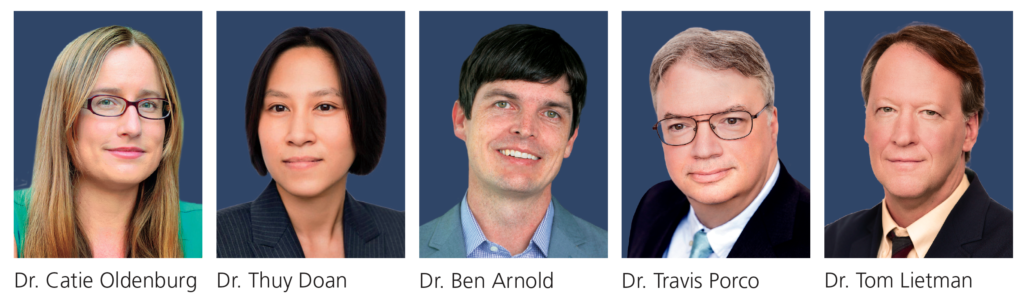
The clinical trial is called Azithromycin for COVID-19 Treatment in Outpatients Nationwide (ACTION). The research team, which also includes Ben Arnold, PhD; Travis Porco, PhD; and Tom Lietman, MD; hopes to recruit at least 2,300 patients by the end of the year.

The trial will help researchers understand the potential effect of a single dose of the antibiotic in halting progression of COVID-19 in patients who are not hospitalized. Azithromycin is an antibiotic used to treat many common bacterial infections, and it may have antiviral and anti-inflammatory properties.

The Proctor team collaborates with the Stanford Clinical Virology Lab to recruit newly diagnosed COVID-19 patients. This lab has been performing a high volume of California tests for the virus, known as SARS-CoV-2. COVID-19 patients nationwide are encouraged to participate, and more virology labs will be recruited as well.


Inside the Trial

Each participating patient will be sent a single dose of the azithromycin or a look-alike placebo. Because the study is conducted completely via mail and email, patients with proof of a positive SARS-CoV-2 test can enroll from anywhere in the United States within seven days of their positive test result. Participants will then complete five short online questionnaires over the subsequent three weeks.  In addition, Dr. Doan and her lab team will analyze biosamples taken at home by interested participants. Their analysis will provide insight into the precise effects of the azithromycin.


Changing Science, Changing World

In the face of this pandemic, the Proctor team is experiencing synergy like never before.

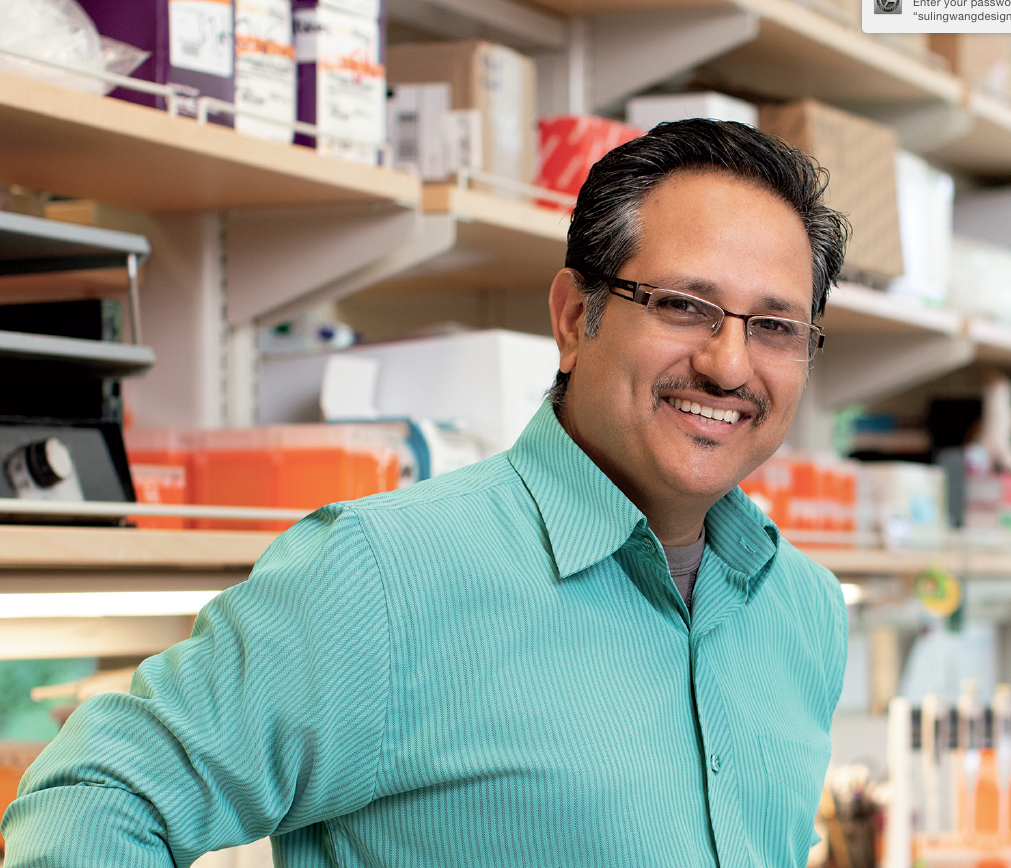
“There’s a level of cooperation across disciplines that was unusual before,” says Dr. Oldenburg. “I feel that the way researchers are working together during the pandemic is going to change how we do science forever.”

Evidence generated by the ACTION trial will serve as a blueprint for future trials. “We don’t think this is the last coronavirus epidemic that we’re going to see,” says Dr. Oldenburg. “What we learn now will allow us to jumpstart effective research practices during future epidemics.”

Dr. Oldenburg stresses the importance of patients stepping forward to participate in gold-standard clinical trials like this one. “To understand and properly evaluate drug treatments,” she says, “the best thing we can do is to conduct and volunteer to take part in randomized controlled trials.”

Five headshots of medical professionals on a blue background.


Join the Trial

If you or someone you know tests positive for COVID-19, please consider enrolling in the ACTION study within three days of diagnosis. Learn more: Website: proctor.ucsf.edu/action-trial
Email: Actiontrial@ucsf.edu
Phone: 415.326.3761

Ophthalmology Department’s Max Nachury, PhD, Receives ARVO’s 2020 Cogan Award

The laboratory research of UCSF Ophthalmology’s Maxence Nachury, PhD, promises to bring great insight to an understanding of photoreceptor degeneration and potential treatment strategies.

The Association for Research in Vision and Ophthalmology (ARVO) has named Dr. Nachury as recipient of its 2020 Cogan Award.

Dr. Nachury studies the primary cilium, a surface-exposed organelle required for vision, olfaction, and developmental signaling. He has published widely in Cell, Science, PNAS, Nature Genetics, Nature Materials and Nature Cell Biology.

The Cogan Award recognizes a “young researcher 45 years of age or younger at the time of application deadline, and who has made important and worthwhile contributions to research in ophthalmology or visual science that are directly related to disorders of the human eye or visual system, and who show substantial promise for future contributions.”

Dr. Nachury’s research is currently funded by the Wayne and Gladys Valley Foundation, Research to Prevent Blindness, That Man May See, National Institute of Health/National Institute of General Medical Sciences, National Institute of Health/National Eye Institute, and the American Diabetes Association.

Halting Retinal Sight Loss

Patients with glaucoma and retinal degenerations need better solutions. Researchers deploy advanced tools to find novel ways to save their sight.


Protecting Vulnerable Cells

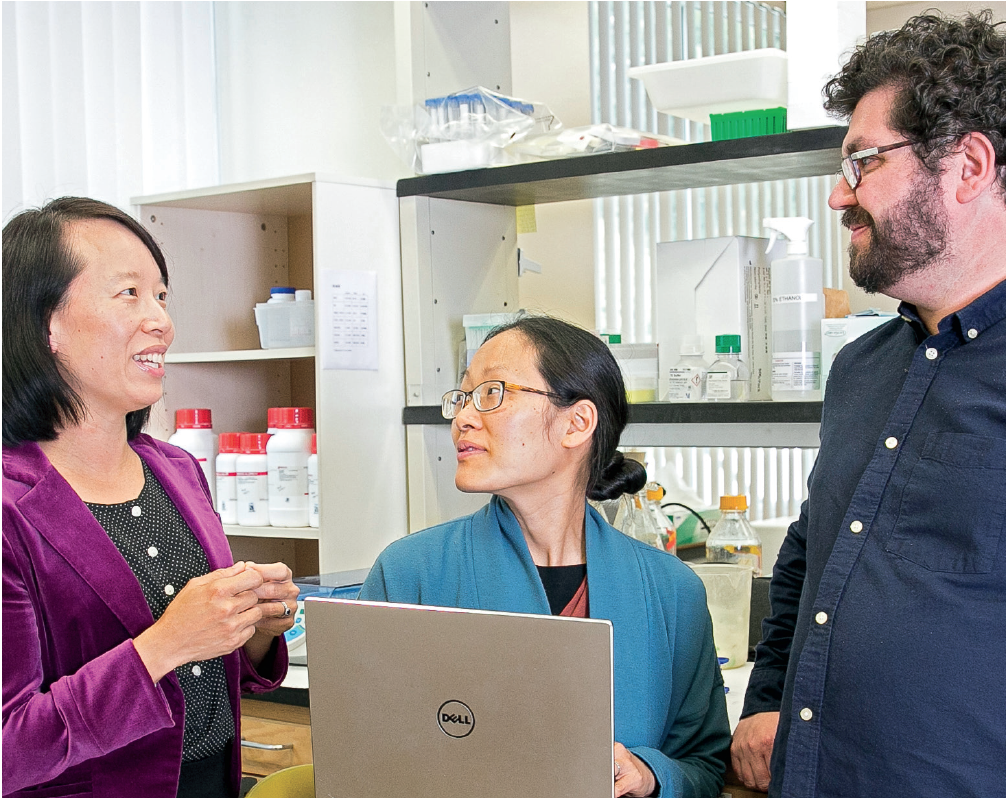
Photo caption above: To halt glaucoma, Dr. Ou, Dr. Dunn, and Dr. Della Santina investigate novel avenues for preventing damage to retinal nerve cells.

Christie Hastings knows firsthand that glaucoma steals sight. By the time she noticed blurring in her visual field, her sight was irreversibly compromised. Innovative avenues that identify glaucoma earlier and treat it more effectively promise to transform outcomes for patients like Christie.

“Patients need more effective strategies,” says glaucoma specialist Yvonne Ou, MD. To advance novel paradigms to halt the disease, Dr. Ou collaborates with two coinvestigators: physiologist Felice Dunn, PhD, and neuroscientist Luca Della Santina, PhD.

The team uses molecular, anatomical, electrophysiological, and modeling techniques to understand how increased eye pressure, common in glaucoma, affects potentially weaker retinal nerve cells and their neighbors. They also explore how retinal circuits mend themselves and continue functioning even when some cells are damaged.

“Learning how to protect the retinal nerve cells most vulnerable to damage is key to stopping glaucoma,” says Dr. Dunn. “We’re excited to pursue this promising direction.”


Altering Genes to Save Sight

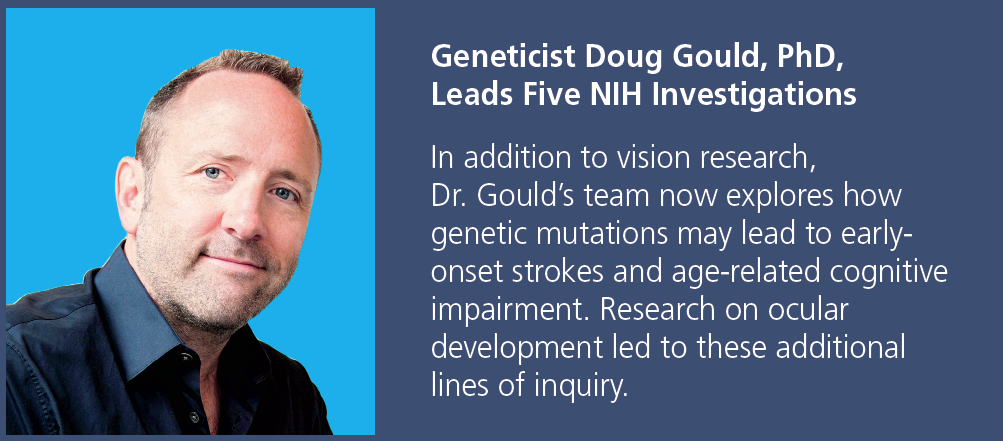
Retinitis pigmentosa is a major interest for geneticist Douglas Gould, PhD. Dr. Gould and his team explore how “quality control” mechanisms inside retinal cells try to fix or dispose of mutated proteins.

Headshot of Doug Gould, PhD, with a blue background.

Lorie Hirson is losing her sight to retinitis pigmentosa, but she is hopeful that future generations will be spared. “Vision scientists are getting closer to answers that will change our lives,” she says. “We’re proud to support their research.”

Microscopic cross-section of a biological sample.
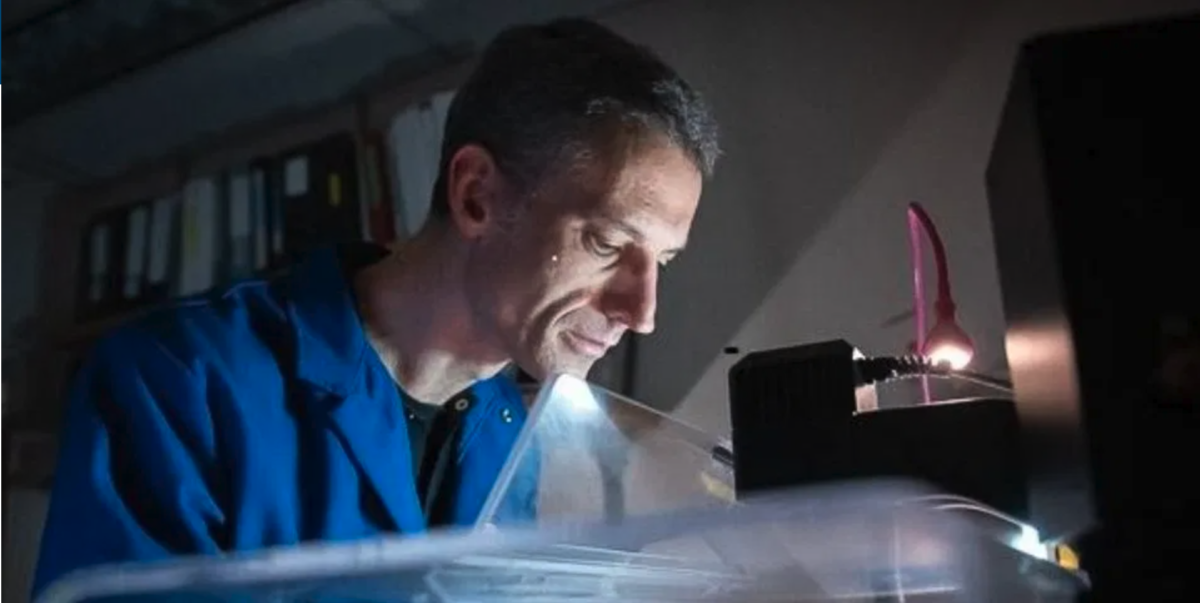
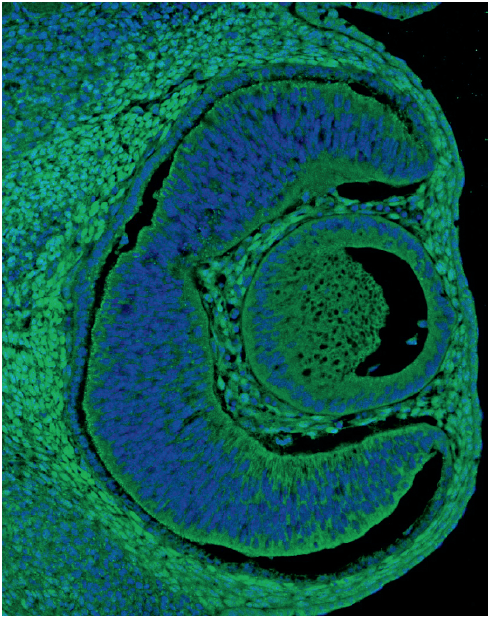
Dr. Gould’s team of geneticists explores whether faulty formation of the front of the eye can cause glaucoma. This image shows the anterior segment during development.

In this inherited disease, mutations in a particular protein cause the light-sensitive retinal cells to die off. Dr. Gould’s team will test whether altering this cellular process can preserve vision. If so, treatments to alter this process could potentially preserve sight for patients like Lorie.


Prenatal Signs of Glaucoma

Children as young as six months can get glaucoma and its companion, high intraocular pressure. Genetic mutations that lead to the formation of defective ocular cells and tissues in the front of the eye may lead to glaucoma in infancy or later in life.

Dr. Gould uses advanced imaging and molecular techniques to investigate how the front of the eye develops. “By understanding genes that contribute to structural defects, we will open new doors to glaucoma prevention and treatment,” says Dr. Gould.


Research support provided by the National Institutes of Health, Research to Prevent Blindness, and friends of That Man May See.

Restore the Retina, Restore Sight

Retinal transplantation will one day allow ophthalmologists to restore sight. To accelerate development of regenerative treatments for blindness, the National Eye Institute has provided funds to five multidisplinary teams nationwide.


Retinal specialist Jacque Duncan, MD, leads UCSF research for the initiative, joined by neurobiologist and bio-engineer Deepak Lamba, MD, PhD, and leading scientists at the University of Wisconsin.

To better understand cellular behavior before, during, and after experimental retinal transplantations, Dr. Lamba’s team will use stem cells to develop retinal tissue with many, many cone cells. These are the light-sensitive cells that allow humans to recognize faces and see fine detail in daytime.

“Dr. Duncan’s expertise in patient care, disease progression, and advanced imaging techniques will guide us to look for cellular changes that she has previously recorded from her patients’ retinal cells,” says Dr. Lamba.

The team’s findings will move successful retinal cell transplantations closer to a transformative reality.


Photo caption: Dr. Lamba’s team collaborates with clinical researcher Dr. Duncan to advance transplantation of laboratory-grown retinal cells to restore sight.

Celebrating Research to Prevent Blindness

Research to Prevent Blindness (RPB) is celebrating 30 years of its highly impactful Career Development Awards, which jump-start research early in the careers of outstanding scientists.


Sixteen UCSF vision scientists have received Career Development Awards over the years, advancing new knowledge, insights, and solutions — building blocks in the future of vision. UCSF vision research continues to benefit from these and other RPB awards, including three this year.


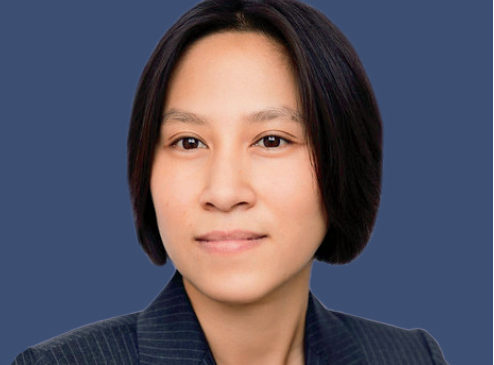
Portrait of a woman in a dark suit with short hair against a blue background.Nurturing Novel Approaches

Thuy Doan, MD, PhD, applied her 2016 RPB Career Development Award to help launch pioneering genomic studies of the ocular micro-environment (biome) in search of pathogens underlying uveitis inflammations.

Dr. Doan’s international work at the Proctor Foundation involves investigation of the intestinal microbiome for an antibiotics study of 190,000 children in sub-Saharan Africa. Dr. Doan is lead author of a new Proctor publication in Nature Medicine,* which posits that reductions in two diarrhea-related bacteria may be a factor in higher child survival rates.

“Those of us who study… child survival in sub-Saharan Africa haven’t seen well-done trials showing such a striking mortality benefit in a really long time, so it’s very exciting,” says Patricia Pavlinac, MD, a University of Washington epidemiologist.


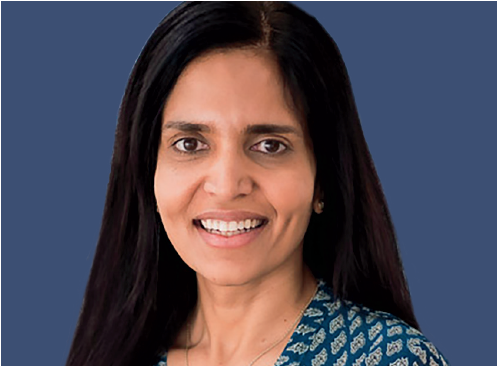
A woman smiling with long dark hair in a patterned blue blouse.

Preventing AMD

Retinal cell biologist Aparna Lakkaraju, PhD, won RPB’s 2019 Catalyst Award for Innovative Approaches to Age-Related Macular Degeneration (AMD). Her team uses innovative microscopy, genome editing, and stem cell technologies to pinpoint genetic and cellular mechanisms responsible for initiating AMD, and identify promising therapies to target the earliest disease stages to preserve central vision. The research builds on earlier successes made possible by her Career Development Award in 2010.


Understanding Epidemics

RPB collaborates with the American Academy of Ophthalmology to grant awards for big data research. Michael Deiner, PhD; Thomas Lietman, MD; and Travis Porco, PhD, won this 2019 award to use the exceptional IRIS Registry to study infectious eye epidemics in the United States.


Strategic Flexibility

The Department of Ophthalmology was awarded an RPB unrestricted grant this year as well. The five-year grant extends decades of institutional support from the foundation. “We’re extremely grateful,” says Department Chair Stephen D. McLeod, MD. “These awards allow us to build high potential research from the ground up.”


*T Doan, A Hinterwirth, L Worden, AM Arzika, R Maliki, A Abdou, S Kane, L Zhong, SL Cummings, S Sakar, C Chen, C Cook, E Lebas, ED Chow, I Nachamkin, TC Porco, JD Keenan, TM Lietman. “Gut microbiome alteration in MORDOR I: a community randomized trial of mass azithromycin distribution.” Nature Medicine. 2019 Aug 12.