UCSF Ophthalmology Residency Research Curriculum

OVERVIEW

The UCSF Ophthalmology research curriculum is designed to give residents the epidemiological and biostatistical tools that they need to become productive members of the research community. Over the year-long course, residents will receive instruction in study design, parametric and non-parametric statistical methodology, and data presentation. In addition, residents will receive instruction in R programming. These lectures are incorporated into the instructional curriculum for the UCSF Ophthalmology Residency program, and occur on Thursday of every week during the academic year, which runs from September to June.

The capstone project of the curriculum is the performing a clinical, translational or basic science resident research project. Residents will progress from project conception to design to completion with the help from a faculty mentor. These projects are presented as part of the annual Alexander Irvine Resident’s Day each May.

SCHEDULE

July

Residents meet with potential mentors, determine area of interest

Research Workshop Day – an all-day lecture series on the basics of study design and introduction to statistics.

August

Residents develop research proposals

Meet with faculty epidemiologist, Dr. Ben Arnold

Residents present project proposals to a panel of faculty and the department chairperson.

September to December

​Epidemiology lecture series (see resident lecture schedule)

​R programming modules (see resident lecture schedule for assignments)

​Perform research projects

December

​Mid-year project review with Dr. Arnold and Dr. Schallhorn

January to April

Epidemiology lecture series

​R programming modules

Perform research projects

May

​Alexander Irvine Residents Day

READINGS​

Residents are required to read the Lancet epidemiology series, available on the UCSF Ophthalmology Residency Box site.

Residents conducting clinical trials are required to read Designing Clinical Research by Stephen B. Hulley, MD, MPH et al. Wolters Kluwer. 4th Edition. 2013. UCSF library call number: R853.C55 D47

FACULTY MENTOR​

The resident research curriculum is overseen by Dr. Julie Schallhorn, Associate Residency Program Director. Dr. Benjamin Arnold provides epidemiology mentorship. All residents are asked to select an additional faculty member who is specialized in their area of research interest
Advancing through Mentorship

Just Getting Started: $2.5 Million for Mentorships

UCSF Ophthalmology’s outstanding vision and clinician scientists have a tremendous track record of developing leading-edge research programs that attract hypercompetitive grants from the National Institutes of Health (NIH). This sustained funding enables new discoveries

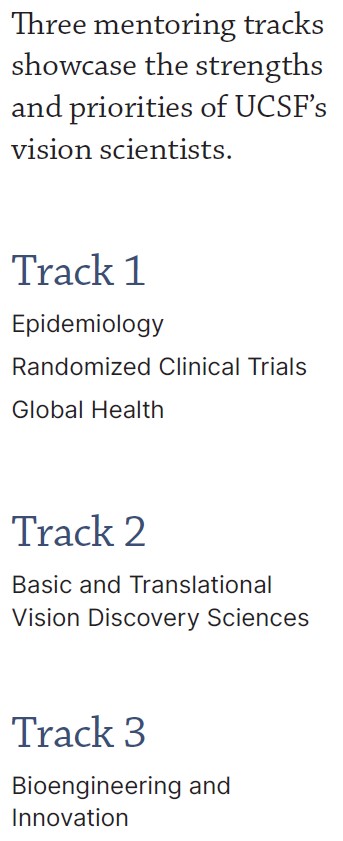
Three mentoring tracks showcase the strengths and priorities of UCSF’s vision scientists.The UCSF-Proctor Clinician Vision Scholars K12 Program is a $2.5 million, five-year grant from the National Eye Institute (NEI), one of 27 institutes and centers that comprise the US National Institutes of Health. This grant provides institutional funding to train as many as ten young faculty members to achieve this same level of success. Co-led by Yvonne Ou, MD, and Tom Lietman, MD – both NEI grant awardees – the program builds on existing strengths and collaborations in clinical and translational sciences, bioengineering, and career development in the UCSF Proctor Foundation and Department of Ophthalmology.
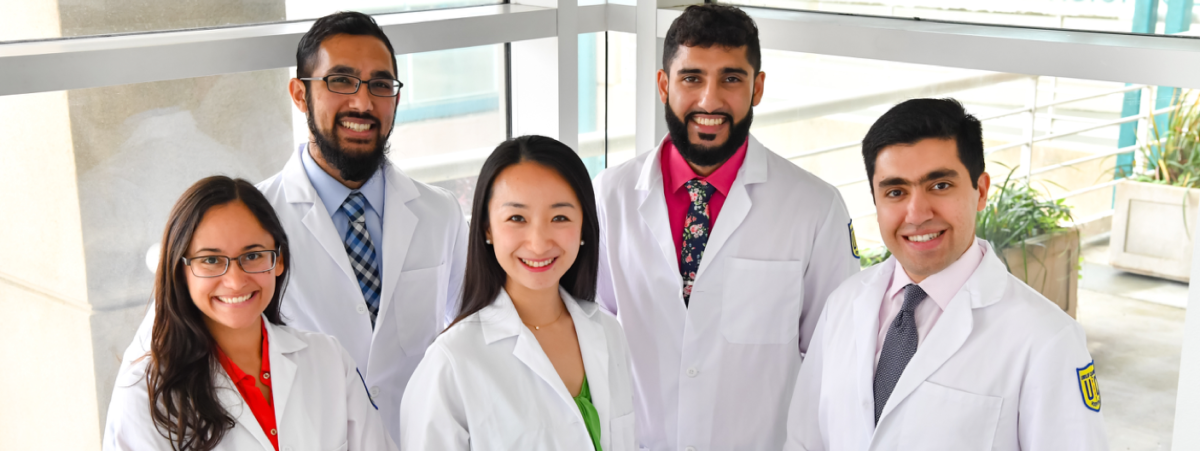
New patient-serving faculty members with a passion for research can undertake a one-year intensive mentorship, each supported by a primary mentor and a faculty advisory committee. Immersion in rigorous state-of-the-art vision research is supplemented with guidance for crafting important and novel questions while developing techniques to answer them, aspects of leadership, the value of multidisciplinary and collaborative approaches, and writing effective grant proposals.

This mentorship opportunity makes UCSF Ophthalmology an even more attractive place for top clinical research candidates to launch their faculty careers. As younger vision scientists develop and take charge of significant new research programs, the future of vision grows brighter – at UCSF and around the world.


Reducing Sight Loss from Diabetes

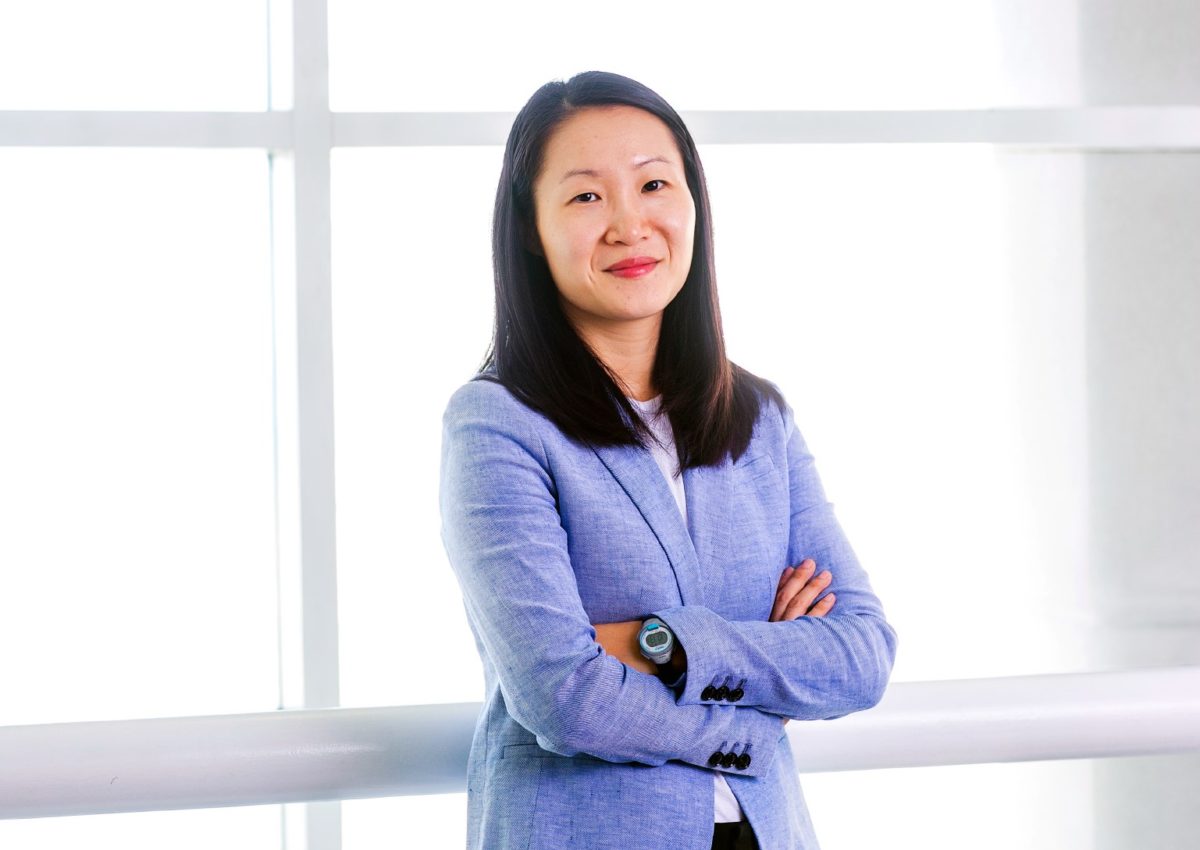
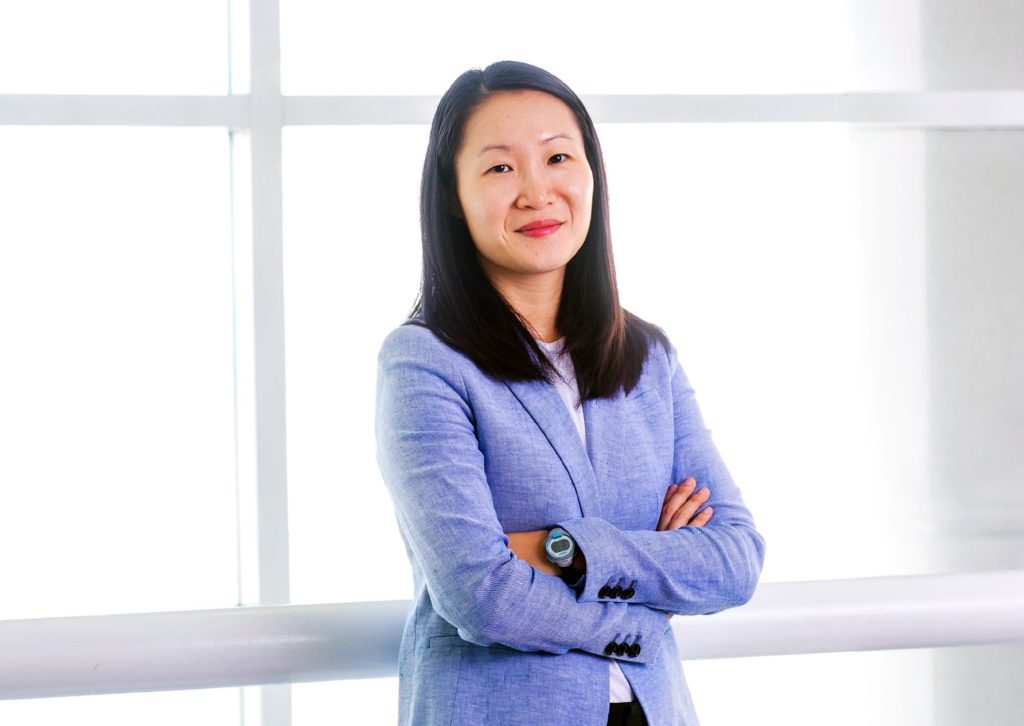
Cathy Sun, MD, the first scholar to benefit from an NEI K12 mentorship, has been awarded an NIH grant for independent research of diabetic retinopathy.

A woman smiling with arms crossed in a bright office.
Cathy Sun, MD, investigates diabetic retinopathy.

Joining UCSF Ophthalmology’s faculty in 2019, Dr. Sun’s grant will allow her to investigate the rising global health threat of Type 2 diabetes, where blurred vision is often the first noticeable symptom. Advanced diabetic eye disease, called proliferative diabetic retinopathy, can result in permanent sight loss.

Dr. Sun and her team develop and test novel methods and tools for analyzing large databases of de-identified electronic health care records of patients treated for this condition. The team’s findings and insights can be used to adjust treatment protocols, halting the disorder before it advances and reducing sight loss. They expect to improve strategies for electronic records investigations that can be used to improve outcomes for other damaging eye conditions as well.

Dr. Sun earned her medical degree and completed a residency in ophthalmology at UCSF. She completed a fellowship in glaucoma at Bascom Palmer Eye Institute and received a merit award fellowship from the prestigious Heed Ophthalmic Foundation.

Learn more about teaching and mentorship of our residency program and post-residency fellowships.

We hope you will enjoy this video presentation about what makes our residency and post-resident fellowship programs great! You can learn much more about these teaching programs and how to apply by going to our residency home page and our fellowships home page.


Video: Bryn Mawr Communications

Serving the City’s Homeless

A volunteer-run clinic helps shelter residents keep their sight.

”Whether crossing the street or trying to avoid trouble, poor vision intensifies the vulnerability of an already vulnerable population,” says ophthalmology resident Lauren Hennein, MD. When Dr. Hennein floated the idea for a shelter-based vision clinic two years ago, Alejandra de Alba Campomanes, MD, MPH, became an enthusiastic faculty sponsor. Dr. Hennein and medical student Ogonna Nnamani dug in to make it happen.

Training to Care

With The California Endowment’s $20,000 equipment gift to That Man May See, the monthly clinic opened in fall 2017. It joins other UCSF services at Division Circle Navigational Center, a shelter run by the St. Vincent de Paul Society in San Francisco’s South of Market area.

The clinic has no paid staff. A handful of medical and premedical students are led by Dr. Hennein and Mrs. Nnamani. Volunteers provide care under the supervision of ophthalmology residents, fellows, and faculty. Project Homeless Connect pays to have glasses made. Students learn to do intake, collect histories, perform comprehensive exams, coach patients on their conditions, and document next steps.

Dr. de Alba is thrilled. “Providing care at the shelter allows us to serve those in the most unstable circumstances,” she says. “Aspiring doctors are learning the value of community service as well as patient care and the tools of ophthalmology.”

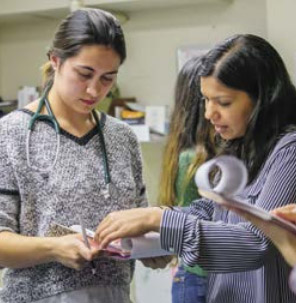
Sarah Menchaca, Dr. Neeti Parikh
Volunteer Sarah Menchaca learns from attending faculty ophthalmologist Dr. Neeti Parikh

Connecting to County

The clinic is a bridge to sight-saving treatments at Zuckerberg San Francisco General Hospital and Trauma Center. Jay Stewart, MD, chief of ophthalmology there, saves appointments for patients referred from the shelter.

“Those already experiencing sight loss are the most motivated to follow up,” says Dr. Stewart. “We want to make it easy.”

Momentum and Hope

“Even though we want to serve more people, our first goal is to make the clinic sustainable,” says Dr. Hennein. “Eventually, we’d like to open our doors twice each month.” Right now, leaders hope to acquire a portable slit lamp to provide more comprehensive services.

Volunteering at the clinic is extremely popular. “It is inspiring to see young students’ eagerness to learn and their enthusiastic commitment to help in such a respectful, compassionate way,” says Dr. de Alba. “It gives me so much hope.”

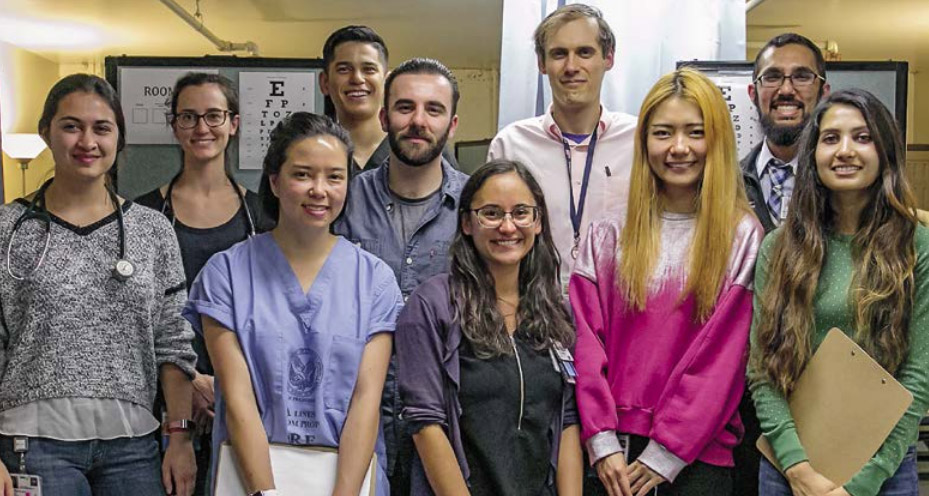
Shelter Clinic Volunteers pictured above:
Back row, from left: Ana Marija Sola, Joseph Atangan, Ermin Dzihic, Charlie Kersten, Dr. Murtaza Saifee. Front row, from left: Sarah Menchaca, Kiki Spaulding, Dr. Lauren Hennein, Tianyi Zhang, Heer Purewal

Thanks to The California Endowment, That Man May See, and Akorn Pharmaceuticals for donations; additional faculty sponsors Drs. Stewart and McLeod; premedical student clinic director Kiki Spaulding, Project Homeless Connect’s Alison Van Nort, MSW, and faculty and student volunteers.

Improving Vision Care in China

UCSF ophthalmologists are improving quality of care for vision patients by teaching and consulting at vision clinics across China.

It isn’t every day that ophthalmologists see their names dancing across a Jumbotron. This bold welcome met two UCSF clinician scientists last fall at the equivalent of a county hospital in Changchun, China. Vitreoretinal specialist Jay Stewart, MD, and oculofacial plastics specialist M. Reza Vagefi, MD, were the honored guests at a three-day teaching event.

Advancing Training, Care, and Understanding

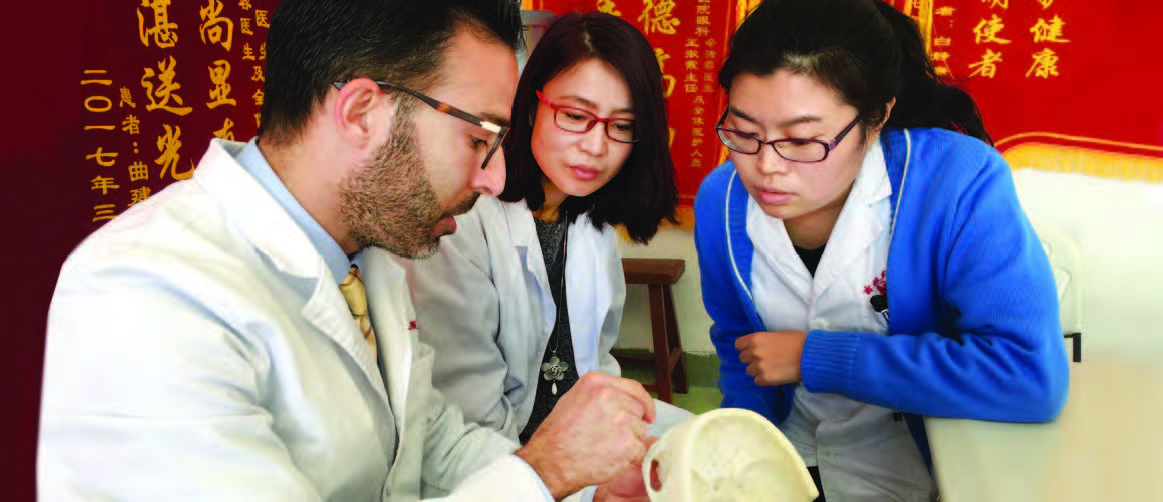
Drs. Stewart and Vagefi spent one day consulting on how to help patients with complex vision disorders, and another day in surgery, teaching advanced methods. “I was able to share a method for approaching the orbit that avoids leaving a scar on the skin,” says Dr. Vagefi. A third day was devoted to theory and clinical application.

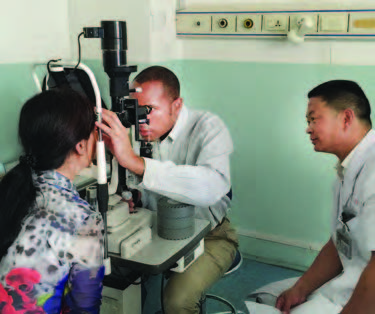
An eye doctor examining a patient's eyes with an ophthalmic device.
Dr. McLeod offers expertise on a difficult case.

“This was our second trip,” says Dr. Vagefi, “and each has offered a unique learning experience. In China, patients are in charge of their own medical charts and carry them from doctor to doctor. For the most part, only senior ophthalmologists perform eye surgeries.”

“After our first visit, we recommended a video system be installed in the operating room as a teaching tool,” adds Dr. Stewart. “This will help advance the skills of younger ophthalmologists.”


Initiative to Improve Quality

These trips are part of a larger initiative to lift the quality of care for Chinese vision patients. In China, ophthalmologists often lack access to training on par with the best available in the United States and Europe, with only a handful of outstanding vision centers providing comprehensive training.

Organized by the nonprofit Lifeline Express, Western specialists help fill gaps in professional knowledge at interested hospitals and clinics and recommend improvements. Pediatric specialist Creig Hoyt, MD, was the first UCSF ophthalmologist to participate in the program, and he soon interested others.

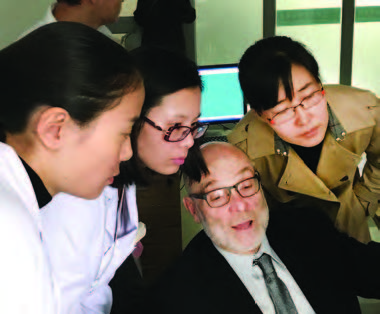
A group of four people closely observing a screen together.
Chinese ophthalmologists consult with Dr. Hoyt.

This year Dr. Hoyt will teach at a clinic on the Tibetan plateau. Glaucoma specialist Ying Han, MD, pediatric ophthalmologist Alexandra de Alba Campomanes, MD, and Stephen D. McLeod, MD (cornea, external disease, and refractive surgery), have also led professional development missions.


Inspiring Deeper Learning

“The impact of this work continues to unfold,” says Dr. Vagefi. “After our first visit, a junior ophthalmologist traveled to Shanghai, inspired to seek additional training in orbital surgery.”

These UCSF ambassadors are establishing ties to vision institutions across China and offering invitations for ophthalmologists to apprentice as international fellows at UCSF. This year Drs. de Alba and Hoyt will host visiting Chinese scholars whom they met while working for Lifeline Express.