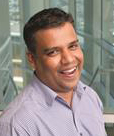
Kayarat Nair, PhD

Assistant Professor


Mechanisms of Glaucoma and Ocular Growth

The Nair lab studies the genetics and biology of ocular diseases with a primary focus on glaucoma and relevant phenotypes. Glaucoma is a heterogeneous group of diseases characterized by death of retinal ganglion cells, specific visual field deficits, and optic nerve degeneration. It is a leading cause of blindness worldwide and affects over 70 million people. The genes and molecular mechanisms contributing to glaucoma are poorly understood. Our goal is to identify genes, molecular mechanisms and cellular networks contributing to glaucoma. Individuals with refractive errors (both myopia or hyperopia) are at a higher risk of developing glaucoma. Another focus of the lab is to understand the role of refractive error in the pathogenesis of glaucoma. Our laboratory employs a variety of multi-disciplinary approaches to dissect the role of complex disease associated genes at a mechanistic level. We have established important mouse models that recapitulate features of the human disease. They provide us the platform to discover new genes/pathways, elucidate the molecular mechanisms, contributing to glaucoma as well as to test hypothesis and new treatment ideas. In parallel, we employ tools of human genetics as a path towards the identification of disease genes.


To Learn More:

https://profiles.ucsf.edu/kayarat.nair
https://ophthalmology.ucsf.edu/nairlab/


Research Areas:

Glaucoma, Gene Research, Visual System Development
 
Learn more about UCSF Ophthalmology faculty research.
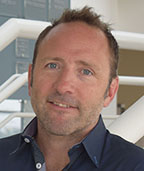
Douglas Gould, PhD

Professor


Studying the biological functions of the extracellular matrix and its role in human disease

Our broad mission is to understand the biological functions of a specialized extracellular matrix structure called the Basement Membrane.

Our primary focus is a multi-system disorder that is caused by mutations in the genes encoding type IV collagen alpha 1 (COL4A1) and COL4A2.

Our goal is to understand the tissue-specific molecular mechanisms that underlie this syndrome and develop mechanism-based therapies that can prevent, reduce or delay disease in patients.

The Gould lab uses translational genetics to study the role that extracellular matrix proteins play in a multisystem connective tissue disorder caused by mutations in type IV collagens. Individuals with mutations in type IV collagen alpha 1 (COL4A1) or alpha 2 (COL4A2) often have a complex syndrome presenting with cerebrovascular, ocular, renal and muscular manifestations. Approximately one-third of these individuals have developmental defects of the eye leading to impaired vision or early onset glaucoma. The Gould lab uses genetic models to understand the molecular mechanisms underlying pathology in each organ that might represent therapeutic targets to prevent, reduce, or delay disease. Dr. Gould is the Director and Vice Chair for research and is dedicated trainee advocate and mentor with a commitment to inclusivity. The Gould lab provides research opportunities for Scholars interested in state-of-the-art genetic approaches, extracellular matrix biology, cell biology, physiology, biochemistry and advanced imaging.


To Learn More:

https://profiles.ucsf.edu/douglas.gould


Research Areas:

Glaucoma, Retina or Retinal Diseases, Gene Research
 
 
Learn more about UCSF Ophthalmology faculty research.
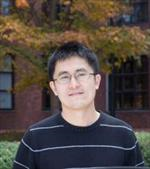
Xin Duan, PhD

Professor


The molecular and cellular basis of neural circuit wiring and rewiring

The Duan lab’s goal is to reconstruct neural circuits and restore normal function in the setting of neuronal injury. Trainees will develop skills in imaging using confocal microscopy, adeno-associated virus (AAV) production, CRISPR mutagenesis, performing mouse ocular injections, isolating of retinal neurons for RNASeq, and measuring the functional properties of retinal ganglion cells through patch clamp retinal electrophysiology. He has mentored 4 postdoctoral fellows, 3 graduate students, 1 medical student, 10 summer students and undergraduate students and 2 visiting international scholars. Drs Duan and Dunn were awarded the 2017-18 Weill Trailblazer award to collaborate on how the retina “talks” to the brain. Scholars interested in circuit assembly and neuronal repair in the central nervous system will find opportunities in the Duan lab.


To Learn More:

https://profiles.ucsf.edu/xin.duan


Research Areas:

Retina or Retinal Diseases, Visual System Development, Glaucoma
 
 
Learn more about UCSF Ophthalmology faculty research.