Halting Retinal Sight Loss

Patients with glaucoma and retinal degenerations need better solutions. Researchers deploy advanced tools to find novel ways to save their sight.


Protecting Vulnerable Cells

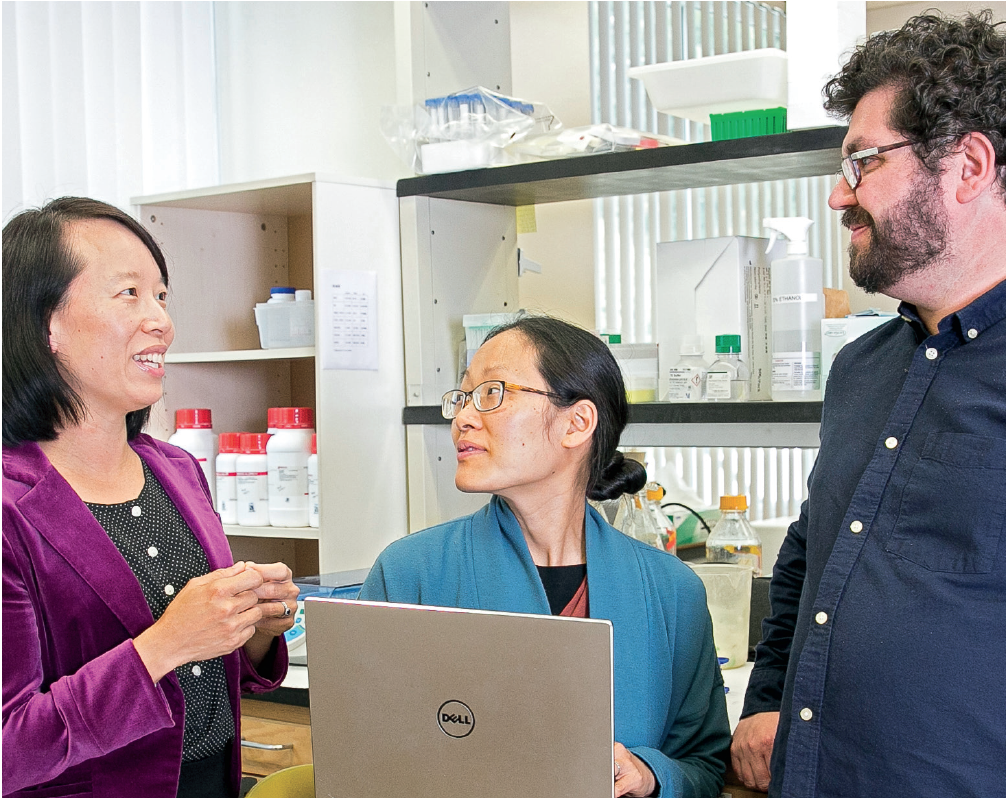
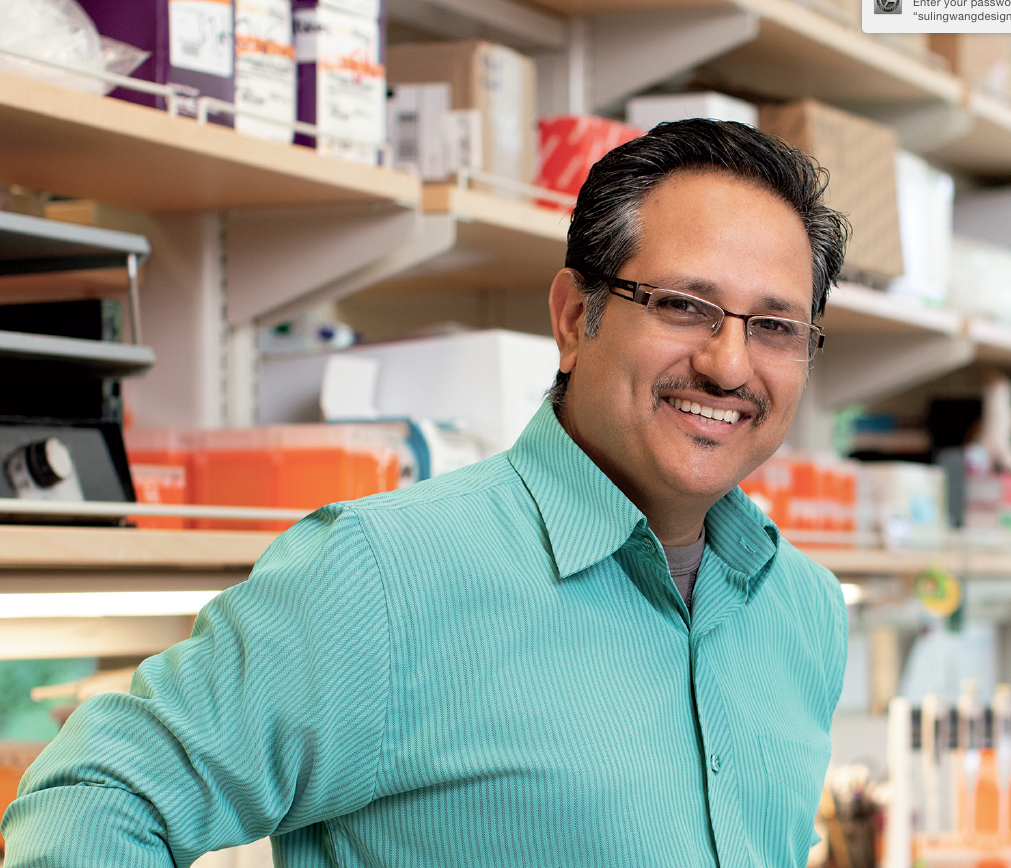
Photo caption above: To halt glaucoma, Dr. Ou, Dr. Dunn, and Dr. Della Santina investigate novel avenues for preventing damage to retinal nerve cells.

Christie Hastings knows firsthand that glaucoma steals sight. By the time she noticed blurring in her visual field, her sight was irreversibly compromised. Innovative avenues that identify glaucoma earlier and treat it more effectively promise to transform outcomes for patients like Christie.

“Patients need more effective strategies,” says glaucoma specialist Yvonne Ou, MD. To advance novel paradigms to halt the disease, Dr. Ou collaborates with two coinvestigators: physiologist Felice Dunn, PhD, and neuroscientist Luca Della Santina, PhD.

The team uses molecular, anatomical, electrophysiological, and modeling techniques to understand how increased eye pressure, common in glaucoma, affects potentially weaker retinal nerve cells and their neighbors. They also explore how retinal circuits mend themselves and continue functioning even when some cells are damaged.

“Learning how to protect the retinal nerve cells most vulnerable to damage is key to stopping glaucoma,” says Dr. Dunn. “We’re excited to pursue this promising direction.”


Altering Genes to Save Sight

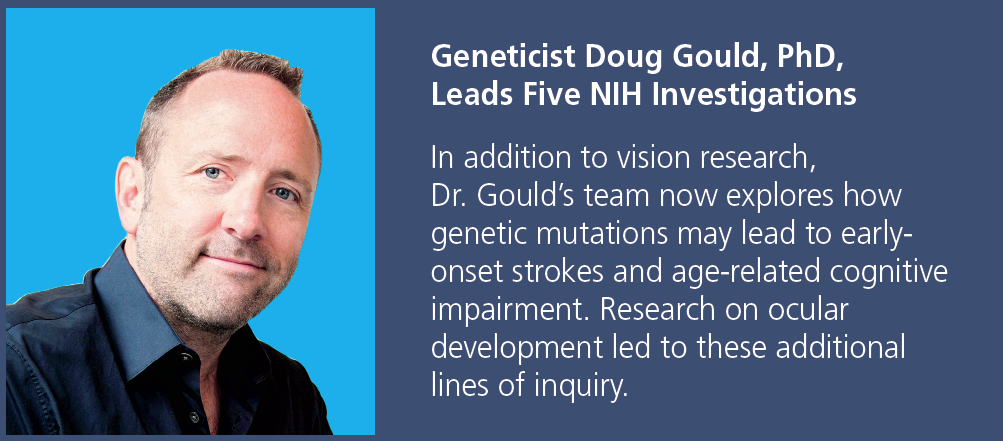
Retinitis pigmentosa is a major interest for geneticist Douglas Gould, PhD. Dr. Gould and his team explore how “quality control” mechanisms inside retinal cells try to fix or dispose of mutated proteins.

Headshot of Doug Gould, PhD, with a blue background.

Lorie Hirson is losing her sight to retinitis pigmentosa, but she is hopeful that future generations will be spared. “Vision scientists are getting closer to answers that will change our lives,” she says. “We’re proud to support their research.”

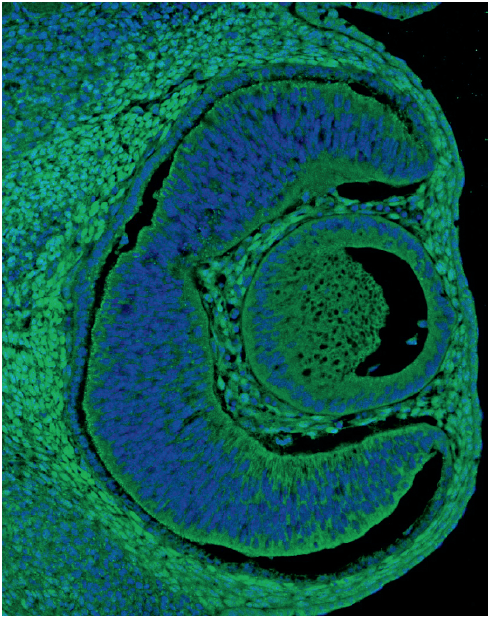
Microscopic cross-section of a biological sample.
Dr. Gould’s team of geneticists explores whether faulty formation of the front of the eye can cause glaucoma. This image shows the anterior segment during development.

In this inherited disease, mutations in a particular protein cause the light-sensitive retinal cells to die off. Dr. Gould’s team will test whether altering this cellular process can preserve vision. If so, treatments to alter this process could potentially preserve sight for patients like Lorie.


Prenatal Signs of Glaucoma

Children as young as six months can get glaucoma and its companion, high intraocular pressure. Genetic mutations that lead to the formation of defective ocular cells and tissues in the front of the eye may lead to glaucoma in infancy or later in life.

Dr. Gould uses advanced imaging and molecular techniques to investigate how the front of the eye develops. “By understanding genes that contribute to structural defects, we will open new doors to glaucoma prevention and treatment,” says Dr. Gould.


Research support provided by the National Institutes of Health, Research to Prevent Blindness, and friends of That Man May See.

Restore the Retina, Restore Sight

Retinal transplantation will one day allow ophthalmologists to restore sight. To accelerate development of regenerative treatments for blindness, the National Eye Institute has provided funds to five multidisplinary teams nationwide.


Retinal specialist Jacque Duncan, MD, leads UCSF research for the initiative, joined by neurobiologist and bio-engineer Deepak Lamba, MD, PhD, and leading scientists at the University of Wisconsin.

To better understand cellular behavior before, during, and after experimental retinal transplantations, Dr. Lamba’s team will use stem cells to develop retinal tissue with many, many cone cells. These are the light-sensitive cells that allow humans to recognize faces and see fine detail in daytime.

“Dr. Duncan’s expertise in patient care, disease progression, and advanced imaging techniques will guide us to look for cellular changes that she has previously recorded from her patients’ retinal cells,” says Dr. Lamba.

The team’s findings will move successful retinal cell transplantations closer to a transformative reality.


Photo caption: Dr. Lamba’s team collaborates with clinical researcher Dr. Duncan to advance transplantation of laboratory-grown retinal cells to restore sight.

Celebrating Research to Prevent Blindness

Research to Prevent Blindness (RPB) is celebrating 30 years of its highly impactful Career Development Awards, which jump-start research early in the careers of outstanding scientists.


Sixteen UCSF vision scientists have received Career Development Awards over the years, advancing new knowledge, insights, and solutions — building blocks in the future of vision. UCSF vision research continues to benefit from these and other RPB awards, including three this year.


Portrait of a woman in a dark suit with short hair against a blue background.Nurturing Novel Approaches

Thuy Doan, MD, PhD, applied her 2016 RPB Career Development Award to help launch pioneering genomic studies of the ocular micro-environment (biome) in search of pathogens underlying uveitis inflammations.

Dr. Doan’s international work at the Proctor Foundation involves investigation of the intestinal microbiome for an antibiotics study of 190,000 children in sub-Saharan Africa. Dr. Doan is lead author of a new Proctor publication in Nature Medicine,* which posits that reductions in two diarrhea-related bacteria may be a factor in higher child survival rates.

“Those of us who study… child survival in sub-Saharan Africa haven’t seen well-done trials showing such a striking mortality benefit in a really long time, so it’s very exciting,” says Patricia Pavlinac, MD, a University of Washington epidemiologist.


A woman smiling with long dark hair in a patterned blue blouse.

Preventing AMD

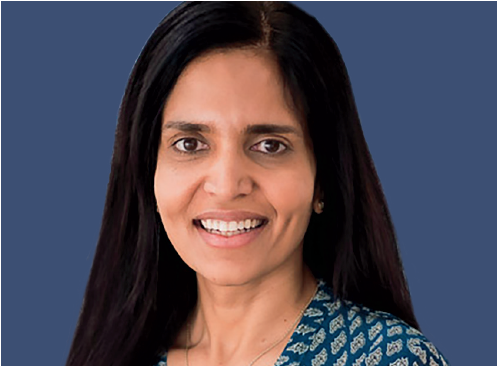
Retinal cell biologist Aparna Lakkaraju, PhD, won RPB’s 2019 Catalyst Award for Innovative Approaches to Age-Related Macular Degeneration (AMD). Her team uses innovative microscopy, genome editing, and stem cell technologies to pinpoint genetic and cellular mechanisms responsible for initiating AMD, and identify promising therapies to target the earliest disease stages to preserve central vision. The research builds on earlier successes made possible by her Career Development Award in 2010.


Understanding Epidemics

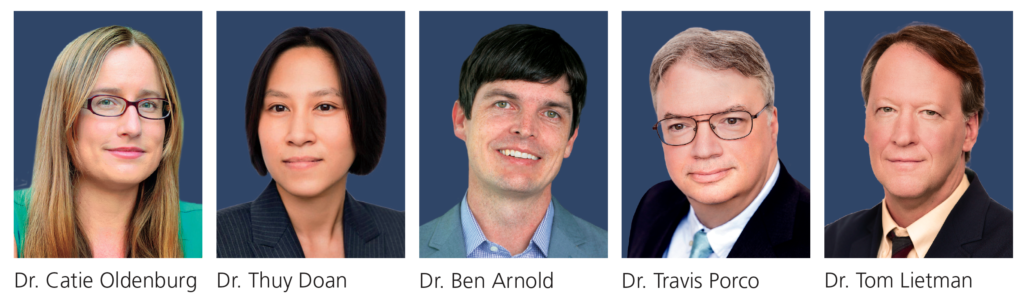
RPB collaborates with the American Academy of Ophthalmology to grant awards for big data research. Michael Deiner, PhD; Thomas Lietman, MD; and Travis Porco, PhD, won this 2019 award to use the exceptional IRIS Registry to study infectious eye epidemics in the United States.


Strategic Flexibility

The Department of Ophthalmology was awarded an RPB unrestricted grant this year as well. The five-year grant extends decades of institutional support from the foundation. “We’re extremely grateful,” says Department Chair Stephen D. McLeod, MD. “These awards allow us to build high potential research from the ground up.”


*T Doan, A Hinterwirth, L Worden, AM Arzika, R Maliki, A Abdou, S Kane, L Zhong, SL Cummings, S Sakar, C Chen, C Cook, E Lebas, ED Chow, I Nachamkin, TC Porco, JD Keenan, TM Lietman. “Gut microbiome alteration in MORDOR I: a community randomized trial of mass azithromycin distribution.” Nature Medicine. 2019 Aug 12.

The Proctor Foundation Saving Sight and Lives

Committed to reducing blindness worldwide, UCSF’s Francis I. Proctor Foundation for Research in Ophthalmology has worked in sub-Saharan Africa since 2000.

A major investigation led by the Proctor Foundation is rocking the public health firmament. “The study shows we can prevent young children in sub-Saharan Africa from dying with a simple intervention,” says Jeremy Keenan, MD, MPH, director of International Programs.

This team previously established that the same intervention saves children’s sight. The UCSF team and international partners investigated whether giving two doses a year of a common antibiotic to infants and toddlers in Malawi, Tanzania, and Niger would reduce child deaths. The work was funded with $14.8 million from the Bill & Melinda Gates Foundation.

According to principal investigator Thomas Lietman, MD, the biggest effects were seen in Niger, where 10 percent of newborns do not survive to their fifth birthday. A continuation of the Niger study will examine the impact of a four-year course of treatment, with the support of a $2.4 million Gates Foundation award.

Tens of Thousands of Lives Saved

With 190,000 children participating, the treatments prevented one in four deaths among 1- to 5-month-olds and slashed death rates by nearly 14 percent overall. The New England Journal of Medicine published the results in April, with Dr. Keenan as lead author. The news was covered everywhere from CNN to the Wall Street Journal and NPR.

The New York Times reported that these results are influencing the World Health Organization to decide whether to advise routinely giving antibiotics to newborns. Such a recommendation could speed progress toward the United Nations’ goal of ending preventable child deaths by 2030. Concerns about antibiotic resistance are central to this discussion. In fact, Proctor scientists monitored resistance bacteria in the respiratory tract and the stool, and they will continue to do so for the next two years.

Saving Sight Increased Survival

The Proctor Foundation’s meticulous studies on community-wide administration of the antibiotic azithromycin have played a leading role in arresting the epidemic spread of trachoma.

Early studies also showed that the vision-saving treatment increased survival rates for young children. Researchers believe the antibiotics could possibly help children fight off pneumonia, malaria parasites, and diarrhea, the biggest causes of death for this group.

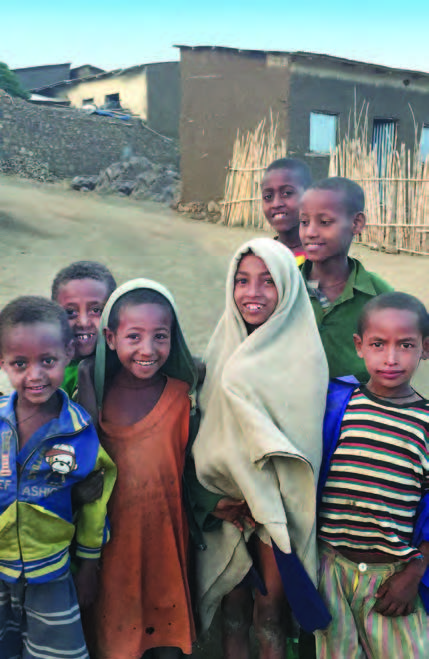
Group of smiling children in a village setting.
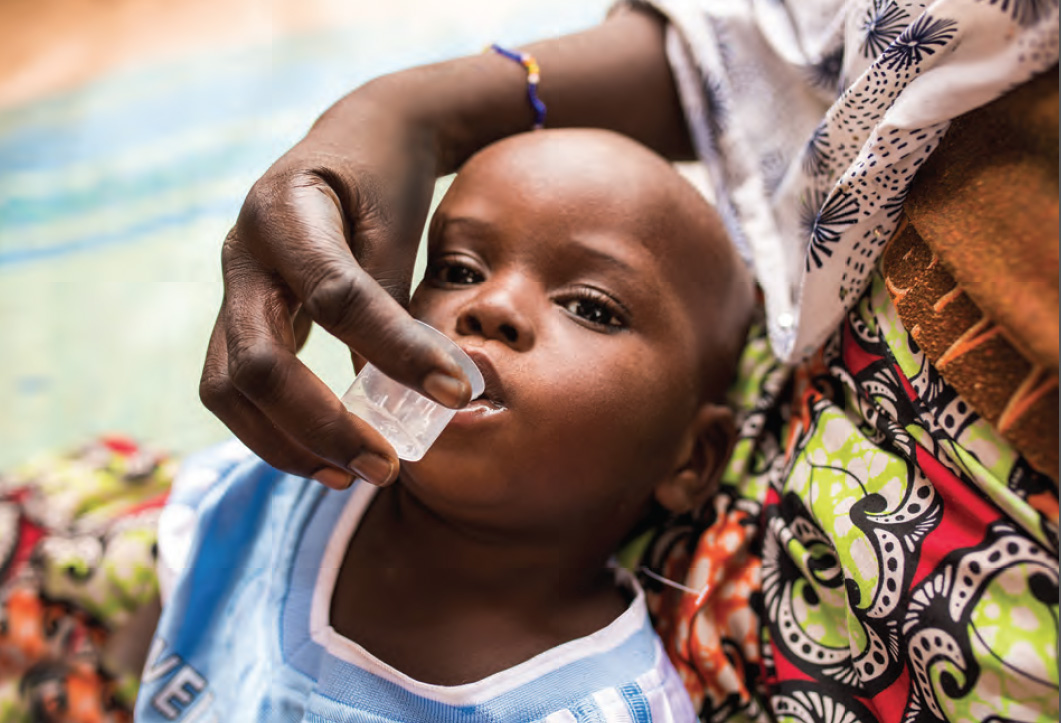
Lack of basic medicines and good sanitation leaves infants and children vulnerable to disease.


Next Study to Support Newborns

The UCSF team is taking another leap forward, supported by a new $13.5 million award from the Gates Foundation. A three-year study of at least 50,000 young children in Burkina Faso is being planned. Drs. Lietman and Keenan share principal
investigator honors with colleagues Catie Oldenburg, PhD, and Thuy Doan, MD, PhD. In the first study, most babies were not treated in their earliest months, when they are most vulnerable. “In Burkina Faso, we are partnering with local health workers to provide azithromycin to infants at 4-6 weeks, during vaccine visits,” explains Dr. Oldenburg. The study will explore whether treatment in the first weeks of life helps infants survive.

Biosamples to Yield Answers

Biosamples gathered from the infants and toddlers are critical to understand precisely why more children survive,” says Dr. Doan. Using conventional and advanced genetic sequencing techniques, she will analyze samples from the back of the throat and the gut to determine which pathogens are being killed. She’ll also monitor for antibiotic-resistant genes and characterize the microbial environment in these children’s digestive systems.

“ Thanks to the Bill & Melinda Gates Foundation, we are able to test our strategies at scale.” – Dr. Thomas Lietman


Research Benefits Sight, Too

“As we determine how best to use antibiotics to help vulnerable children survive, we also see benefit for the overall trachoma eradication program,” says Dr. Lietman. Seed funds from That Man May See helped launch this work many years ago, with pilot funding from John Debs and others. “Small well-designed studies allowed us to establish evidence that led to increased support from the Bernard Osher Foundation, the National Institutes of Health, and most notably the Gates Foundation.” says Dr. Lietman.