
Historical References
Dr. Cordes’ A.J.O. Special Issue — view the scanned special issue
Dr. Cordes’ Carter Collection Essay — read the essay. A series of typewritten essays, written by historical campus figures, is contained in the Carter Collection of the Rare Books Room of the Main Library. This essay was written by Dr. Cordes as he contemplated his retirement from a 40-year relationship with the Parnassus campus. It recalls his memories from the earliest years of the Medical School of the University of California. It is written in his own style and, if read in its entirety, gives you a feeling that you might know him personally. It is reproduced here in its original formatting. R. Dudley Stone.
Dr. Cordes’ American Journal of Ophthalmology special issue
These 20 pages are photographic scans in the source PDF with no underlying text, so they are presented as images with descriptions. Select an image to open it full size.
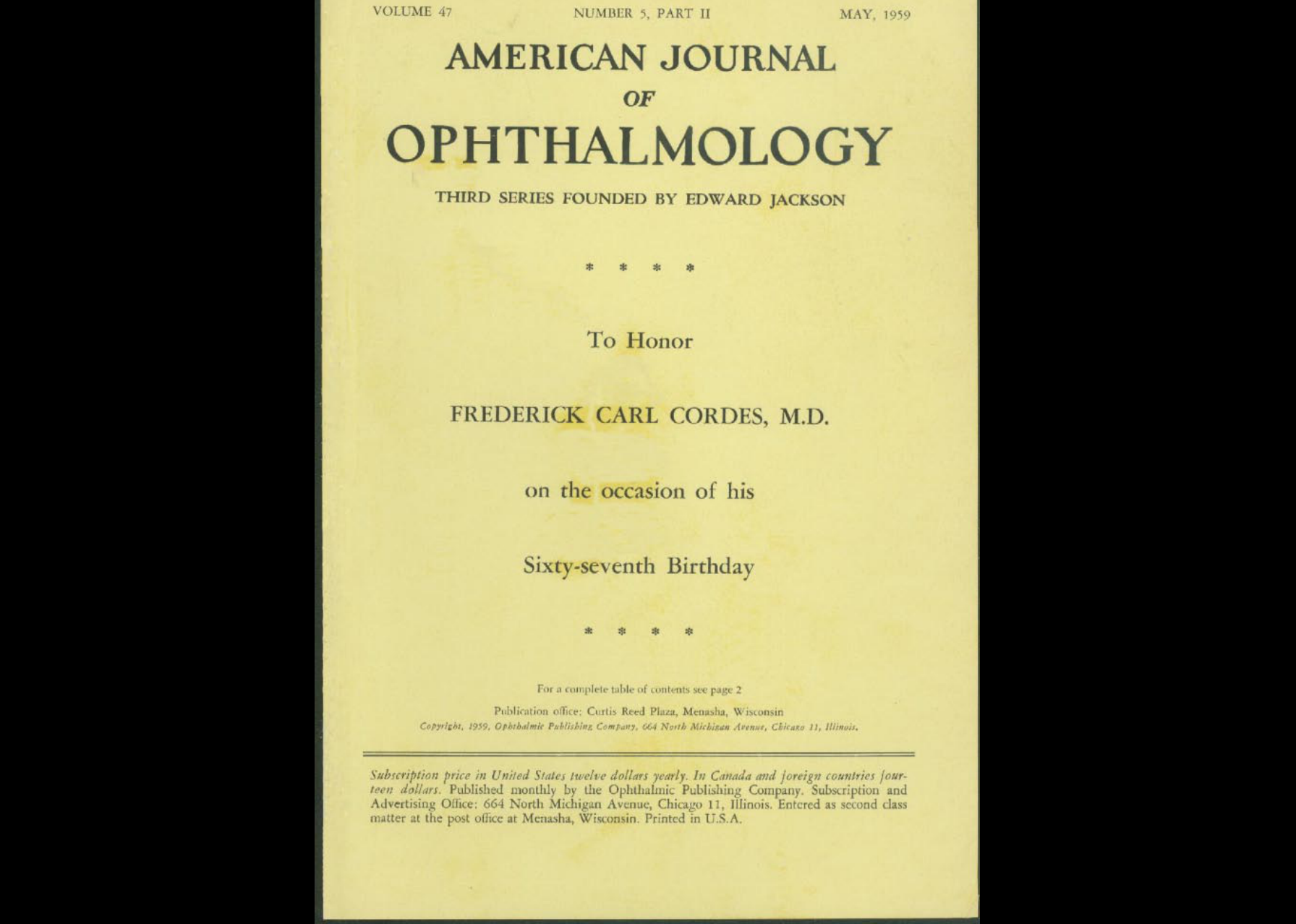 View American Journal of Ophthalmology special issue (scan) at full size
American Journal of Ophthalmology special issue (scan)
 View American Journal of Ophthalmology special issue — page 3 at full size
American Journal of Ophthalmology special issue — page 3
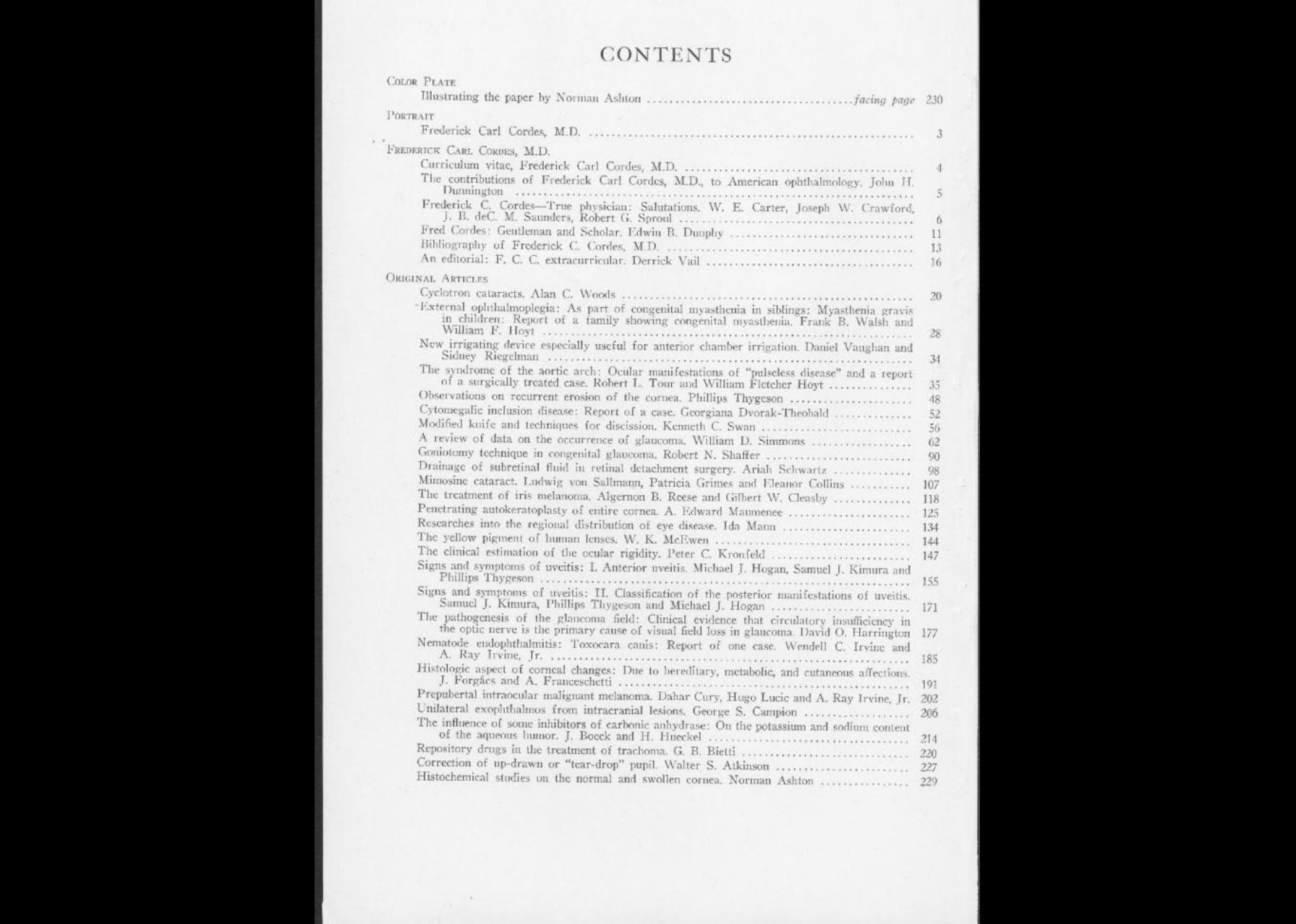 View American Journal of Ophthalmology special issue — page 4 at full size
American Journal of Ophthalmology special issue — page 4
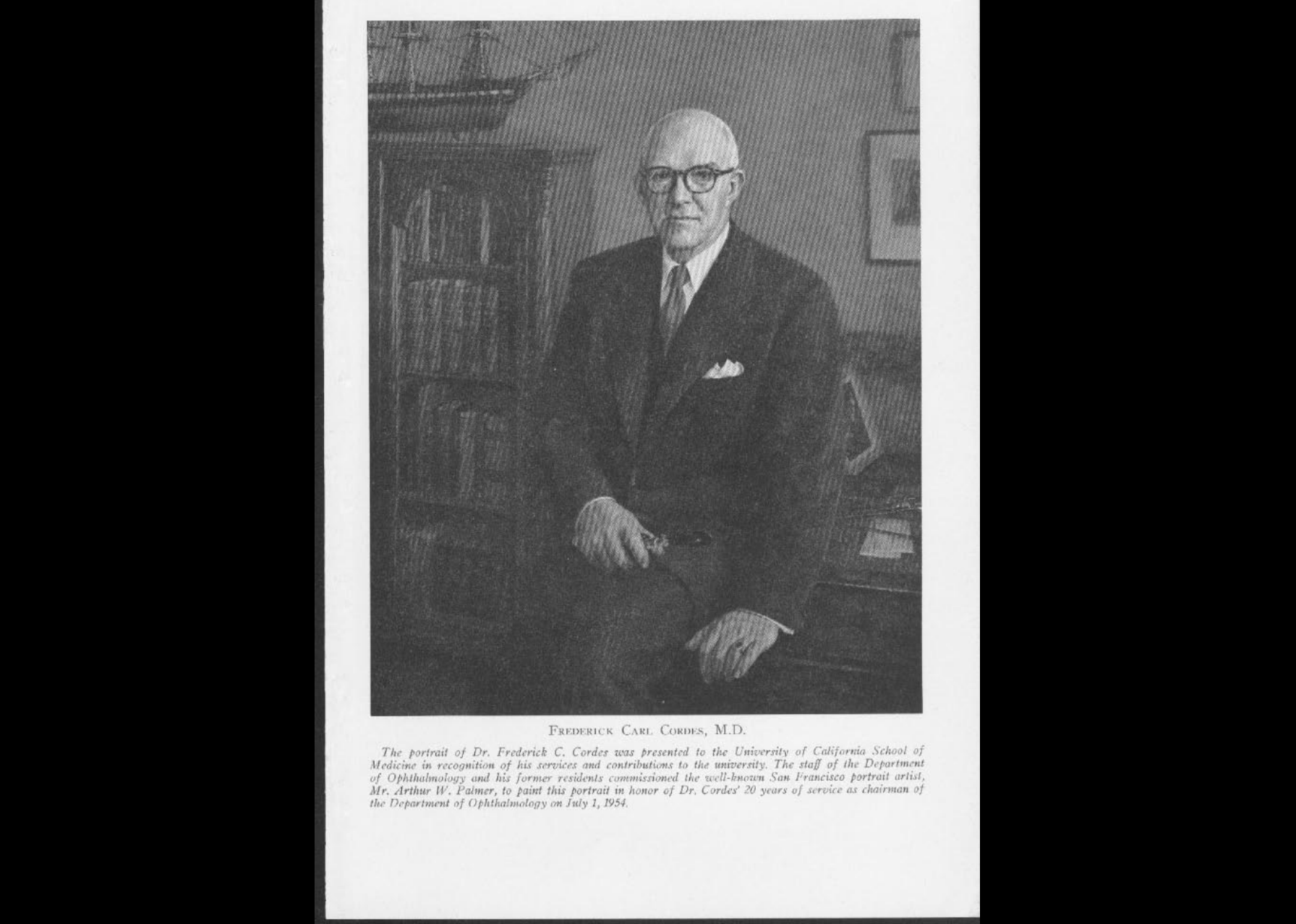 View American Journal of Ophthalmology special issue — page 5 at full size
American Journal of Ophthalmology special issue — page 5
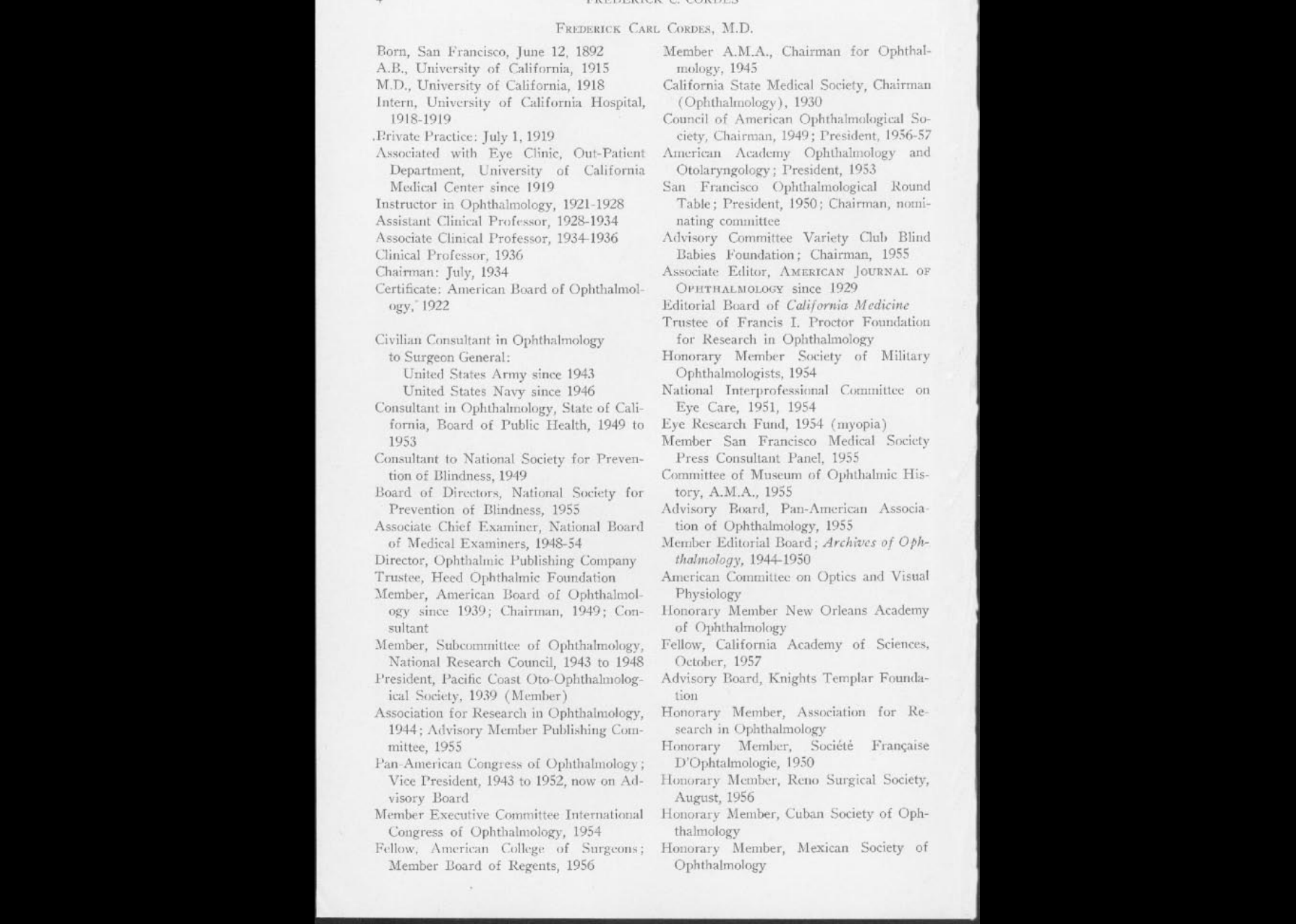 View American Journal of Ophthalmology special issue — page 6 at full size
American Journal of Ophthalmology special issue — page 6
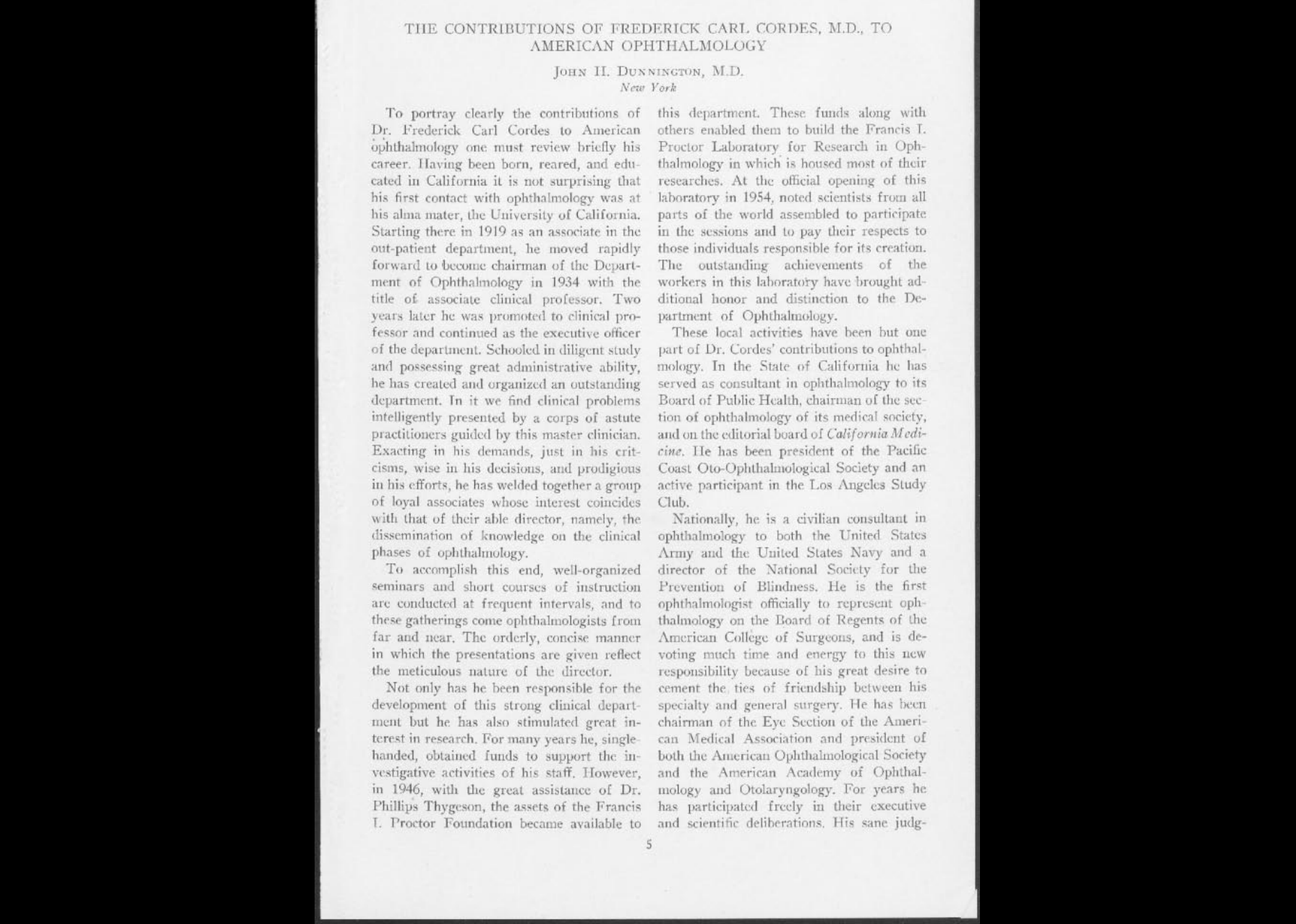 View American Journal of Ophthalmology special issue — page 7 at full size
American Journal of Ophthalmology special issue — page 7
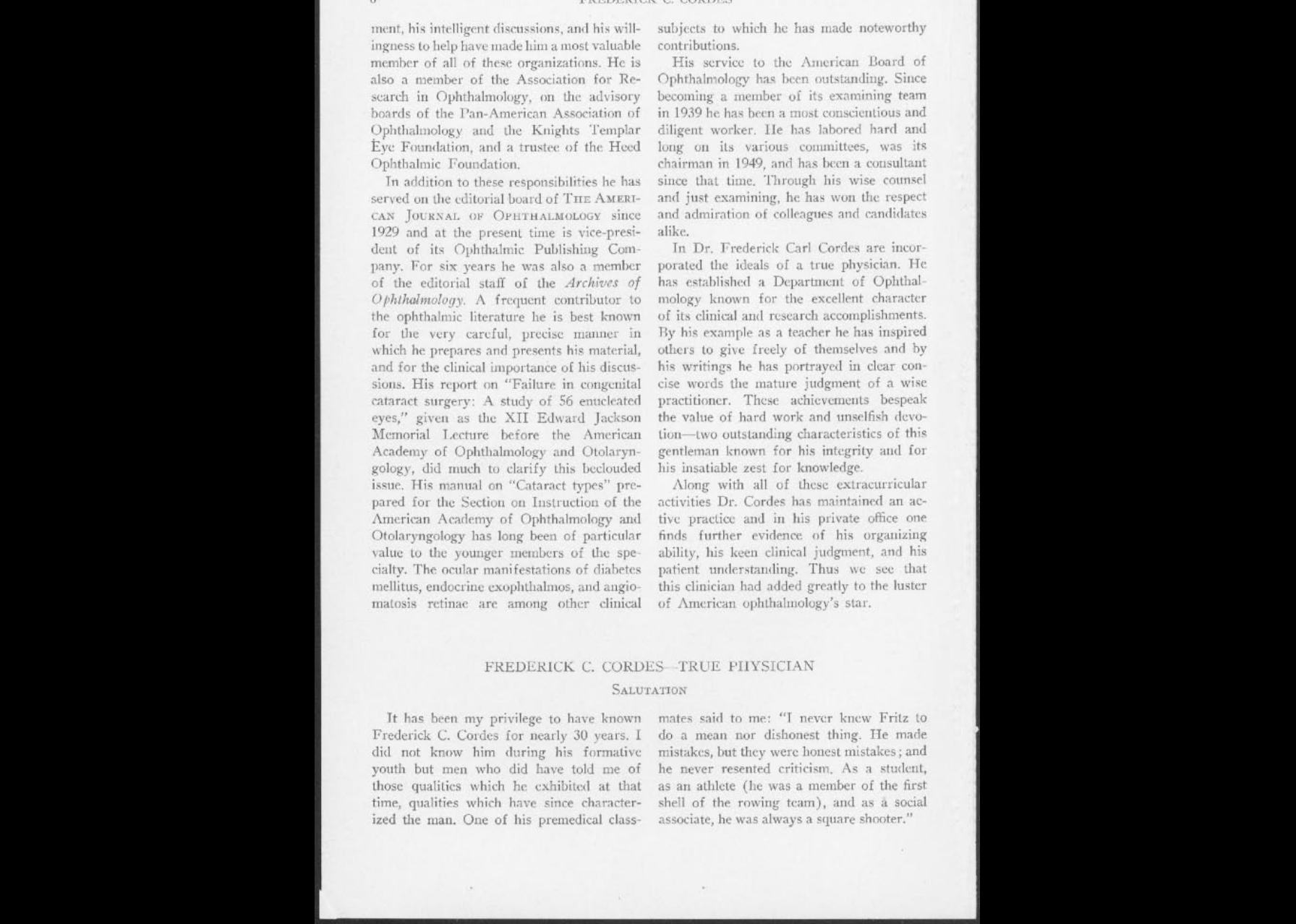 View American Journal of Ophthalmology special issue — page 8 at full size
American Journal of Ophthalmology special issue — page 8
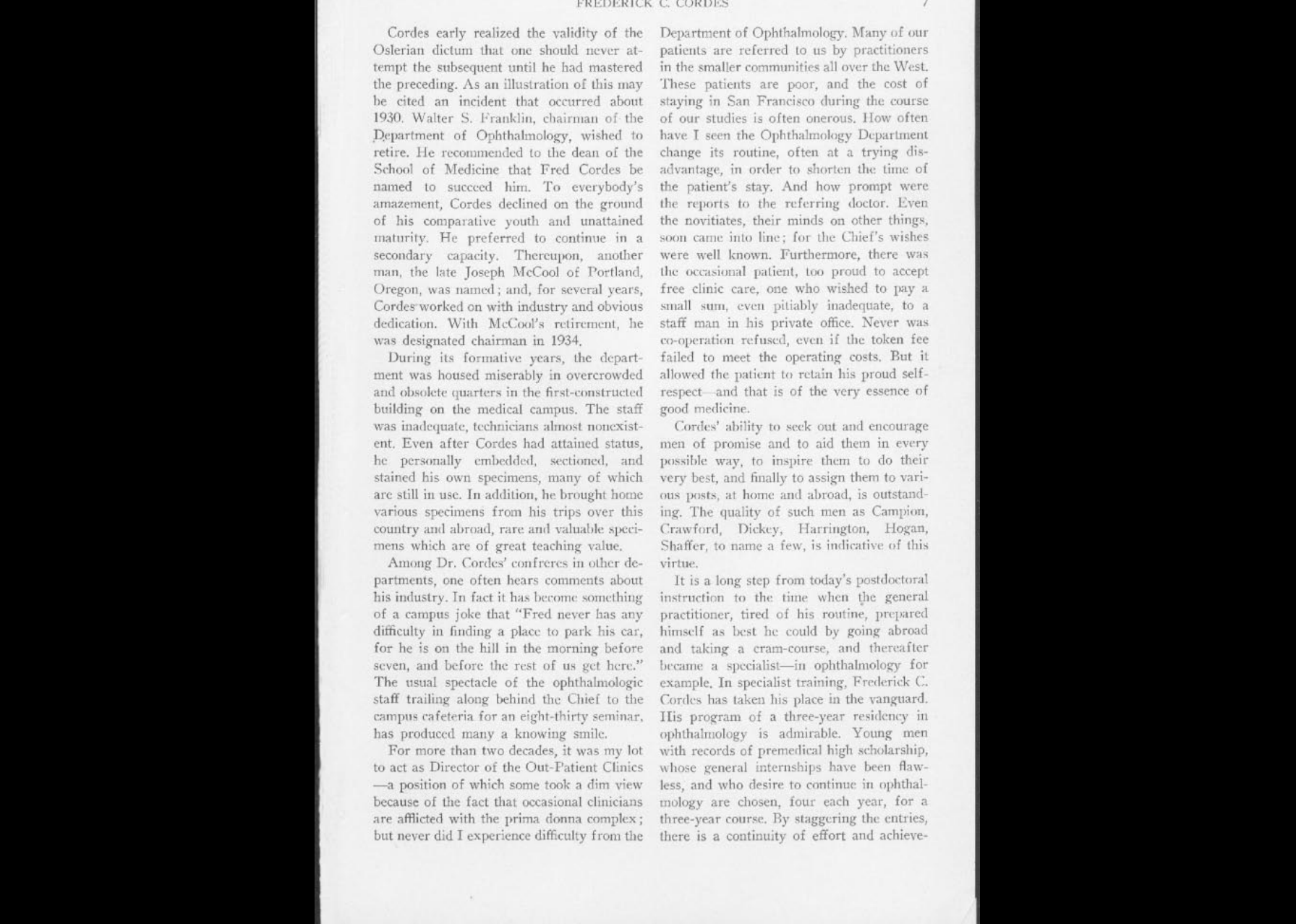 View American Journal of Ophthalmology special issue — page 9 at full size
American Journal of Ophthalmology special issue — page 9
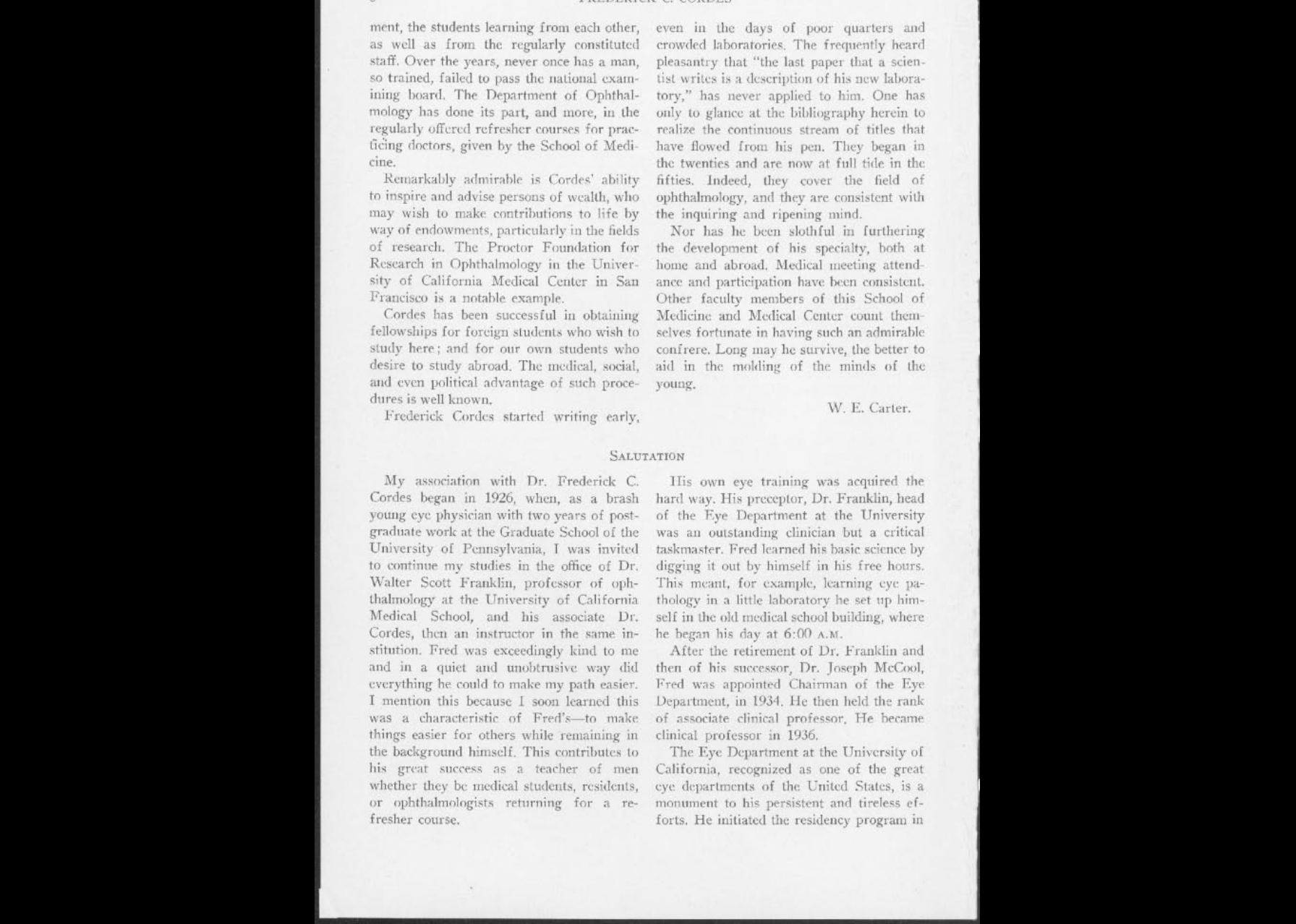 View American Journal of Ophthalmology special issue — page 10 at full size
American Journal of Ophthalmology special issue — page 10
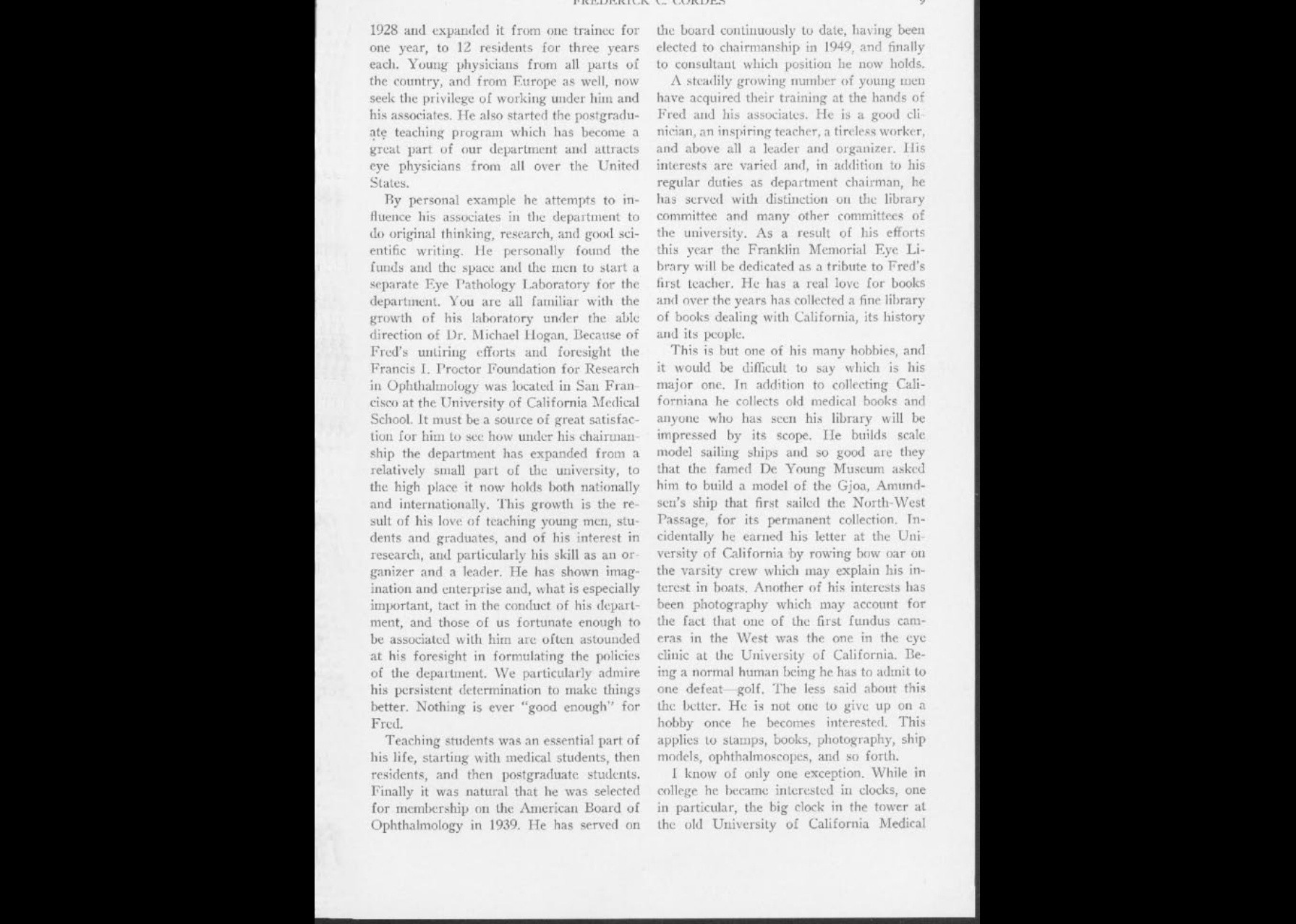 View American Journal of Ophthalmology special issue — page 11 at full size
American Journal of Ophthalmology special issue — page 11
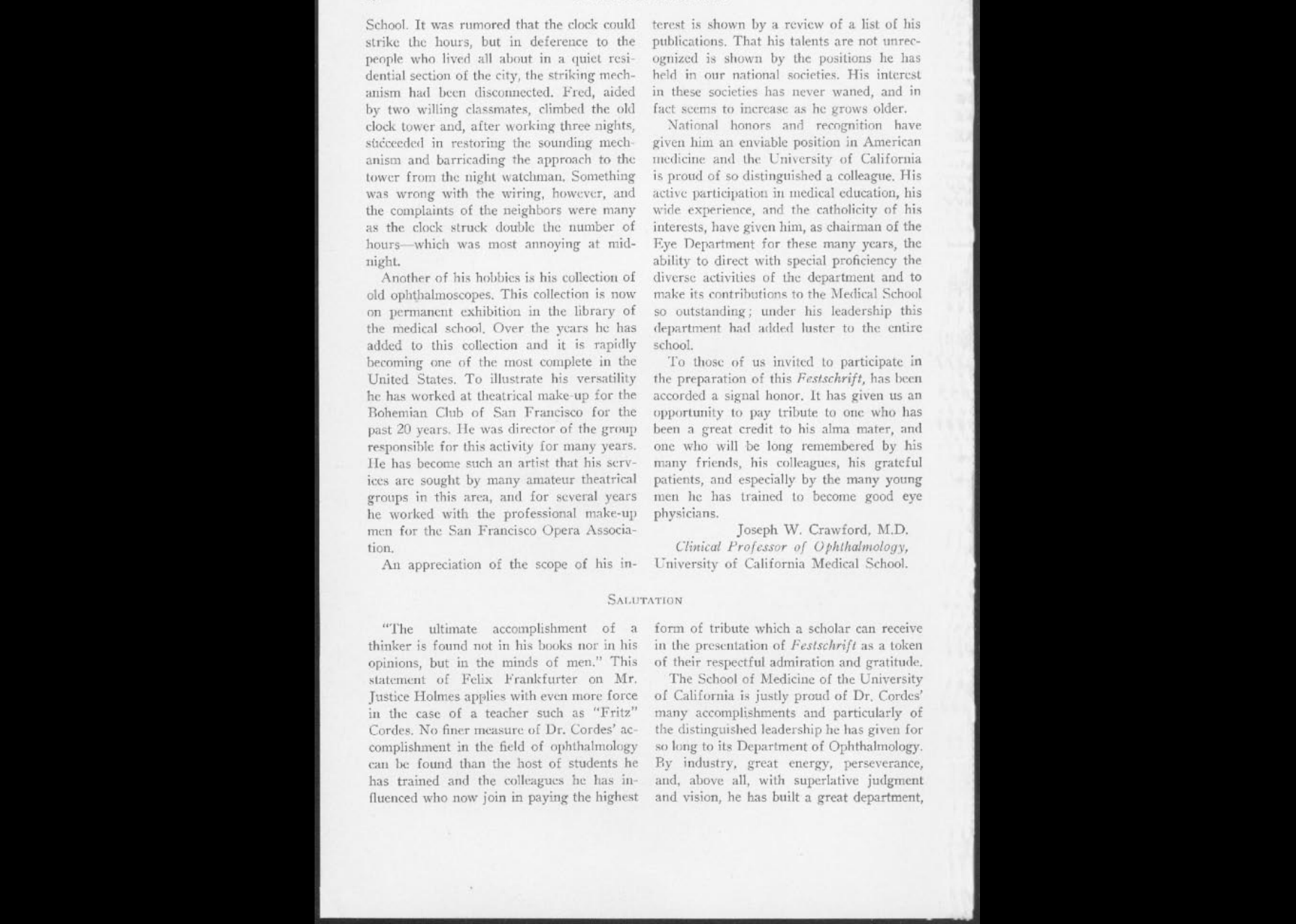 View American Journal of Ophthalmology special issue — page 12 at full size
American Journal of Ophthalmology special issue — page 12
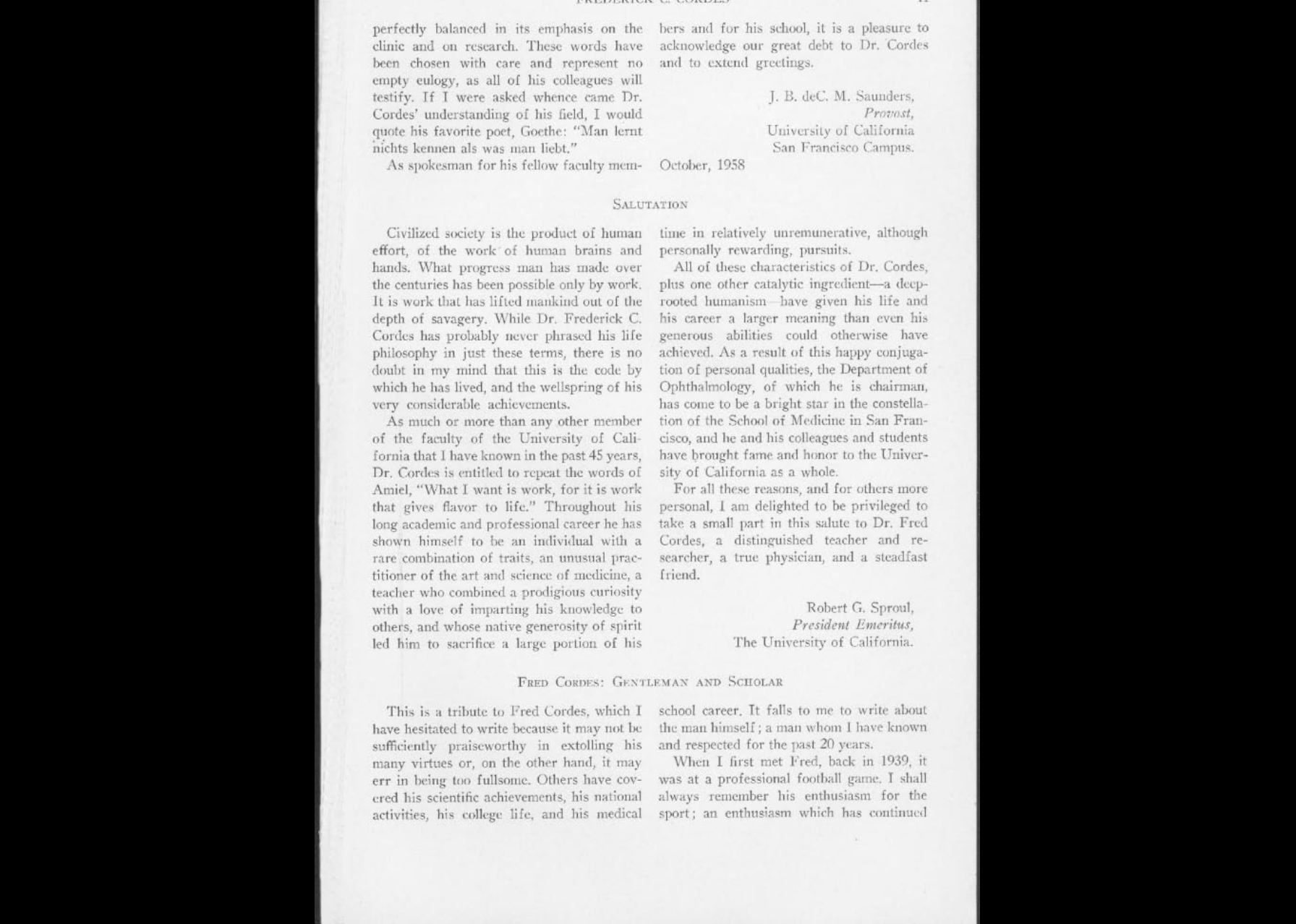 View American Journal of Ophthalmology special issue — page 13 at full size
American Journal of Ophthalmology special issue — page 13
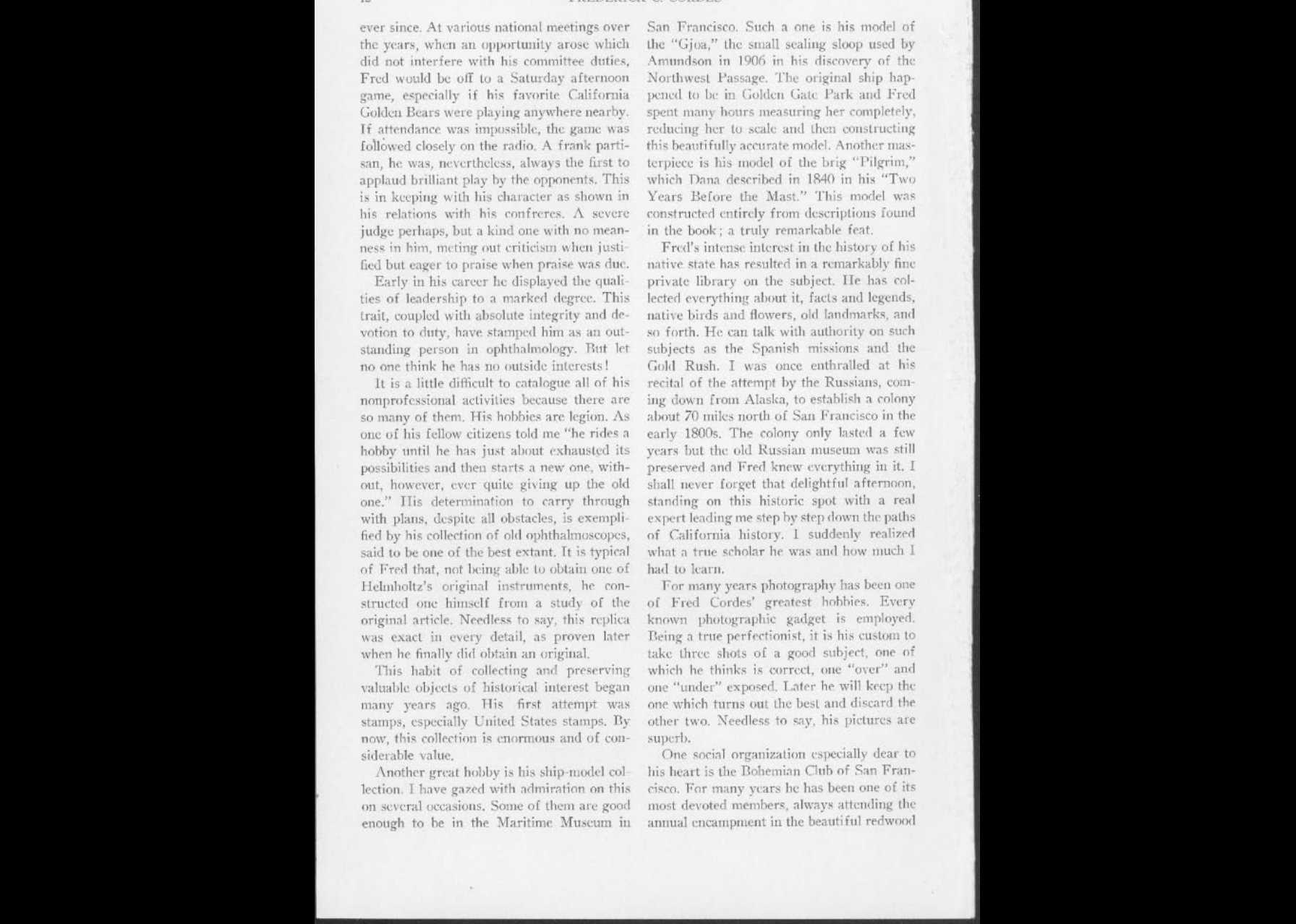 View American Journal of Ophthalmology special issue — page 14 at full size
American Journal of Ophthalmology special issue — page 14
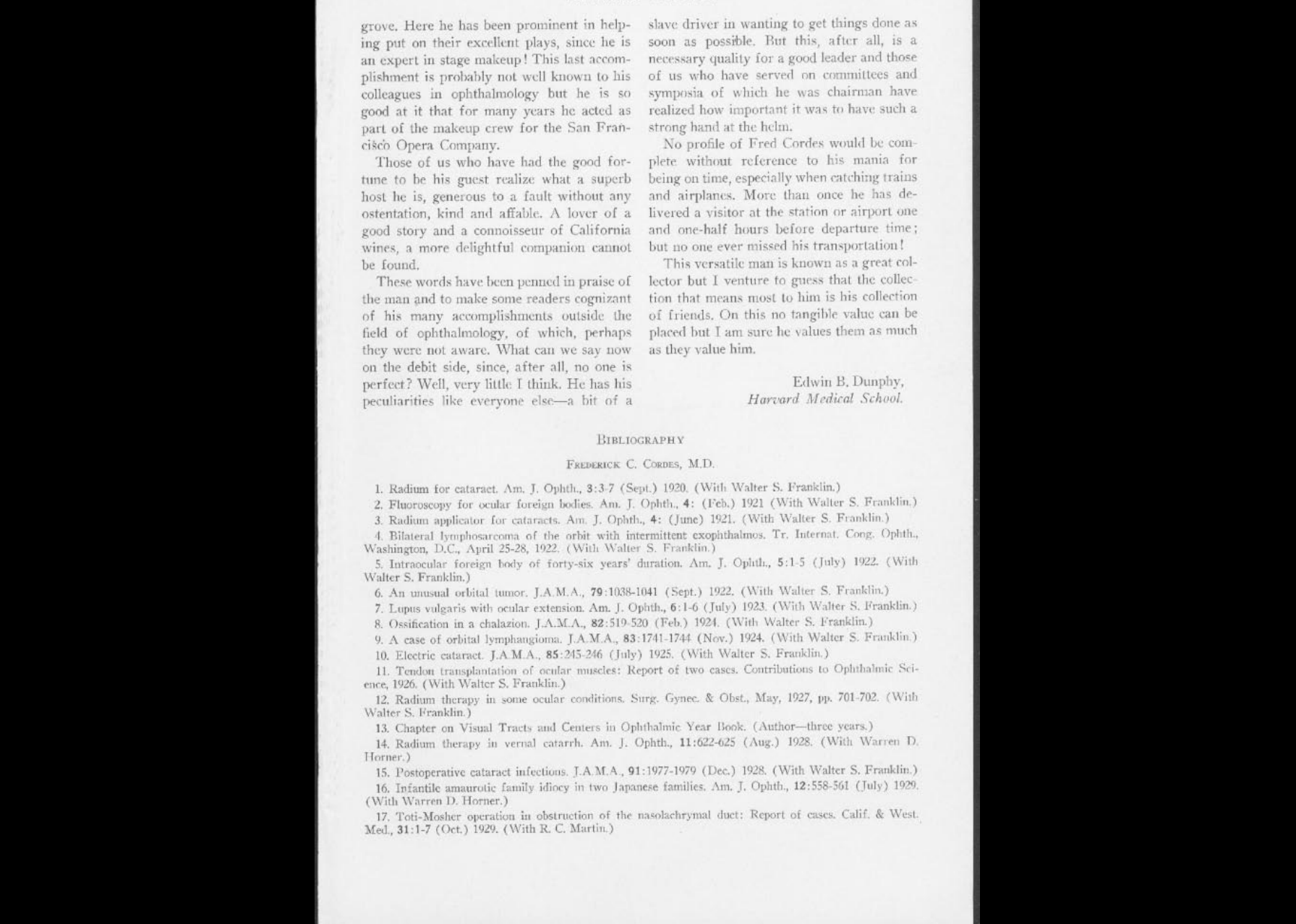 View American Journal of Ophthalmology special issue — page 15 at full size
American Journal of Ophthalmology special issue — page 15
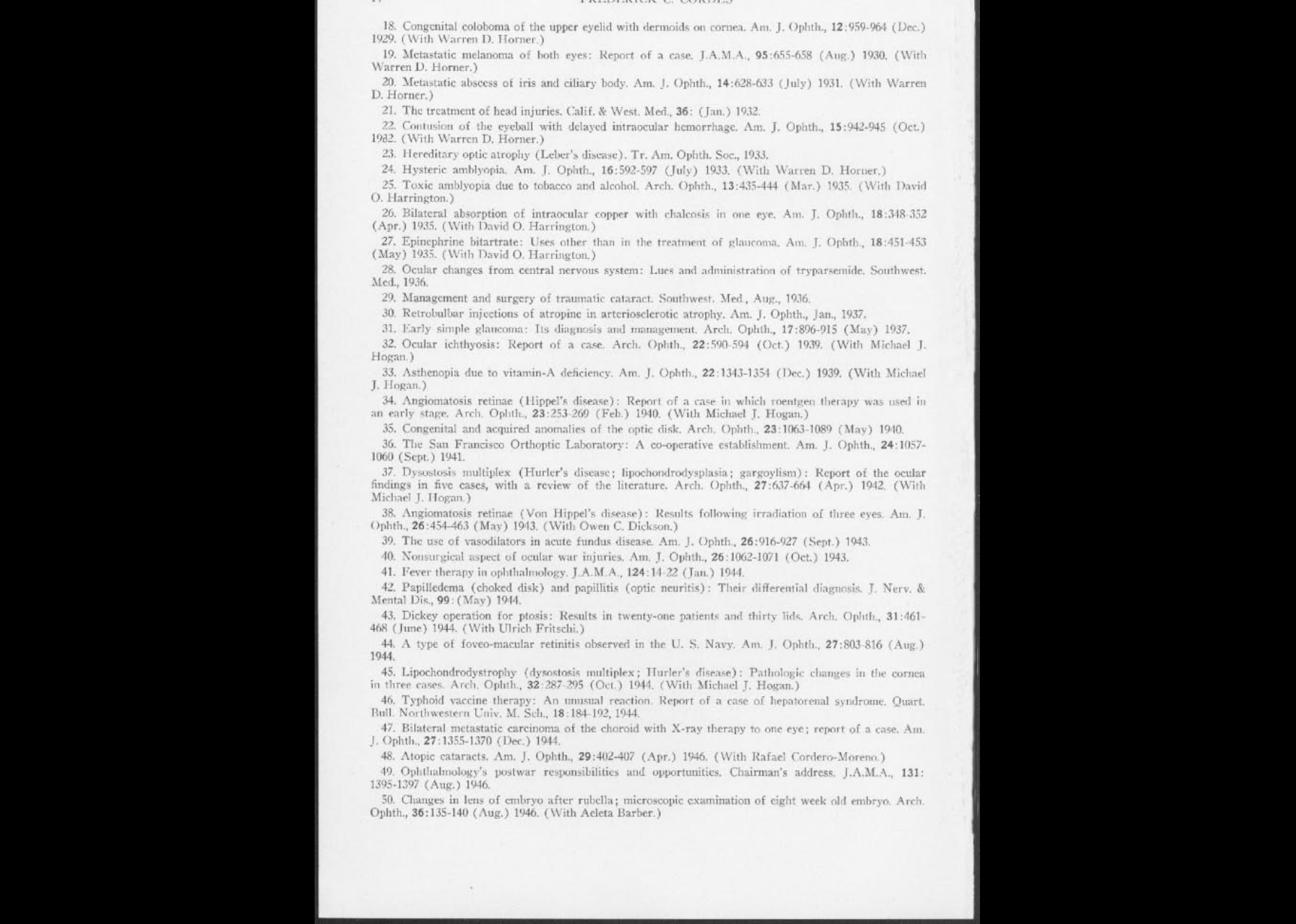 View American Journal of Ophthalmology special issue — page 16 at full size
American Journal of Ophthalmology special issue — page 16
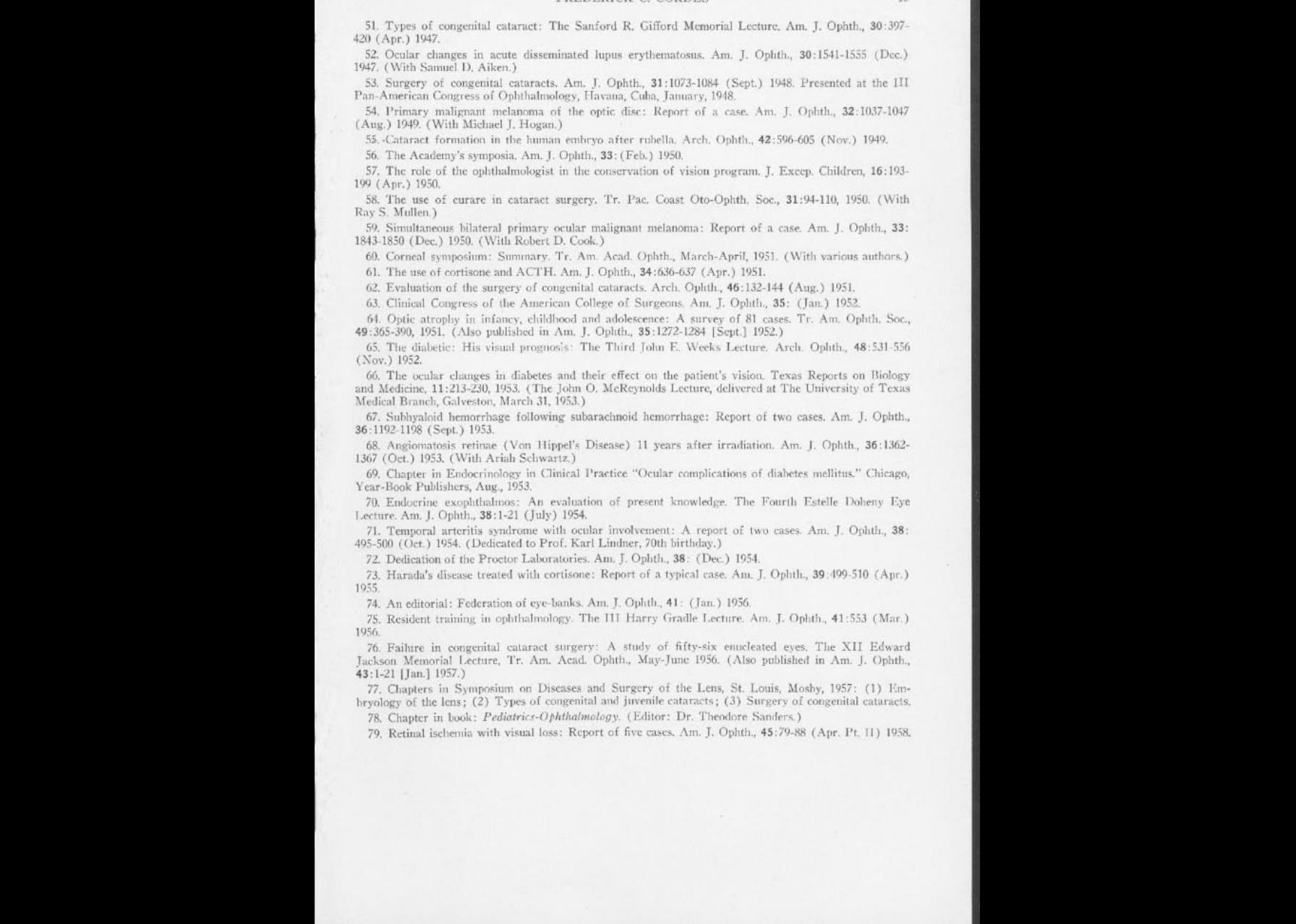 View American Journal of Ophthalmology special issue — page 17 at full size
American Journal of Ophthalmology special issue — page 17
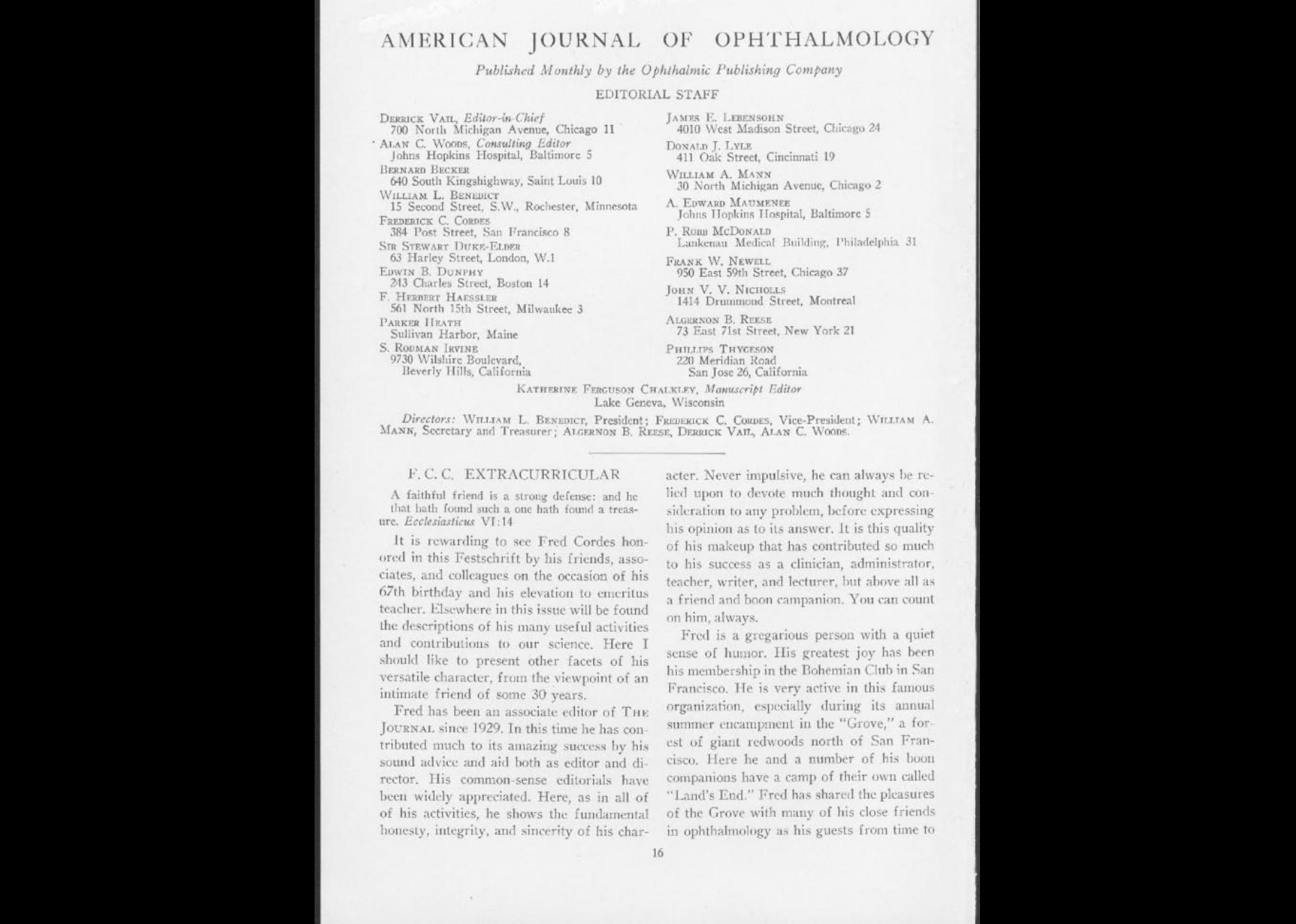 View American Journal of Ophthalmology special issue — page 18 at full size
American Journal of Ophthalmology special issue — page 18
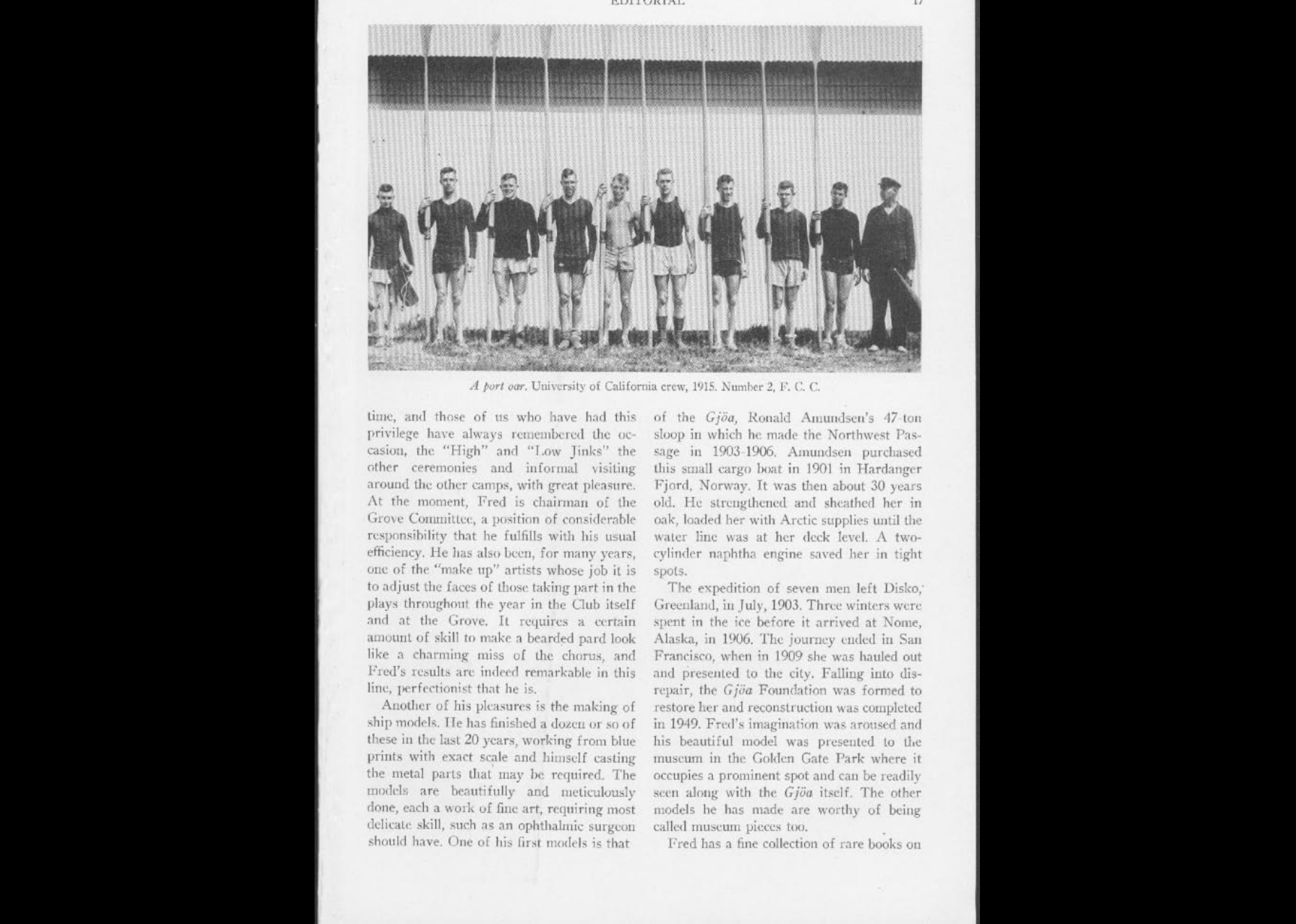 View American Journal of Ophthalmology special issue — page 19 at full size
American Journal of Ophthalmology special issue — page 19
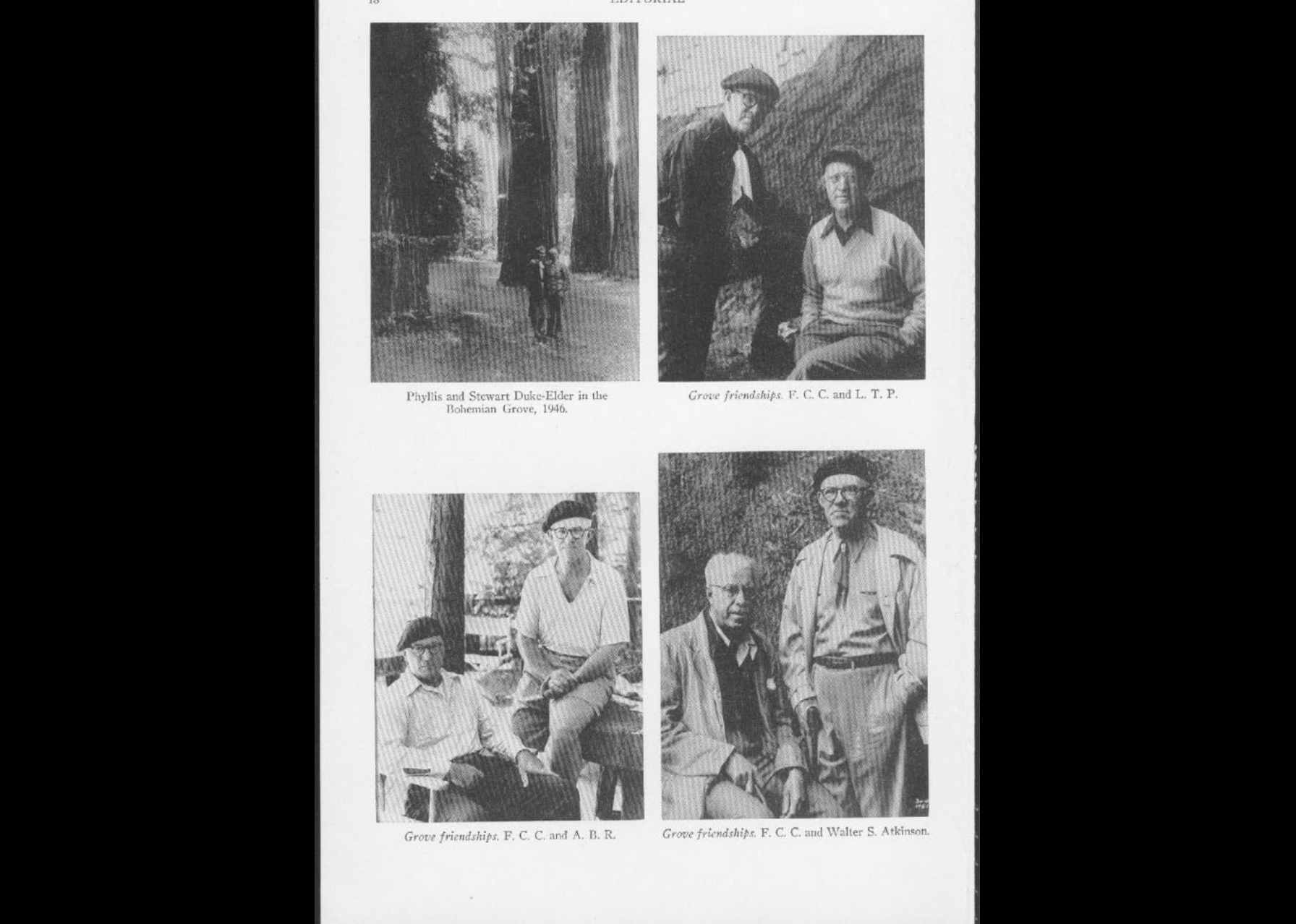 View American Journal of Ophthalmology special issue — page 20 at full size
American Journal of Ophthalmology special issue — page 20
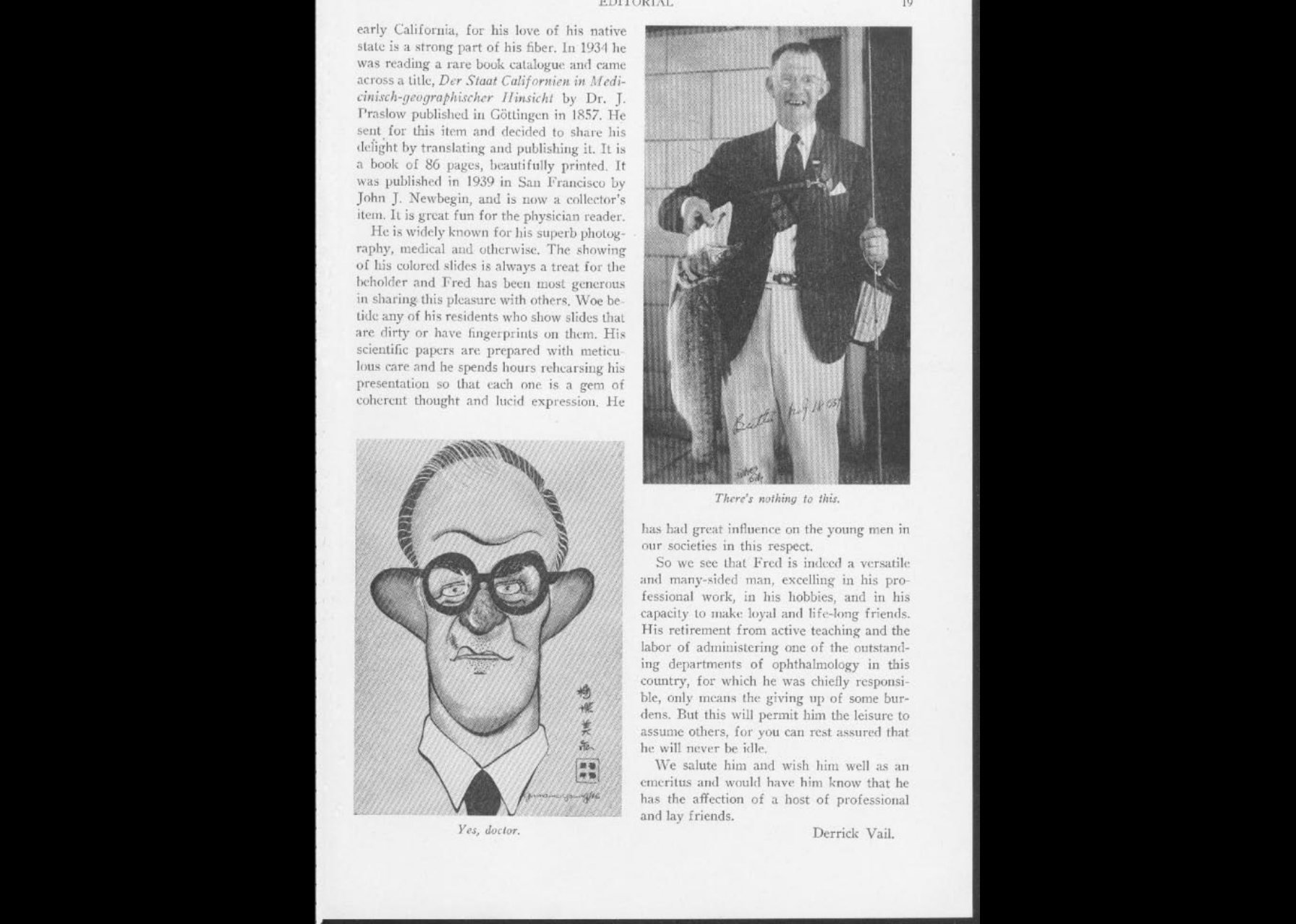 View American Journal of Ophthalmology special issue — page 21 at full size
American Journal of Ophthalmology special issue — page 21
Dr. Cordes’ Carter Collection essay
AS I REMEMBER THE UNIVERSITY OF CALIFORNIA MEDICAL SCHOOL FROM 1915, THE YEAR OF THE FAIR TO THE END OF WORLD WAR I, 1919
Full text of the essay
Transcribed from the source PDF. Each printed sheet is marked so that the text can be matched to the corresponding page scan below.
Sheet 1 (journal page 160) begins in the text below · view the scan of sheet 1
A short time ago I sat in my small but rather elegant laboratory in the new Medical Sciences Building contemplating the fact that in a few short months I would be retired as Chairman of the Department of Ophthalmology. It made me realize that it would be the end of 44 years association with the San Francisco Campus of the Medical School as a student or faculty member. As I sat, I wondered how many of the present faculty remembered The Medical Center when it consisted of one brick building that housed the school, the hospital, and the outpatient department.
Dr. Carter has urged a number of times that this era should be written up, and the final nudge came from Dr. “Bob” Ward at a dinner party last week. And so I decided that on my recent trip east, with time on my hands, I would try to give a brief account of the University of California Medical School, as I remembered it, during the period of 1915 to our graduation in 1919.
Sheet 2 (journal page 161) begins in the text below · view the scan of sheet 2
The 1918 class of the Medical School came to the San Francisco Campus in the fall of 1915, the year of the Panama-Pacific Exposition. As already stated, the School consisted of one yellow brick three story building. The basement housed the specialty clinics and the surgical clinic. The first floor housed the offices of the School, the medical clinic, the laboratories, pediatrics, gynecology and obstetrics clinics, and the library, which was in a small room to the right of the stairs going up to the lecture room. What had been built as an auditorium and which was later converted into a library until the present new library was finished, served as interne and resident quarters. On the second floor were the medical and surgical wards and the operating room. The kitchen and dining rooms were also on this floor. On the third floor was obstetrics, and as I remember also the gynecology and pediatrics wards. Of obstetrics there can be no doubt. Many of us lived on Second and Hugo and when the call came to come up and watch a delivery it usually came at about 3 in the morning. We knew that if we missed it, it would mean getting up again some other night. They didn’t give us much time so that we rushed up 2nd Ave. (which no longer exists) and then up the flights of stairs, there being no elevator. It was the last flight from the second to the third floor that “killed you”.
As one faced the “Park”, to the right stood the Dental and Pharmacy Building which was demolished to make room for the present new Library and Increment II. To the left stood the building containing the Anthropological Collection given by Mrs. Hearst, which is now in Berkeley. This building was razed to make room for the present clinic building. The University of California Hospital was under construction, the funds having been given by the friends of Dr. Herbert Moffitt, and not by the State as been so often stated.
Sheet 3 (journal page 162) begins in the text below · view the scan of sheet 3
This then was the plant to which we came in 1915. It was the height of the era of Herbert C. Moffitt, Wallace I. Terry, Howard Morrow, Albert “Bert” Houston, Walter Scott Franklin, Walter I. Baldwin, Howard C. Naffziger, Howard E. Ruggles, Frank Hinman, Saxton T. Pope and others. These were the men who, under the direction of Herbert Moffitt, were dedicated to the development of the School and it is the foundations they so carefully laid upon which our great Medical Center is built. The classes were small, ours being composed of 22 members, and the faculty was small by present day standards. The result was that the faculty got to know everybody, and we had almost personal teaching. For us, the fall of 1915, was an exciting time. It meant that we had finally finished dissection and the basic sciences laboratory and were now really in medicine where we were seeing patients and where we had a stethoscope, the insignia of our graduation to clinical medicine.
Every Doctor of Medicine must have memories of some of the characteristics that were outstanding in some of his instructors. And so it is with me and while it is not always possible to convey these in so many words an attempt will be made to comment on some of the teachers of the Class of 1918.
Sheet 4 (journal page 163) begins in the text below · view the scan of sheet 4
Herbert C. Moffitt, who turned down the chair of Medicine at Harvard to remain our Professor of Medicine was our idol. He was the personification of dignity with all the attributes and the appearance that we felt should go with the position of Professor of Medicine. With all of this he had a gentle and delightful sense of humor. While none of us, with the possible exception of Hitchcock, ever felt that we were close to him, we loved him. His lectures were classics but the most outstanding feature of his teaching was the case presentations that were made in the amphitheatre. They were cases that he had not seen before (we checked this) and he would give a wonderful discourse on whatever the disease was. His prodigious memory would be apparent on these occasions. He would offhand give us a reference, often in a foreign journal and give the title, author, journal, page and date. We looked it up every time and always found that the reference was correct. During the time he was presenting the case one member of our class would be in the pit examining another patient on whom he was to report at the end of Dr. Moffitt’s case presentation. I shall never forget one occasion when he said: “Cordes come down and examine this man’s eyes”. At this time there was no indication that ophthalmology would one day be the chosen field. After prolonged examination I was unable to find anything wrong about the man’s eyes and the beads of perspiration were beginning to stand on my brow. As I was about to give up I went very close to the man to take one more look and as I did so he whispered “Check my fields”. He had a homonymous heminopsia. That afternoon I went to the medical ward and thanked the patient.
It was my privilege to become Dr. Moffit’s ophthalmologist. I shall never forget when I was still a young man the feeling that came over me when he came to me to have me remove a foreign body of the cornea. I must confess that I never entirely overcame being awed by him as long as he lived. One of my most prized possessions is a photograph of the portrait that now hangs in the Herbert C. Moffitt Hospital which Mrs. Moffitt gave me.
Sheet 5 (journal page 164) begins in the text below · view the scan of sheet 5
Wallace I. Terry, kindly, skilled surgeon, with an intense personal interest in the welfare of his patients, was our Professor of Surgery. An excellent teacher from whom we learned the importance of careful, gentle, handling of tissues. He was firm but gentle in his contact with his internes and if you did anything wrong, his quiet and gentle “Why did you do that Fred?” was all he had to say. Above all, he was fair and honest. I still remember, when as an acting interne in my senior year Dr. Terry presented a case of breast tumor to the junior class that I had worked up. In working up the case I had read French’s Differential Diagnosis and found a case that seemed to be identical which was malignant and, as a result, put down a Diagnosis of malignant tumor of the breast. Dr. Terry presented the case as a benign tumor and gave his reasons why he disagreed with me. At surgery, the frozen section revealed malignancy and a radical excision was done. The next week when the class met, his opening remarks were: “Last week a breast tumor was presented. Dr. Cordes said it was malignant while I demonstrated it as benign. Dr. Cordes was correct and I was wrong.” He was well known throughout the surgical world for his skill and judgement and his presence on the staff added prestige to the School. If the word gentle appears to be used frequently it is because to me, above all, he was a gentle soul.
Howard Morrow, the Chairman of Dermatology, was the politician of the group. He had very strong personal likes and dislikes but he never let them interfere with what he thought was best for the School. In demonstrating contagious cases he always washed his hands in alcohol and then wiped them on his hair. The one mannerism for which he was best known was that of rubbing his nose and then scratching the seat of his pants. From him we learned that every woman who came to the skin clinic wearing red shoes had lues.
Saxton Pope was a brilliant, daring, surgeon who died too young following pneumonia. He taught us surgical techniques in small groups. He was a clever slight-of-hand artist and would produce hemostats, etc. from the pockets of the class. On occasions, to embarrass “Liz” Armstrong, he would produce some un mentionable article from her coat pocket. He was an expert with the bow and arrow as witnessed by the grizzly bears in the Academy of Science exhibit in Golden Gate Park. It was he who studied and recorded his findings from studying Ishi, the last surviving member of a tribe of Indians in the mountains of Northern California.
Frank Hinman came to us with a new concept of G.U. He raised it to the level of a dignified specialty. He also took good care of those who worked on his service.
Sheet 6 (journal page 165) begins in the text below · view the scan of sheet 6
Howard Naffziger, the brilliant brain surgeon, was one of the very best teachers we had. His clearly organized and beautifully presented lectures were never forgotten. To me he was a God because I knew that without his judgement and care I might have gone through a needless surgical procedure when I had a fractured skull and was unconscious. Incidentally, I received that fracture while waiting at 4th and Parnassus alongside of the scaffolding of the University of California Hospital which was then under construction. I was waiting for the present Mrs. “Ki” Martin and there is one rather plausible theory that made the rounds as to how I sustained that injury (there were loose bricks around).
Dapper “Bert” Houston, the otolaryngologist; immaculate Walter Scott Franklin, the ophthalmologist; Walter Baldwin, the orthopedic surgeon; these men were also a factor in the School but their subjects were classed as minor so we didn’t get to know them as well.
Our laboratory training which by present standards was very simple was given by a kindly young man who told wonderful French-Canadian stories, Earnest Faulkner.
These then were the men who were our instructors. We learned to know most of them rather well and had a profound respect for all of them.
Sheet 7 (journal page 166) begins in the text below · view the scan of sheet 7
In 1917 we moved into the, what was to us, tremendous, elegant University of California Hospital with its spacious rooms and wonderful operating room facilities. War had been declared and all of the internes and residents were in the service. As a result we, senior residents, moved into the new Hospital to finish our medical education and to do interne duty at the same time. Very few of us were married so that it was wonderful to move in on free board and room, as most of us were “hard up”. At times it meant long hours but we enjoyed it. I must admit that some of the things we did couldn’t happen today. I remember when we were still senior students that one day we did a double hernia. A classmate, Fletch Taylor, gave the anesthetic, I did one side and “Chip” Dodge did the other. There wasn’t an M.D. in the room. I must admit that after Dr. Terry found out about it, it never occurred again.
While we didn’t get our degrees until after our interne year we were permitted to take our State Boards during that year. That year we had the Flu epidemic in which so many lives were lost, including some of our personnel. At this time, with so many ill, it meant long hours. I was on Obstetrics and during one period of 48 hours had only 3 hours sleep.
During this time we were in the Medical Corps on inactive duty. After we had obtained our State License, Hitchcock, Taylor, Bell, Taussig, and I went down to the Headquarters of the Western Division of the Medical Corps and asked to be put on active duty. The Major took off his glasses, looked at us a while, and then asked if we had received orders from the Surgeon General, and when we said that we had been ordered to stay on at the University for special training, he said: “Gentlemen, the Surgeon General probably knows his business, that’s all”. That November the armistice was signed and we never got into uniform.
Sheet 8 (journal page 167) begins in the text below · view the scan of sheet 8
Our class had more than its share of brilliant men, this included such men as Hitchcock, Binkley, Rabinowitz, Frolich, and Bell. They set a standard that made it very difficult for some of the rest of us. However, 18 of the original class made it and in June of 1919 we received our degrees “as of 1918”. One incident in our graduation, however, took some of the glamour out of graduation. At that time the University had taken over Hahnemann Hospital and its Medical School, and had agreed to graduate the remaining classes. The last class from Hahnemann was to receive their degrees the same day as we did ours. In presenting us and conferring the degree of Doctor of Medicine upon us, President Wheeler introduced us as a group of young men from Hahnemann Medical School. I can still hear the uncomplimentary remarks that “Hitch” made under his breath.
During this time all was not work. We were young then, and had the exuberance of youth and, as stated above, very few of us were married.
There was at that time a strictly enforced rule that students an internes must not “go out” with nurses. This merely added zest to dating nurses. The nurses were housed in the Bennett Apartment House on Parnassus, the University having taken over the Apartment House pending the construction of the Nurses Home. The routine was to hide behind a telephone or electric light pole until your date came out and started down the hill. You then quickly joined her and the two went to wherever you were going. You had to be back by 10 o’clock when the front door was locked. However, all of us learned to boost the nurses through a particular first floor window that was never locked.
Sheet 9 (journal page 168) begins in the text below · view the scan of sheet 9
Dr. Summersgill was the Superintendent of the Hospital. He was later shown to have G.P.I. It was customary, when you had the money, to take your date to the Palace Hotel for dancing. Dr. Summersgill knew this and would go to the Palace Hotel and watch for students and internes to see if they were with nurses. If he thought so he would note the color of the gown the girl wore and then the next day go through the Nurses Home looking for the dress and if he found it, the nurse would be warned – if caught again she was discharged. The nurses soon learned this and there were ways and means of preventing the discovery of the gown. Dr. Summersgill had one other habit. He would drive up and down Frederick Street in his Stutz Roadster with its spotlight looking for students and nurses. However, one night he made the mistake of shining the light on someone who was not connected with the Medical School. This ended so disastrously for him that the never did it again.
Most of the personnel of the Hospital were tolerant. For example, Mrs. Spangler, the night superintendent, came into the operating room floor one night when I had a date there with the nurse on night duty. She proceeded to scold us and tell us it was against all the rules and then, when she was leaving, added “I always go through the operating room floor once every night, sharply at 9 o’clock”. We were always careful after that not to be on the floor at 9.
When we didn’t have money to entertain, we had wienie roasts at the beach or took walks in Golden Gate Park. In our last year the ban was removed. By that time we had developed an interne orchestra in which Laurie Taussig, Walter Frolich, and Floyd Bell alternated on the piano and drums; Fletch Taylor played the banjo, and I played the banjo mandolin. With this orchestra we put on dances at the Masonic Hall at 9 th and Judah. As one might suspect, many of our class and the class behind us, married nurses. They were a really, wonderful group of girls.
Sheet 10 (journal page 169) begins in the text below · view the scan of sheet 10
Sheet 11 (journal page 170) begins in the text below · view the scan of sheet 11
Strange how sitting here thinking of the “golden days of our youth” has brought back so many almost forgotten memories: Lydens Saloon (they were called salloons then) on the corner of Haight and Cole: we called it Lyden’s Jar and here we could get some delicious yellow cheese and a glass of beer for 5 cents… Laurie Taussig’s duck hunts: Laurie’s family had money and Laurie had the only car in our class, a big Rambler. Mr. Taussig had a private duck preserve near Cordelia and Laurie was most generous in taking us up there on Saturday afternoons after classes for a Sunday morning shoot. It was a fabulous place which we enjoyed so much ……… ….. walking through the Park at night with Dan Sink occasionally when we had finished our studying: going to the little night club at the end of what is now Lincoln Way to listen to George Hart play the piano while we had a beer. Then going by street car over the sand dunes to Second Avenue where we lived …Delta Iota Nu, the fun “honor” society, headed by Fred Kruse, whose pledge button consisted in leaving the lower button of your fly showing: it died with prohibition…Grandma Stowe, the little old lady, who was the superintendent of nurses….brilliant and dapper, “Bob” Binkley who was our “gift” to the nurses:… he looked tailored even in an operating gown …. clever, handlebar moustached Homer Righetti and his electric ophthalmoscope, the handle of which he had made from an old shaving stick can … our trips to the Fair to see Stella … Pep Muller’s favorite chorus girl “Internal Strabismus” at Techau Tavern …. the beautiful angel who hovered over my hospital bed while I was regaining consciousness after my fractured skull (she later became Mrs. Cordes) … jolly Mr. May, head operating room orderly, who knew everything and always kept us informed and helped us to square ourselves on occasions …. Efficient, immaculate, strict “Joe” Green (Mrs. Carl Hoag) the operating room supervisor, with a heart of gold, with whom we could discuss our troubles and get her advice ….mysterious Alfred, the dapper, efficient head of the dining services who knew too much medicine and who disappeared as mysteriously as he appeared … “Lou” Emge (Professor of Gynecology and Obstetrics at Stanford) who as a resident understood students and knew how to deal with them: we loved him …. Tilly, the beautiful nurse on Pediatrics, who knew children, telling “Hitch” one day that he better do something for that baby as it was really sick. “Hitch” found nothing but the next day the baby had pneumonia. (Tilly was caught twice with students and was discharged) ….. … little “Schmittie”, the recorder of the Medical School, who was also the physician for the Fire Department and always went to all fires …. The time Dan Sooy insulted the nurse, when he was sick in the hospital, by asking her “to fetch a duck” …… Dr. Summersgill going through the Gyn Ward at night brandishing a “45” looking for the prowler: He was put to bed, given a sedative and allowed to sleep it off ….. our classmate, “Mac” whose white shoes were always dirty; we cleaned one of them one night – it didn’t help ….. the beautiful red socks I wore with my white uniform without knowing until later that it was a topic of discussion among the nurses …. the never-to-be forgotten party at one of the downtown restaurants the night before prohibition ….. the delicious Italian dinners with wine at North Beach for 65 cents ….. the fun we had at the Fair when we found out the hours that Ed Bruck was in charge of dispensing the free Napa Valley Wine in the California Building….. the wonderful class dinner given by Dr. Terry in his beautiful Broadway home ….. the fabulous Sunday picnic at the Krug Winery, Ed Bruck’s home ….. these are some of the memories that have come back from the years when our hearts were young and when we were students in the “best medical school” in the world!
Sheet 12 (journal page 171) begins in the text below · view the scan of sheet 12
Our class has the honor, if it can be called that, of being the last class to start the bell ringing the hour in the old clock in the Medical School Building. The bells disturbed the patients in the hospital and the mechanism that tolled the bells was therefore disconnected. After we started the bell again Dr. Summersgill had the mechanism removed. Several incidents of that night stand out. When we were inside the passage leading to the clock, the night watchman came by, tried the door and found it open. Much to our relief he apparently thought better about investigating and went on his way. The other incident that still stands out is that one of us stuck his head out of the little window on the face of the clock just as someone touched the mechanism that moved the hands of the clock; it missed his head by inches. Our class loved that old clock and offered to have the bronze numerals and hands removed and set in cement in the courtyard of the new Millberry Students Union as a tie between the University of California Medical School and the University of California Medical Center at San Franciso. However, the University Architects in their wisdom turned down the offer.
Should by chance anybody ever read these few notes it is hoped that they will convey to them what the University of California Medical School meant to those of us who attended before it became the University of California Medical Center. May it also give some idea of our “way of life” during those, to us, very precious days. It is further hoped that these few, rather intimate notes may be considered s an attempt to pay tribute to that small group of men headed by Dr. Moffitt who worked so hard, against so many odds, with so little financial aid form the State, to lay a firm foundation for the development of the Medical Center in San Francisco. I firmly believe that upon that foundation they layed the Medical Center will continue to develop until it becomes the greatest Medical Center in the United States.
San Francisco March 4, 1959
Page scans of the essay
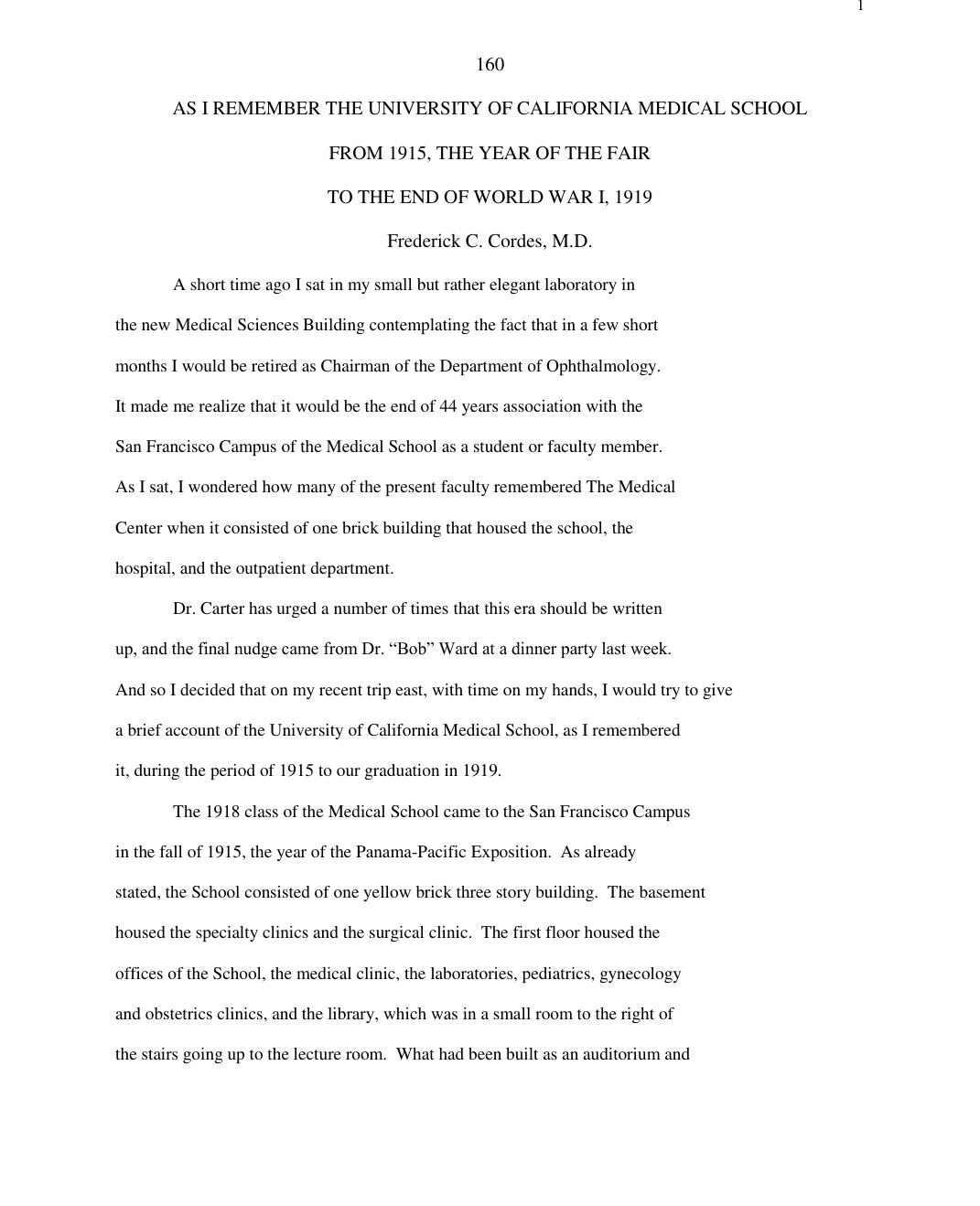 View Cordes Carter Collection essay — page 1 at full size
Cordes Carter Collection essay — page 1
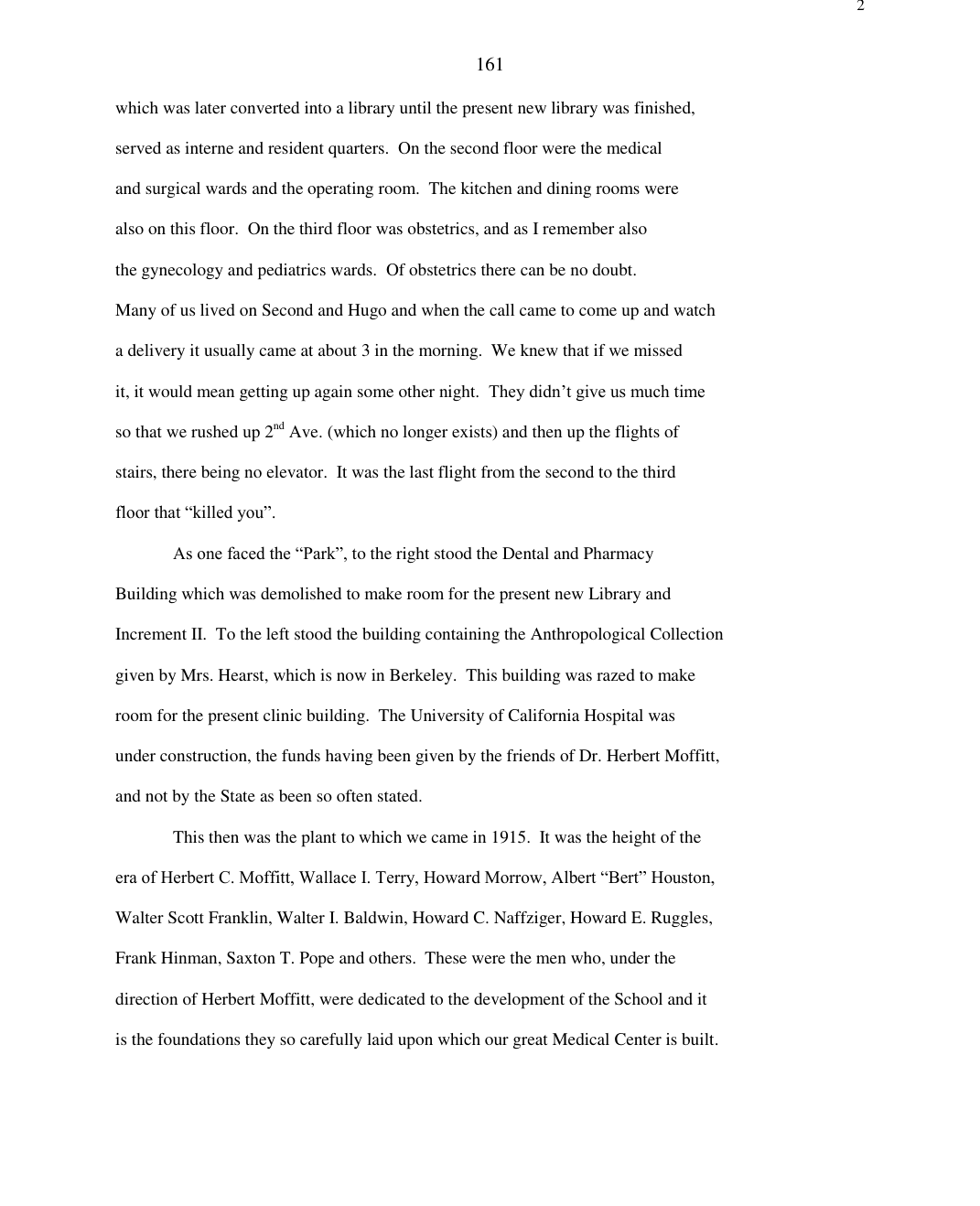 View Cordes Carter Collection essay — page 2 at full size
Cordes Carter Collection essay — page 2
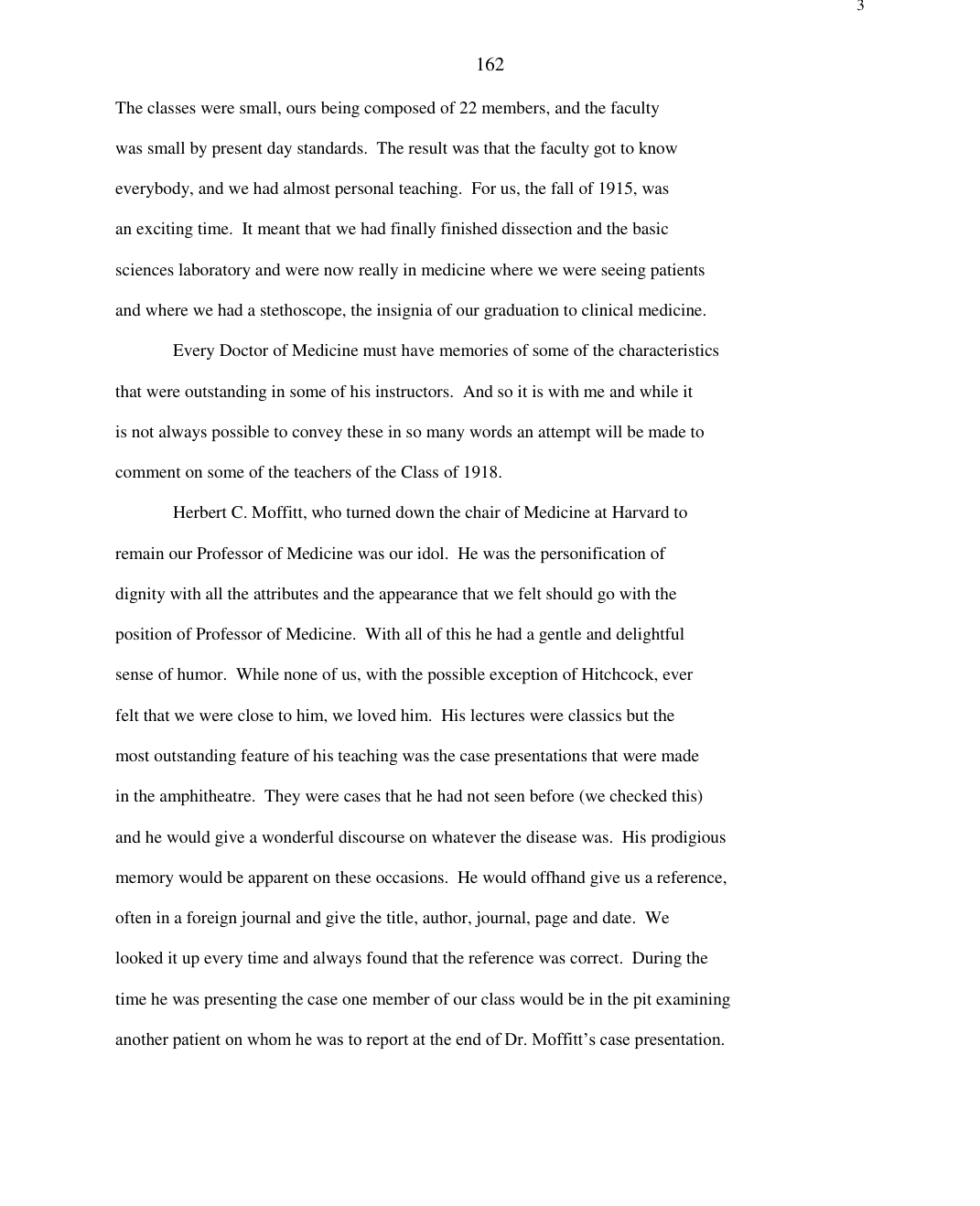 View Cordes Carter Collection essay — page 3 at full size
Cordes Carter Collection essay — page 3
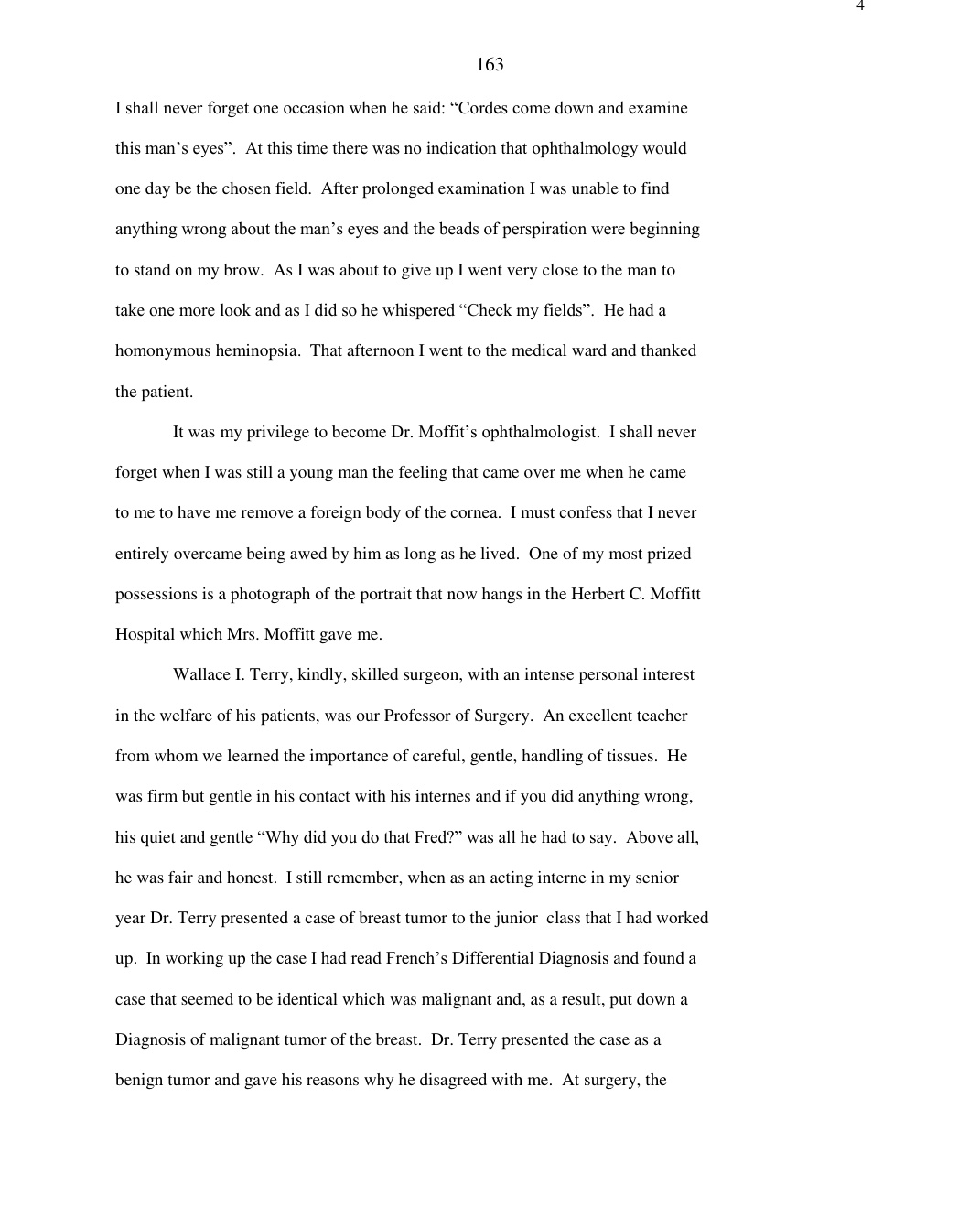 View Cordes Carter Collection essay — page 4 at full size
Cordes Carter Collection essay — page 4
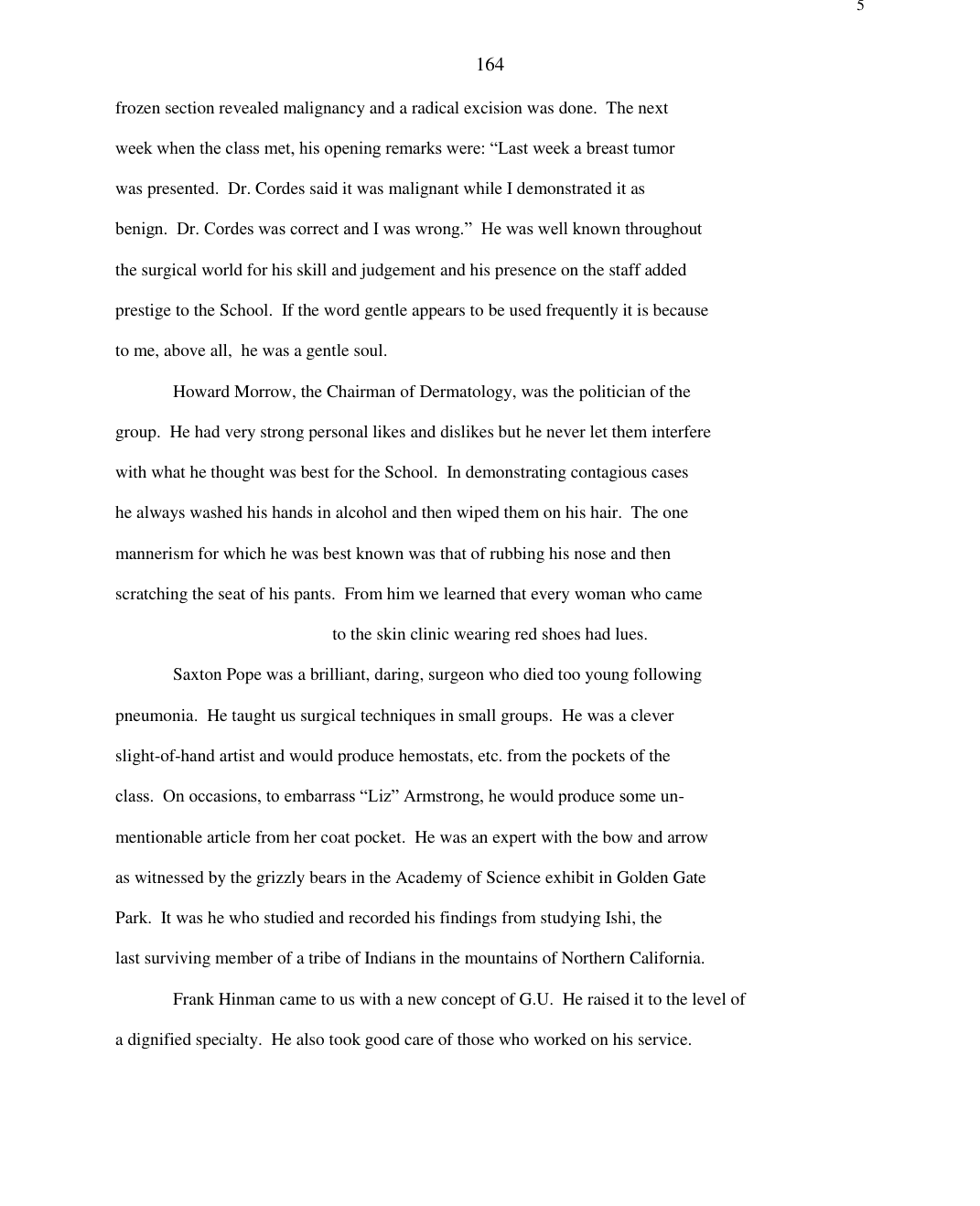 View Cordes Carter Collection essay — page 5 at full size
Cordes Carter Collection essay — page 5
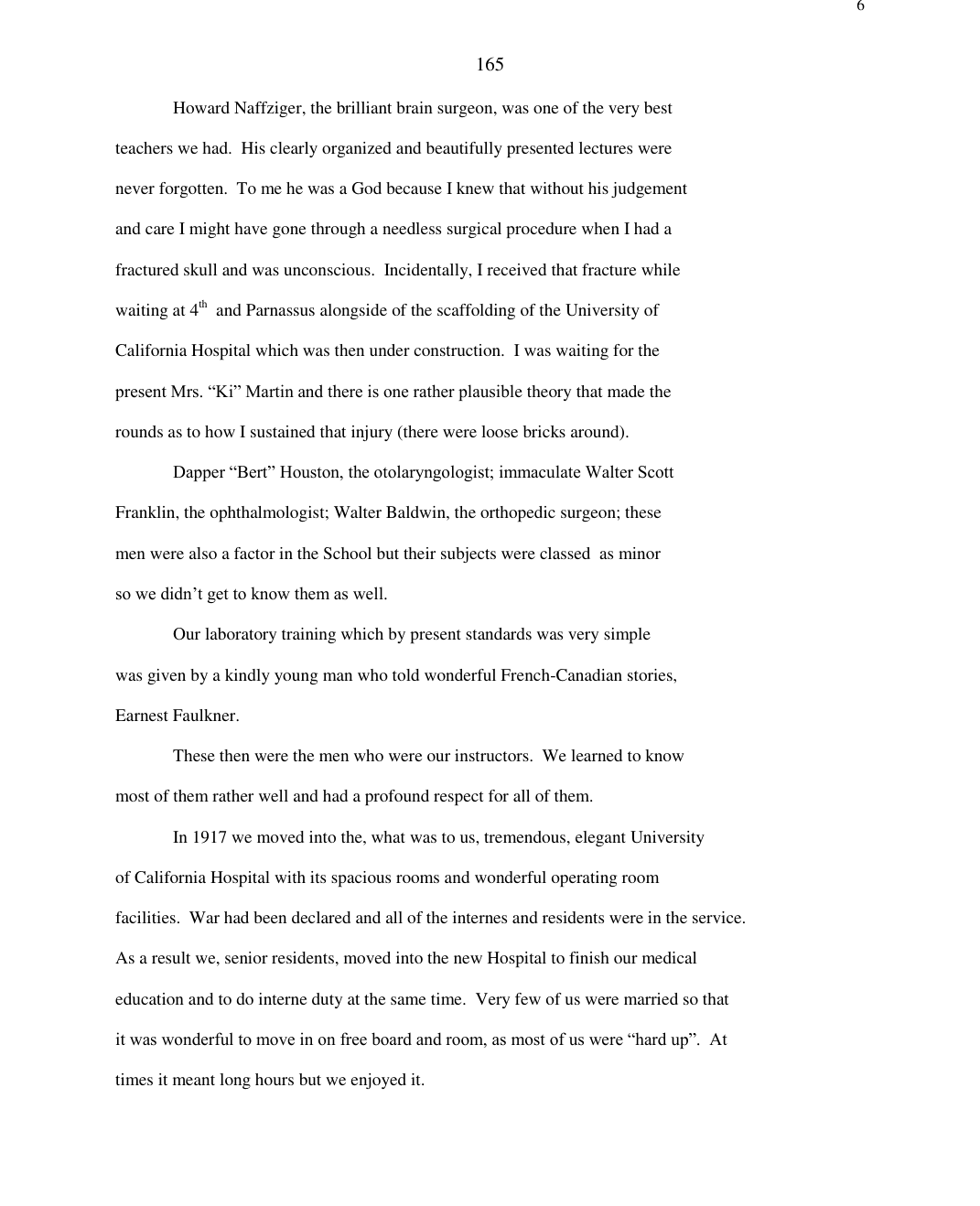 View Cordes Carter Collection essay — page 6 at full size
Cordes Carter Collection essay — page 6
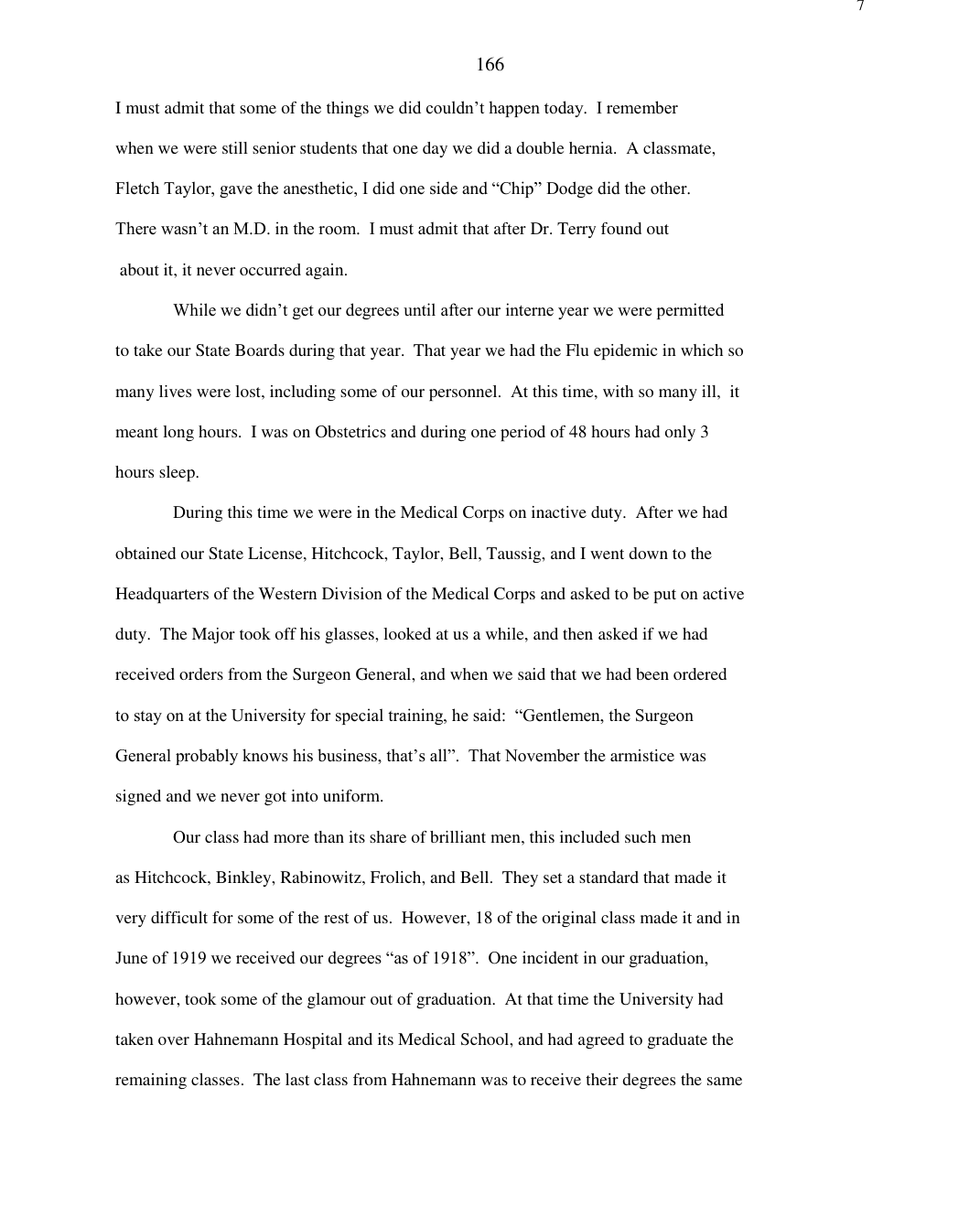 View Cordes Carter Collection essay — page 7 at full size
Cordes Carter Collection essay — page 7
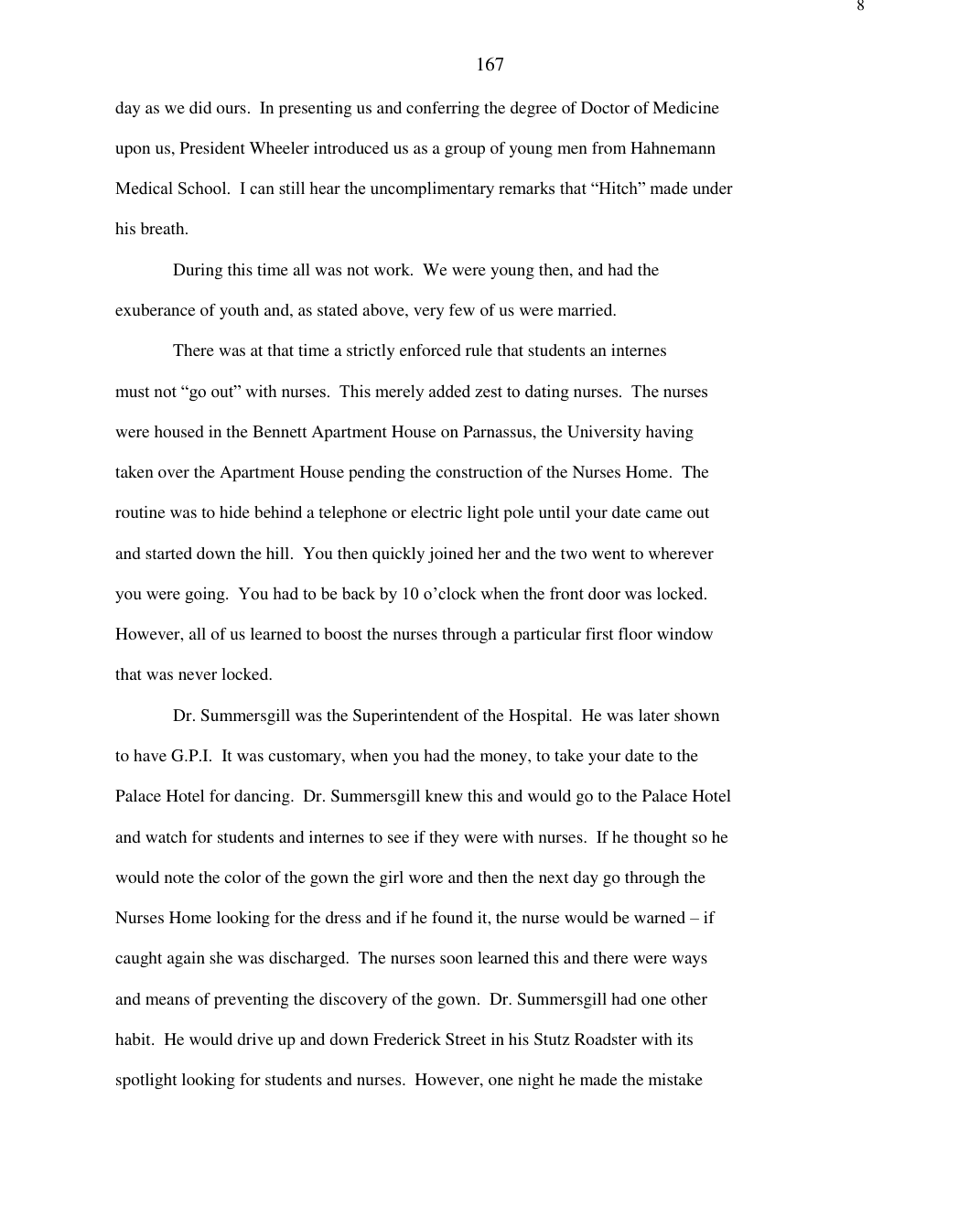 View Cordes Carter Collection essay — page 8 at full size
Cordes Carter Collection essay — page 8
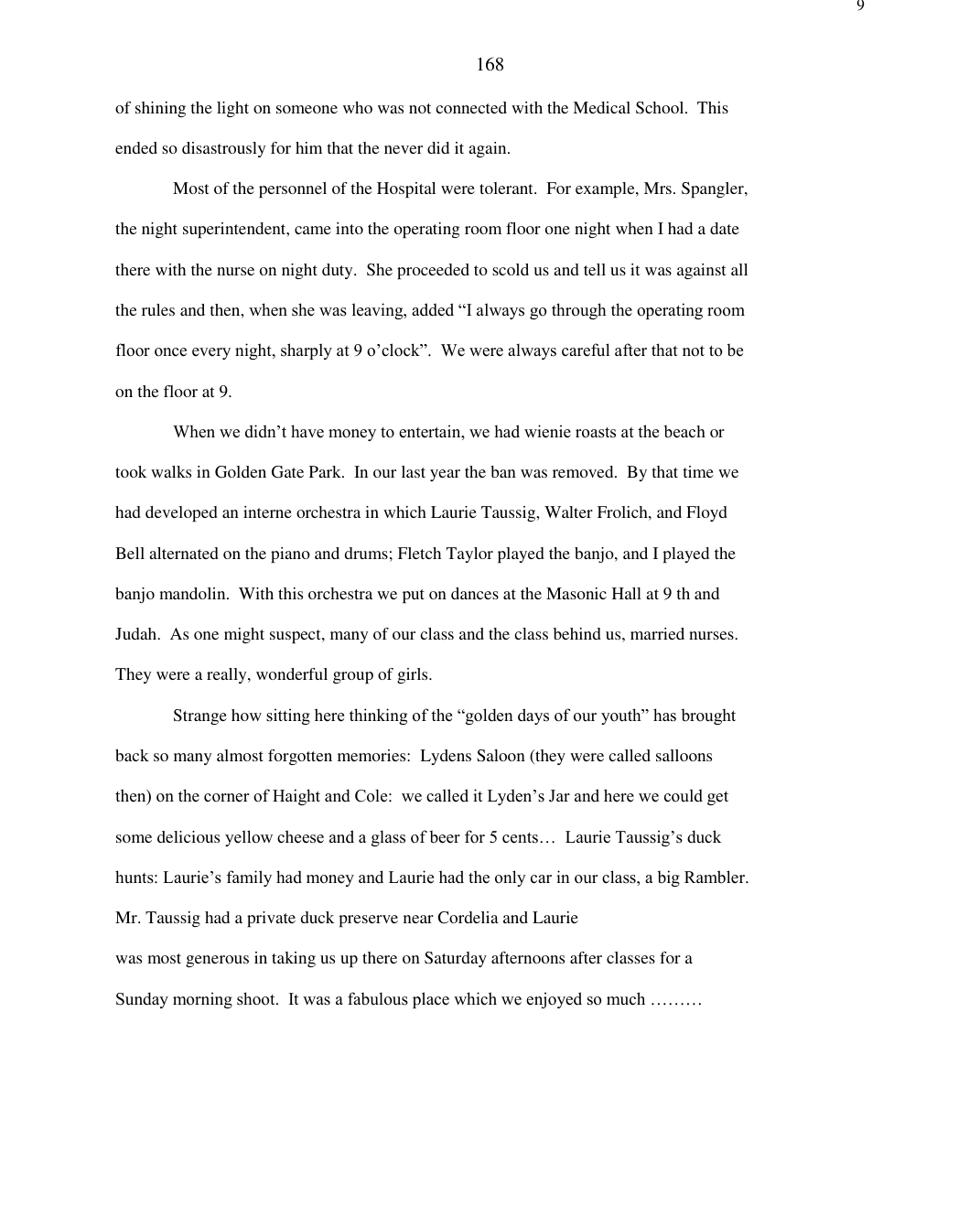 View Cordes Carter Collection essay — page 9 at full size
Cordes Carter Collection essay — page 9
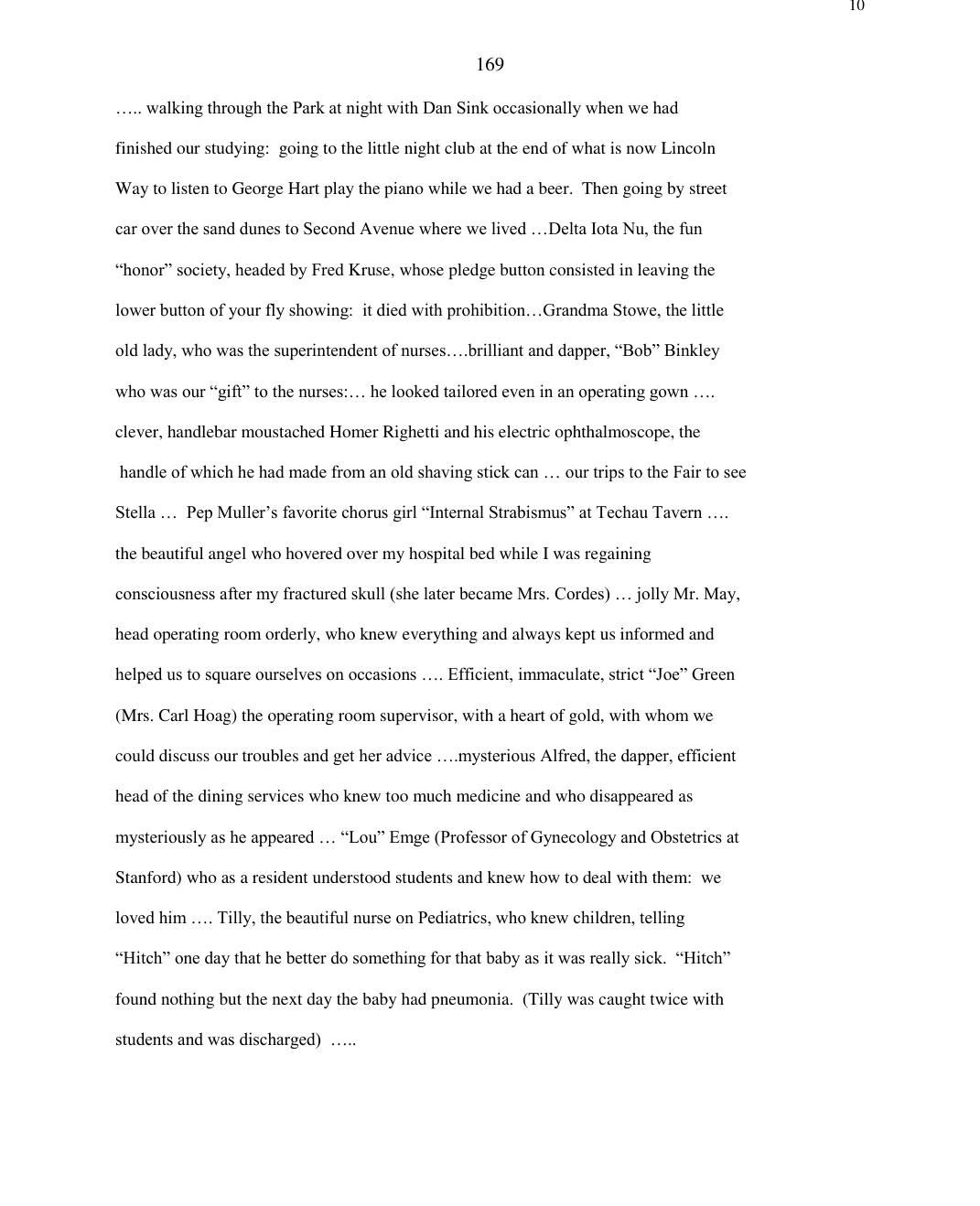 View Cordes Carter Collection essay — page 10 at full size
Cordes Carter Collection essay — page 10
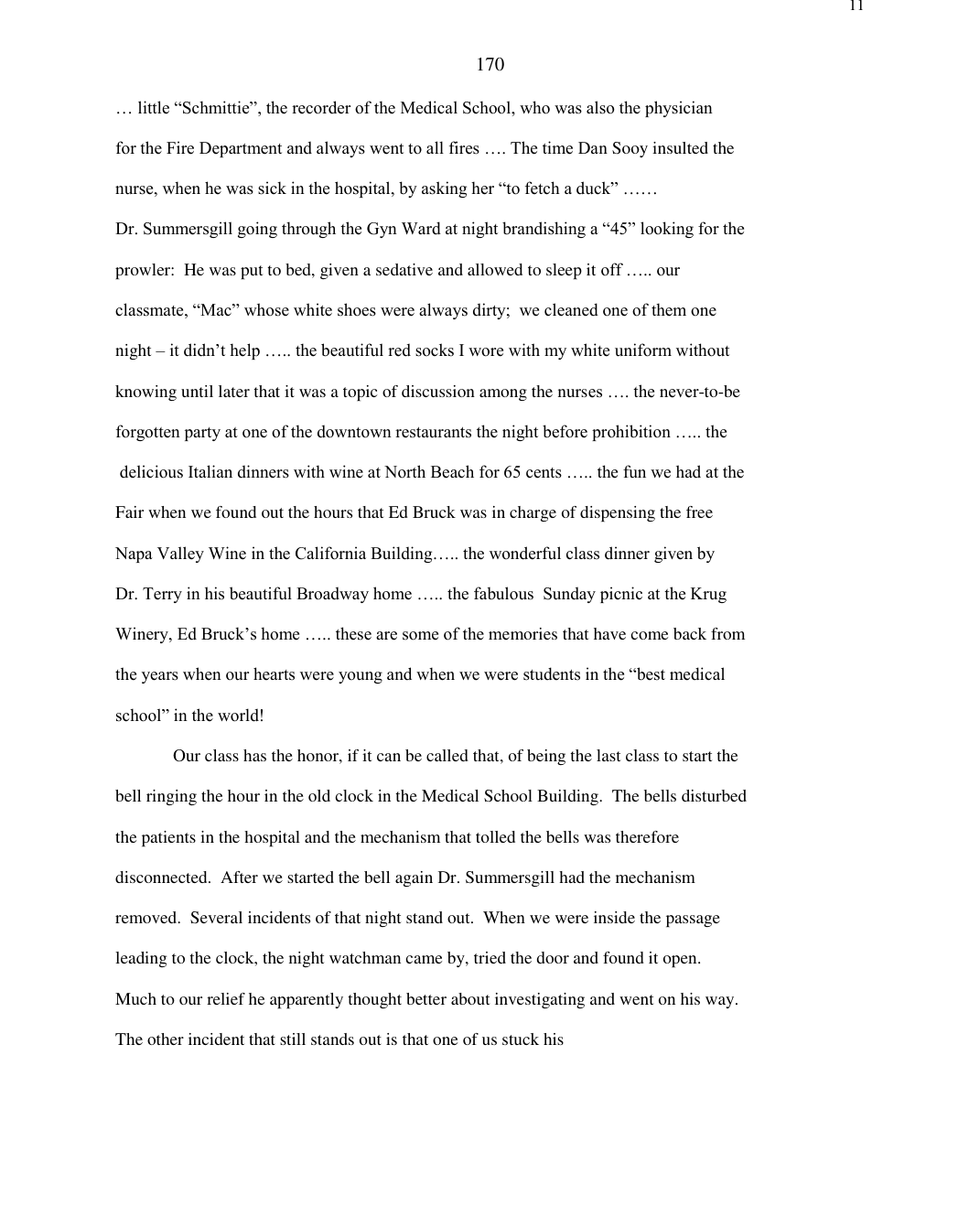 View Cordes Carter Collection essay — page 11 at full size
Cordes Carter Collection essay — page 11
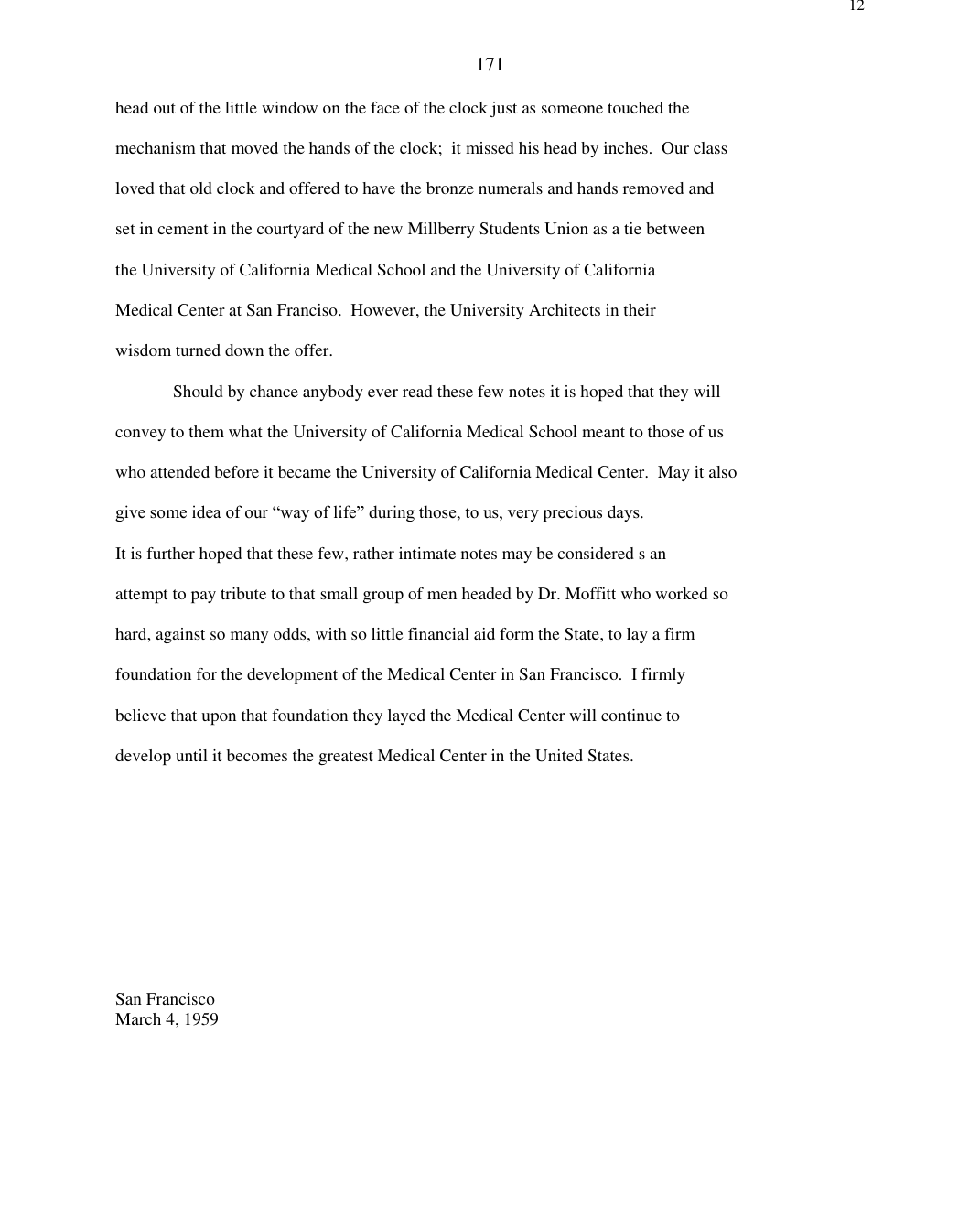 View Cordes Carter Collection essay — page 12 at full size
Cordes Carter Collection essay — page 12