
UCSF Laser Vision Center
Understanding Vision
The Normal Eye
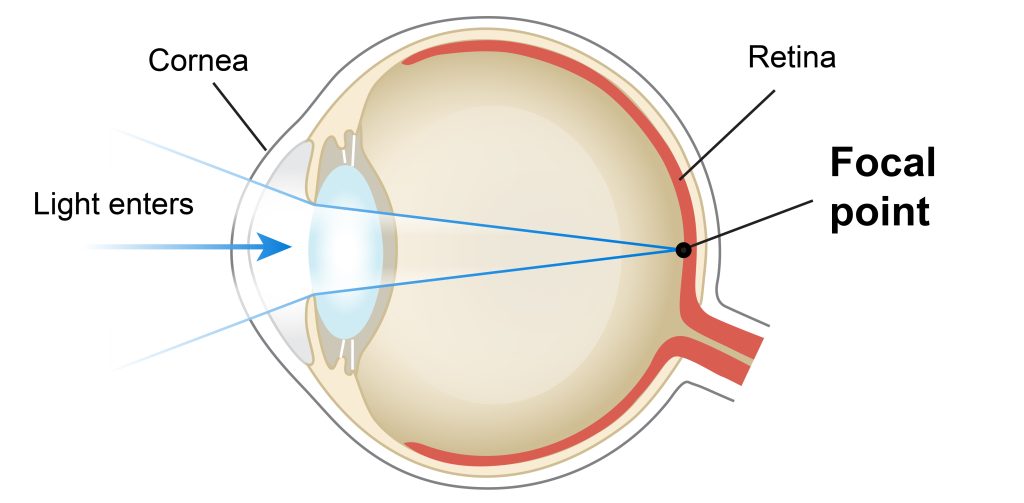
The eye works much like a camera, using a lens to focus an image onto a focal point on the retina at the back of the eye. In the normal eye the light rays join together at a precise point on the retina, and near and distant objects appear sharp and clear.
The Myopic Eye
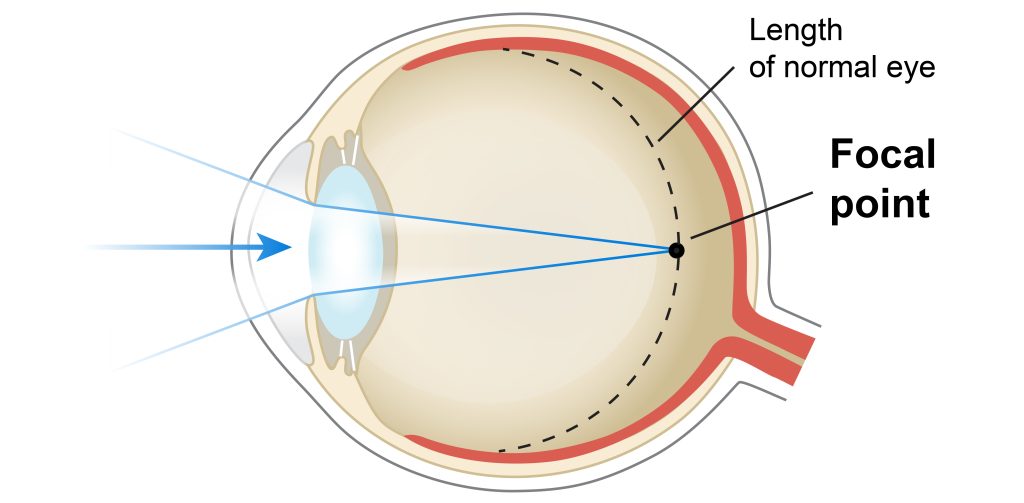
The nearsighted eye (myopia) is somewhat longer than the normal eye. This causes the light rays to focus at a point in front of the retina, resulting in a blurry view of distant objects.
The Hyperopic Eye
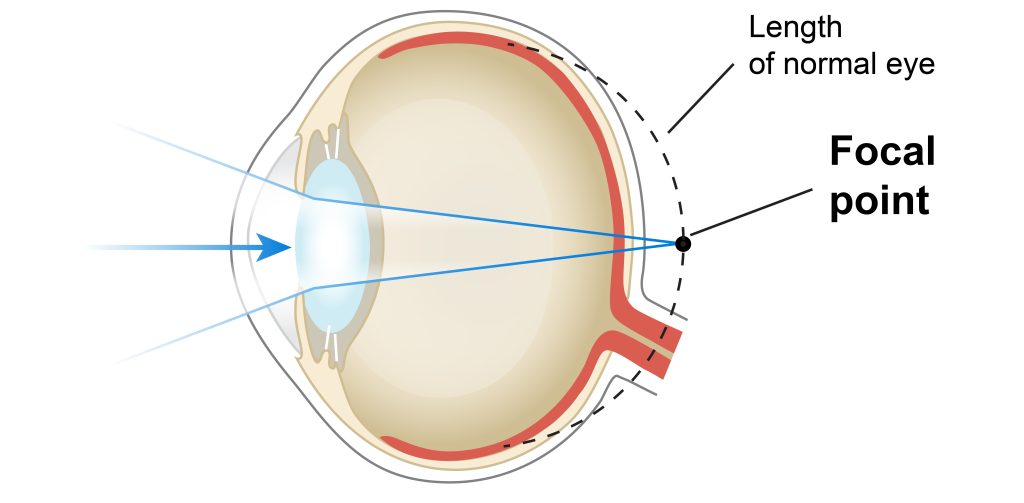
The farsighted eye (hyperopia) is shorter than normal. Light rays are aimed at a focus point behind the retina causing blurring of objects viewed up close.
Astigmatism and Presbyopia
Other common vision problems include astigmatism and presbyopia. With astigmatism the curvature of the cornea is uneven, causing a distortion of images. This distortion is especially noticeable after dark and with bright lights. With astigmatism, objects at all distances appear blurred.Presbyopia is caused by a loss of focusing flexibility in the eye and affects everyone, often starting in the mid-forties . This makes it difficult to view objects up close while wearing corrective eyewear for nearsightedness. People with this condition often wear reading glasses and bifocals (glasses that focus different ways for up close and distance viewing). Alternatively, if they are nearsighted, they may read by removing their eyeglasses and using their nearsightedness to read.
Understanding Vision
The Normal Eye
The eye works much like a camera, using a lens to focus an image onto a focal point on the retina at the back of the eye. In the normal eye the light rays join together at a precise point on the retina, and near and distant objects appear sharp and clear.
The Myopic Eye
The nearsighted eye (myopia) is somewhat longer than the normal eye. This causes the light rays to focus at a point in front of the retina, resulting in a blurry view of distant objects.
The Hyperopic Eye
The farsighted eye (hyperopia) is shorter than normal. Light rays are aimed at a focus point behind the retina causing blurring of objects viewed up close.
Astigmatism and Presbyopia
Other common vision problems include astigmatism and presbyopia. With astigmatism the curvature of the cornea is uneven, causing a distortion of images. This distortion is especially noticeable after dark and with bright lights. With astigmatism, objects at all distances appear blurred.Presbyopia is caused by a loss of focusing flexibility in the eye and affects everyone, often starting in the mid-forties . This makes it difficult to view objects up close while wearing corrective eyewear for nearsightedness. People with this condition often wear reading glasses and bifocals (glasses that focus different ways for up close and distance viewing). Alternatively, if they are nearsighted, they may read by removing their eyeglasses and using their nearsightedness to read.